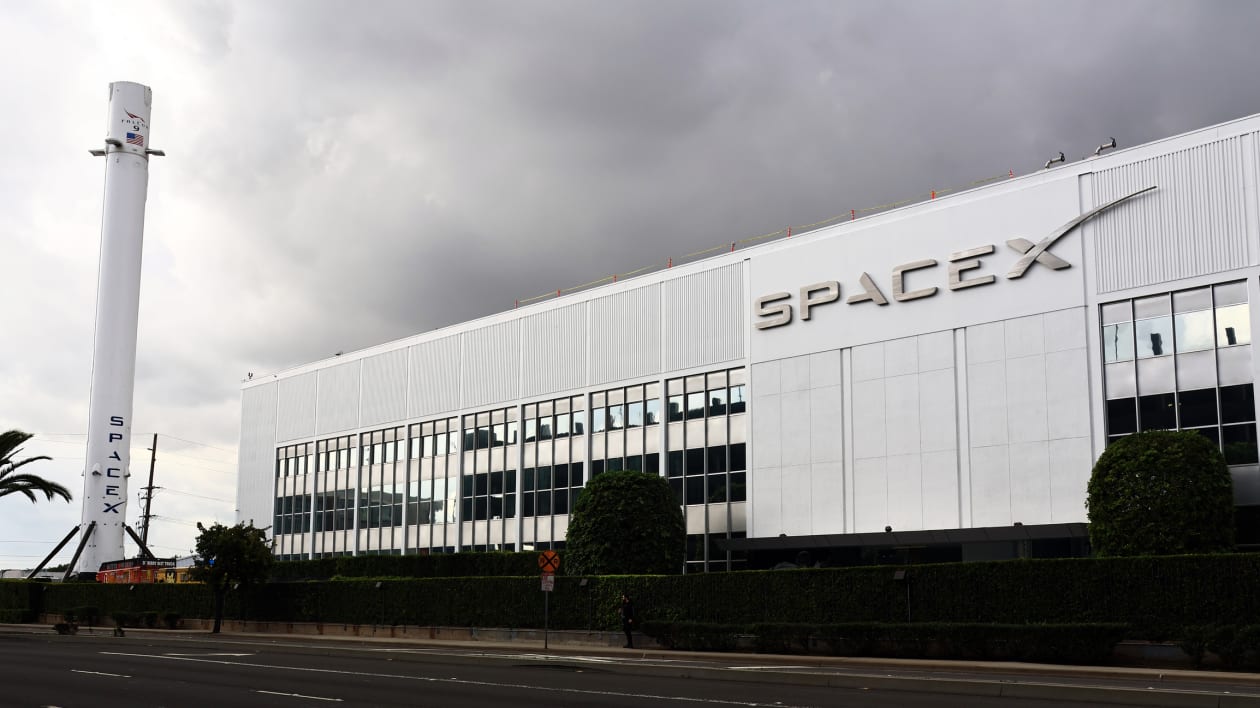
SpaceX's expected IPO could become one of the largest ever and may be added rapidly to major indexes under recently accelerated inclusion rules. That would likely force passive ETFs, including retirement-plan staple funds such as Invesco QQQ, to buy the stock soon after listing, increasing broad investor exposure. The article is largely about index-driven flow implications rather than a near-term operational update.
The key second-order effect is not the IPO itself but the forced-buyer cascade from benchmark inclusion rules. When a mega-cap private asset converts into a public index constituent quickly, the marginal buyer becomes retirement-plan capital that is structurally insensitive to valuation; that can compress supply for months after the listing and create a tape that stays mechanically supported even if fundamentals are hard to handicap. The beneficiaries are less the company itself in the first few days and more the ecosystem of pre-IPO holders, underwriters, and any funds that can source shares before index demand becomes fully embedded.
The most exposed losers are active managers and non-US or small-cap equity sleeves that will see benchmark drift without control over timing. More subtly, the move could weaken the traditional post-IPO underperformance window because the usual liquidity vacuum may be partially offset by passive inflows, making “wait for lockup expiry” less effective as a short thesis. That said, if the float is constrained and demand is front-loaded, the stock can become vulnerable to a sharp air-pocket once the forced buying is done and incremental discretionary demand fails to show up.
The main catalyst is implementation timing around index eligibility and float-adjusted market-cap thresholds; that matters more than headline IPO pricing. The contrarian risk is that the market is overestimating the persistence of passive demand: index buying is a one-time flow, while valuation support requires repeated active sponsorship. If the company debuts at an extreme multiple relative to any public comps, the better trade may be fading the “inevitable ownership” narrative after the first inclusion wave rather than trying to short the opening pop.
For competitors, the bigger implication is that scarce capital may temporarily crowd toward the most obvious private-space winner, making it harder for adjacent aerospace, launch, and satellite names to raise at attractive terms. Longer term, a richly valued SpaceX public comp could reset private market marks across venture and defense-tech, lifting paper valuations but also raising the bar for follow-on capital and return hurdles.
AI-powered research, real-time alerts, and portfolio analytics for institutional investors.
Request DemoOverall Sentiment
neutral
Sentiment Score
0.15
