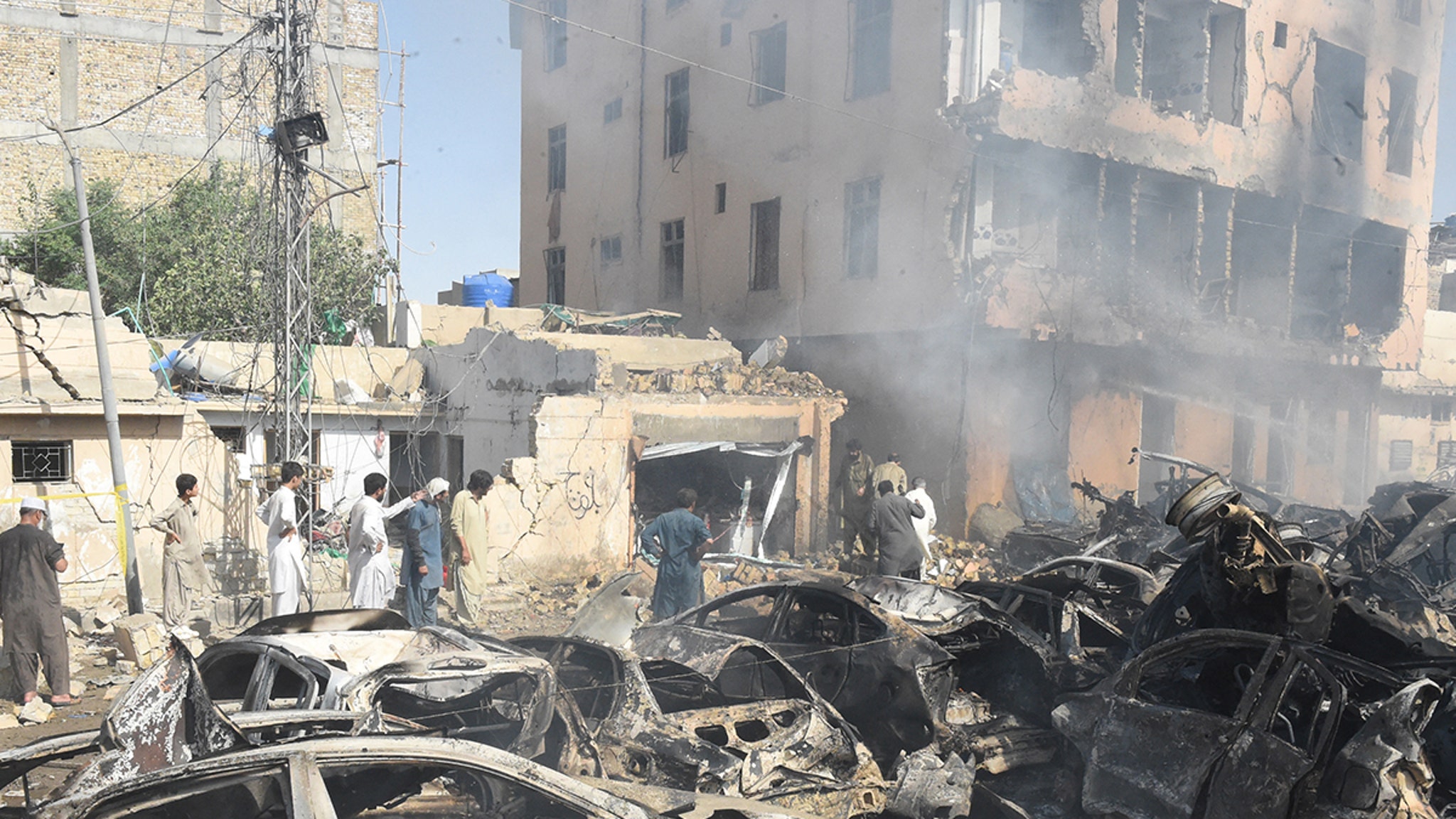
At least 23 people were killed and about 70 injured after a suicide bombing near a passenger train in Quetta, Pakistan, with local reports saying the blast overturned two rail cars and set them on fire. A separatist group, the Balochistan Liberation Army, claimed responsibility and said the attack targeted security personnel and their families traveling for Eid al-Adha. The incident is a major security shock for Pakistan and underscores elevated geopolitical and domestic security risk.
The immediate market impact is not in the casualties themselves, but in the repricing of Pakistan’s security premium. This event raises the odds of a broader counterinsurgency response in Balochistan, which can disrupt rail throughput, road convoys, and project execution for months rather than days. The second-order effect is higher logistics friction for any assets relying on the province as a transit corridor into western Pakistan or toward CPEC-linked infrastructure.
The losers are not just transport operators; they are companies and sovereign-linked projects exposed to schedule slippage, insurance cost inflation, and security overhead. The attack also increases the probability of tighter policing around elections and public gatherings, which tends to suppress domestic mobility and discretionary spending in affected regions. For EM investors, the key is that repeated high-profile attacks can widen Pakistan’s risk premium even if macro data are stable, pressuring local-currency assets and making foreign financing more expensive.
The near-term catalyst is a security response cycle: retaliatory operations, increased checkpoints, and possible service interruptions over the next 1-4 weeks. Over 3-6 months, the bigger risk is not one-off disruption but normalization of elevated security costs that erode margins for logistics, construction, and rail-related activity. The main reversal would be a visible de-escalation from separatist groups or a credible improvement in state security capacity; absent that, the market should assume a higher baseline of operating friction.
Consensus may underappreciate how localized violence can still matter for broader EM sentiment because the marginal buyer does not need Pakistan-specific exposure to demand a higher risk discount. The overdone view would be to extrapolate this into a nationwide growth shock; the more likely outcome is a concentrated hit to corridor economics and confidence rather than a systemic macro event. That said, repeated incidents would eventually feed into sovereign spreads and FX via capital flight and delayed project monetization.
AI-powered research, real-time alerts, and portfolio analytics for institutional investors.
Request DemoOverall Sentiment
extremely negative
Sentiment Score
-0.95
