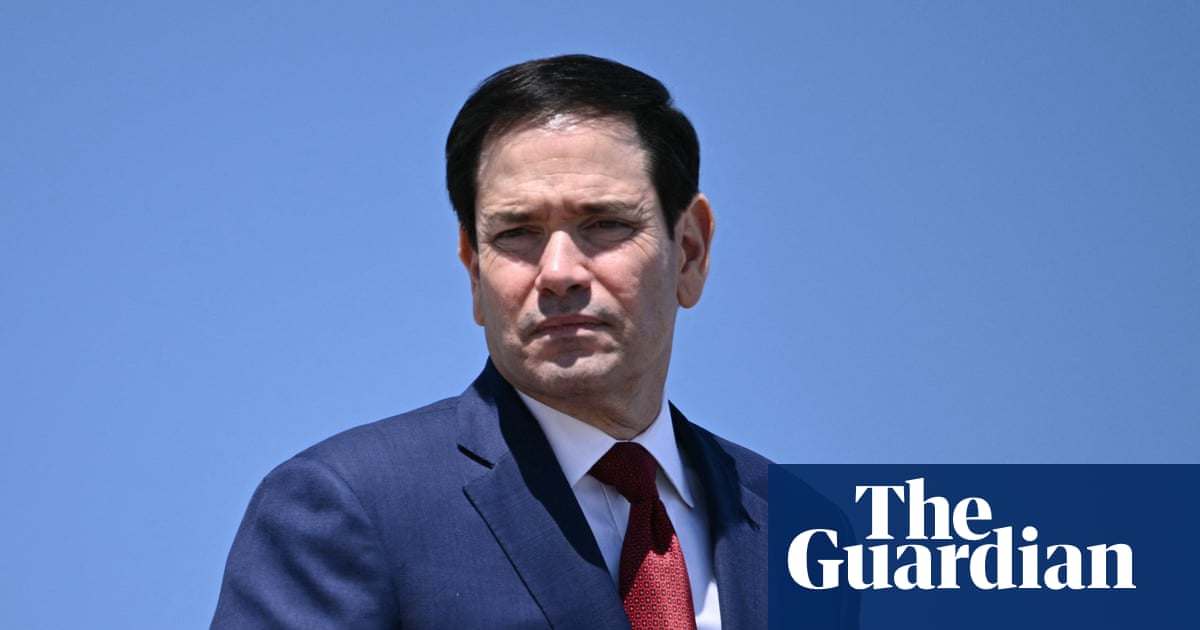
Marco Rubio is set to visit Beijing with President Trump despite being under Chinese sanctions, after China reportedly adjusted the Chinese transliteration of his name to work around the entry ban. The trip underscores a thaw in diplomatic logistics even as tensions remain high over trade, Taiwan, AI, Hong Kong, and Uyghur-related sanctions. The report is geopolitically significant but does not indicate an immediate direct market catalyst.
This is a signal that Beijing is prioritizing transactional stability over symbolic consistency. The real second-order effect is that sanctions lose some of their deterrent value when the target is now a cabinet-level interlocutor in a policy channel Beijing wants open; that lowers the expected cost of selective U.S. pressure and suggests China is willing to carve out narrow exceptions for higher-value engagement. Markets should read that as a modestly lower probability of immediate tit-for-tat escalation, but not a durable thaw: this is procedural de-risking, not substantive rapprochement.
The more important implication is on negotiation scope. If the administration is using a harder trade line while downplaying rights issues, the marginal risk shifts toward tariff calibration, export-control exceptions, and Taiwan-related signaling rather than broad sanctions expansion. That favors companies with China exposure that can absorb headline volatility but are not directly caught in restricted technology categories; it also raises the odds of short-lived dips on hawkish headlines that fade once talks remain orderly.
Contrarian takeaway: the market may be overrating the significance of the diplomatic workaround and underestimating how little it changes the underlying conflict set. A name-transliteration fix does not signal policy moderation, and the most likely path is still choppy rhetoric with limited deliverables over the next 1-3 months. The tail risk is a failed visit that re-energizes sanctions/export-control talk, which would hit semicap equipment, China consumer ADRs, and Taiwan-linked risk assets first; the upside case is narrower: reduced headline risk and incremental relief in trade-sensitive cyclicals.
From a timing perspective, the setup is best traded as a volatility event into the visit rather than a directional macro call. The near-term market reaction should be driven by whether talks produce concrete language on tariffs or AI controls; absent that, mean reversion should dominate within days. Over a multi-month horizon, this still looks like an unstable détente with periodic repricing around policy headlines.
AI-powered research, real-time alerts, and portfolio analytics for institutional investors.
Request DemoOverall Sentiment
neutral
Sentiment Score
0.05
