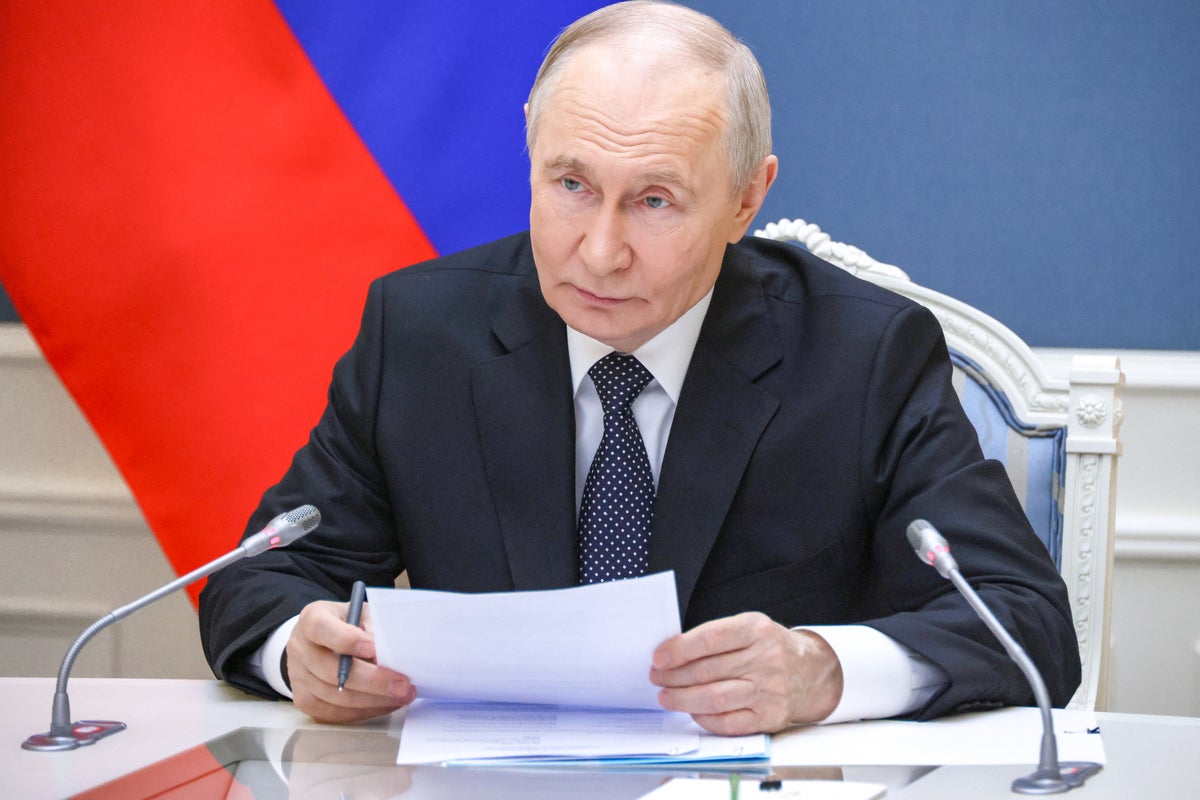
Putin said the use of nuclear weapons would be a "last resort" after Russia and Belarus completed a three-day nuclear drill involving 64,000 troops, more than 200 missile launchers, 140 aircraft, 73 warships and 13 submarines. The exercise, paired with revised Russian nuclear doctrine and Belarus-based nuclear assets, escalates tensions with NATO and was condemned by Europe as provocative and irresponsible. The rhetoric and drills raise the risk of miscalculation in an already volatile Ukraine war environment.
The near-term market effect is not a direct nuclear premium so much as a higher geopolitical volatility regime, which tends to favor defense, cyber, and non-U.S. emerging-market downside hedges while penalizing cyclicals with Eastern Europe supply-chain exposure. The signaling matters because repeated threshold-lowering rhetoric compresses the market’s reaction time: risk assets may initially shrug, but each escalation raises the probability of a fast, discontinuous repricing in European energy, freight, and sovereign-risk proxies if a drone strike or border incident produces a misread response.
The second-order consequence is that Belarus becomes a more important transmission node than Russia itself. Anything tied to rail, power, and military logistics in the western corridor faces elevated disruption risk, while NATO front-line states gain incremental bargaining power for defense spending and domestic missile-defense procurement over the next 6-18 months. For equities, the cleaner expression is through contractors and surveillance names rather than broad Europe exposure, because the latter is already discounting some war risk while procurement budgets have a more durable earnings translation.
A key contrarian point is that this type of nuclear messaging can be politically useful precisely because it lowers the probability of the regime’s preferred outcome: it is coercive signaling designed to freeze Western escalation, not necessarily a prelude to use. That means the base case remains rhetorical escalation with intermittent tactical shocks, and the trade is volatility monetization rather than outright tail-risk panic. The market is likely underpricing how quickly a one-off event in the Baltic region could force a 10-20% move in select European defense and energy names within days, but overpricing the odds of near-term actual nuclear use over a multi-quarter horizon.
AI-powered research, real-time alerts, and portfolio analytics for institutional investors.
Request DemoOverall Sentiment
strongly negative
Sentiment Score
-0.65
