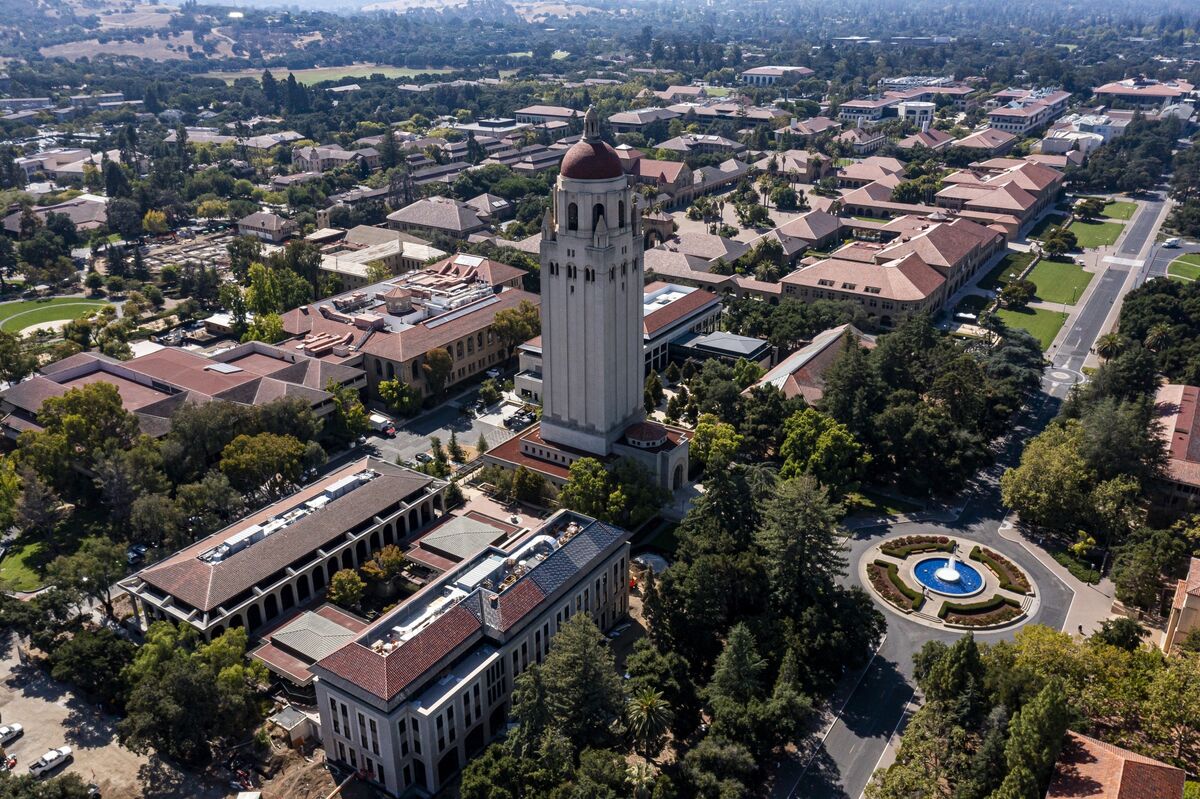
Russia declared Stanford University an "undesirable" organization, adding the California institution to a banned register after a Prosecutor-General's Office decision. The move underscores escalating regulatory and geopolitical friction between Russia and foreign institutions. Market impact is likely limited and indirect, with little immediate effect on broad financial markets.
This is less about Stanford itself and more about the signaling function: Russia is widening the aperture of what it considers hostile civil-society infrastructure, which raises the cost of any cross-border knowledge transfer. The near-term market impact is limited, but the second-order effect is a further chilling of academic, NGO, and corporate partnership channels that often sit behind technical collaboration, talent pipelines, and softer forms of sanctions evasion. That matters most for sectors dependent on frontier research exchange—AI, semiconductors, biotech, and dual-use software—where even marginal friction can slow diffusion over a 6-18 month horizon.
The immediate losers are Russian institutions and private actors that rely on Western academic legitimacy, visiting scholars, and informal channels to access methods, datasets, and talent. The more subtle winner is the Russian state’s domestic control apparatus, which benefits from tighter narrative discipline and from forcing local elites to substitute toward sanctioned or domestic alternatives. For global firms, the practical risk is not direct revenue loss but compliance creep: counterparties with opaque links to Russia will become harder to diligence, and multinational universities, labs, and NGOs may respond by over-screening or suspending otherwise benign relationships.
The key catalyst is escalation breadth, not headline severity. If this becomes part of a broader campaign that expands “undesirable” designations into additional universities, research foundations, or professional associations, expect a measurable reduction in sanctioned-country cooperation and more aggressive enforcement against intermediaries over the next few quarters. A reversal would require a de-escalation in Russia-West relations or a pragmatic carve-out for scientific exchange, neither of which is likely absent a larger diplomatic shift.
Contrarian take: the move is probably underpriced as a qualitative indicator of regime intent, but overestimated as a tradable macro event. The investable edge is in anticipating compliance and operating friction rather than expecting immediate asset repricing. In other words, this is a slow-burn negative for globalization-sensitive business models, not a catalyst for outright risk-off positioning.
AI-powered research, real-time alerts, and portfolio analytics for institutional investors.
Request DemoOverall Sentiment
mildly negative
Sentiment Score
-0.20
