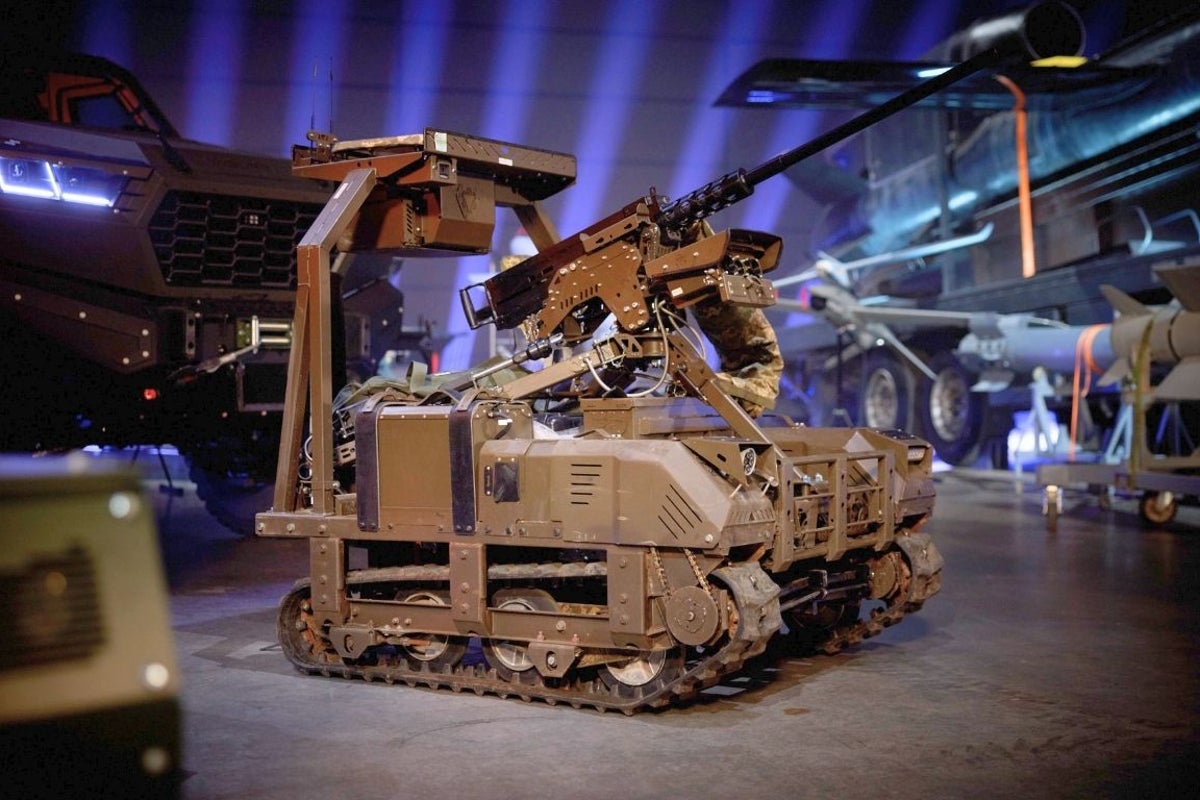
Ukraine said its forces retook a position using only unmanned ground systems and drones, with Zelensky claiming more than 22,000 robot-enabled missions in the past three months and no infantry losses in the operation. Russia also launched a heavy strike on Odesa region infrastructure, damaging Izmail port, a Panama-flagged vessel, buses, cars, homes and an ambulance, while one man was hospitalized. Separately, power was restored at the Zaporizhzhia nuclear plant after its 13th off-site outage, and Hungary’s incoming leader signaled support for an EU €90bn loan to Ukraine and said he would urge Putin to end the war.
The most important second-order signal is not tactical battlefield progress; it is that unmanned ground systems are moving from niche support assets to a force-multiplier that can partially substitute for scarce manpower. That shifts the cost curve of the war in Ukraine’s favor over the medium term: if a cheap robot can perform the highest-risk logistics, mine-clearing, and assault-adjacent tasks, the marginal value of additional hardware, autonomy software, comms, and EW resilience rises faster than the value of conventional platform counts. For defense markets, this is bullish for companies exposed to small UAS, battlefield networking, sensors, autonomy, and counter-drone layers, while legacy heavy armor names face a slower-burning relevance risk. The supply-chain implication is that demand should broaden beyond headline drone frames into components with tighter bottlenecks—thermal imaging, secure radios, guidance chips, power systems, and electronic warfare hardening. Expect procurement cycles to accelerate over the next 6-18 months as military planners internalize that autonomy is now a live battlefield capability rather than a demonstration. The Ukrainian infrastructure angle matters too: repeated strikes on ports, logistics, and nuclear power rails keep the war’s economic drag concentrated in transport, insurance, and regional energy reliability. That creates a persistent risk premium in Black Sea shipping and raises the probability of intermittent disruptions to grain, metals, and refined-product flows. The nuclear plant outage pattern also underscores that tail risk remains binary—any broader grid stress or port disruption would quickly reprice regional logistics and power-sensitive assets. The contrarian take is that the robotics headline may tempt investors to overestimate near-term autonomy adoption across modern armies. The technology is valuable, but scaling is constrained by jamming, terrain, maintenance, and command-and-control fragility; most of the spend will accrue to layered systems that make robots survivable, not to the robots themselves. In other words, the durable trade is into the enabling stack and countermeasures, not into a simplistic “war is automated” narrative.
AI-powered research, real-time alerts, and portfolio analytics for institutional investors.
Request DemoOverall Sentiment
neutral
Sentiment Score
-0.10
