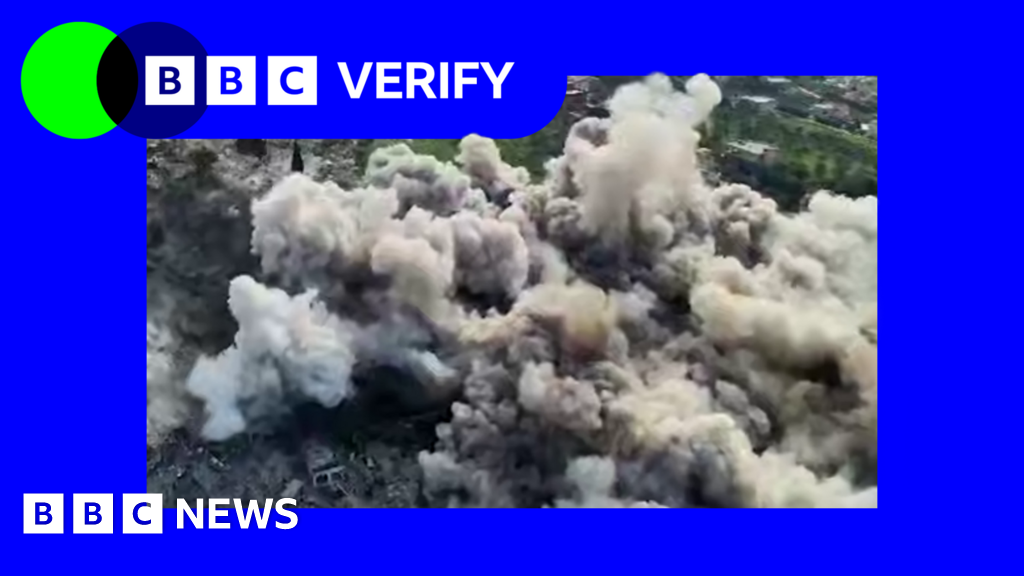
BBC Verify found evidence of more than 1,400 buildings destroyed in southern Lebanon since 2 March, including over 400 in Taybeh and at least 460 in Aita al-Shaab, as Israel expands demolitions and a proposed security zone near the border. The article highlights significant civilian displacement, damage to UN peacekeeping facilities in Naqoura, and allegations from legal experts that the systematic destruction may violate international humanitarian law. The conflict's escalation is likely to keep regional risk sentiment defensive and elevate geopolitical volatility.
The market-relevant issue is not the humanitarian damage per se, but the institutionalization of a long-duration security perimeter strategy. That shifts the conflict from episodic cross-border strikes to a quasi-occupation regime, which raises the probability of intermittent escalation, higher stabilization costs, and a materially longer leash on regional risk premia. The second-order effect is that every step toward a deeper buffer zone increases the odds of blowback via Hezbollah reconstitution, proxy retaliation, and a wider drone/missile threat envelope that can reach Israeli logistics, ports, and northern industrial assets.
For markets, the immediate winners are not obvious defense primes alone; the bigger beneficiary is the entire Israel security stack tied to ISR, counter-drone, precision strike, border surveillance, and armored mobility. This type of conflict tends to favor systems that reduce manpower exposure and improve persistent monitoring, while also supporting ammunition replenishment demand over a 6-18 month window. The loser set extends beyond southern Lebanon real estate and reconstruction: Lebanese banking, telecom, cement, power distribution, and any regional insurer or reinsurer with latent exposure to sovereign stress and infrastructure claims.
The key catalyst is whether this becomes a de facto “new normal” or triggers coordinated external pressure. In the near term, the risk is asymmetry: even if headline violence moderates, destroyed towns are politically irreversible, which makes diplomatic de-escalation harder and keeps reconstruction capex frozen for quarters, not weeks. A deeper tail risk is that UN or allied scrutiny forces sanctions, arms-delivery friction, or legal constraints that hit Israeli procurement timing and sentiment toward dual-use suppliers.
AI-powered research, real-time alerts, and portfolio analytics for institutional investors.
Request DemoOverall Sentiment
strongly negative
Sentiment Score
-0.85
Consensus may be underpricing persistence. The prevailing read is often that border clearing creates a cleaner deterrence posture; in practice, it can create a larger future conflict surface by institutionalizing grievance and making return politically impossible. That argues for treating any temporary lull as a selling opportunity in geopolitical risk hedges rather than evidence of normalization.
