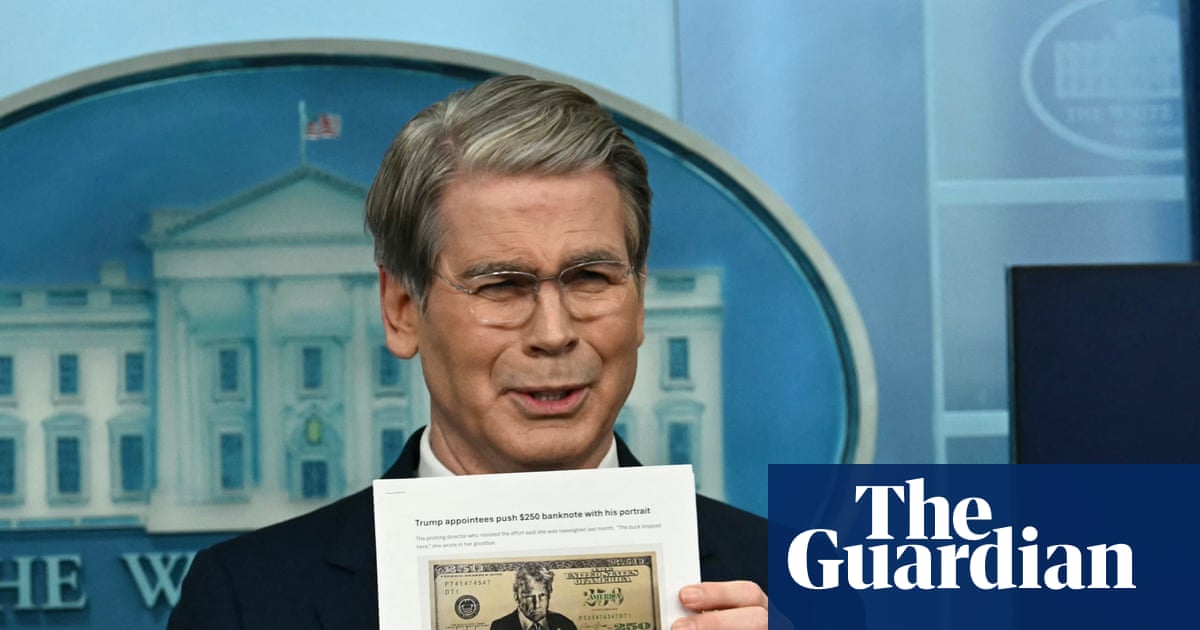
The White House is urging Congress to authorize a proposed $250 bill featuring Donald Trump for the U.S. 250th anniversary, but the move would require changing a longstanding federal ban on living persons on currency and faces steep odds in the Senate, where 60 votes are needed. Treasury Secretary Scott Bessent said the department is preparing prototypes but will "stick to the law" and that the decision is up to Capitol Hill. Bessent also said oil and gas prices should fall quickly after the Iran conflict ends and commented that Kevin Warsh would help balance inflation and growth at the Fed.
This is less about a coin-design stunt than about how far executive branding can be pushed before institutional friction snaps back. The near-term market read-through is not inflationary, but it is a small negative for governance confidence: when policy attention shifts to symbolic measures, it raises the odds of slower progress on budget, tax, and debt-ceiling negotiations that actually matter for rates and risk assets over the next 1-3 months.
The second-order beneficiary is the anti-establishment trade, not the currency itself. Any move that reinforces personalization of economic policy tends to widen the premium on hard-asset hedges and shorten the leash on USD sentiment at the margin, especially if paired with dovish Fed rhetoric and falling energy prices. The bigger risk is legislative embarrassment: if the proposal is floated publicly and then stalls, it becomes a visible reminder of intra-party limits, which can temporarily pressure the "Trump premium" embedded in sectors sensitive to policy tailwinds.
For markets, the more actionable angle is volatility around institutional credibility rather than the bill itself. If Congress meaningfully advances the proposal, expect a brief boost to meme/speculative flows and a distraction trade in D.C.-sensitive sectors; if it dies quickly, the reversal can hit headline-driven momentum names that are currently priced for maximum policy optionality. The timing is days to weeks, not quarters, unless this becomes a broader signal that legal constraints around executive action are being tested elsewhere.
Contrarian view: the consensus may overestimate the economic significance and underestimate the signaling value. The direct GDP impact is zero, but the episode can still matter if it confirms a more personalized, less rules-based policy regime; that would be constructive for assets that benefit from governance uncertainty and inflation hedging, while being mildly negative for long-duration equities if it feeds into a higher political risk premium.
AI-powered research, real-time alerts, and portfolio analytics for institutional investors.
Request TrialOverall Sentiment
neutral
Sentiment Score
0.00
