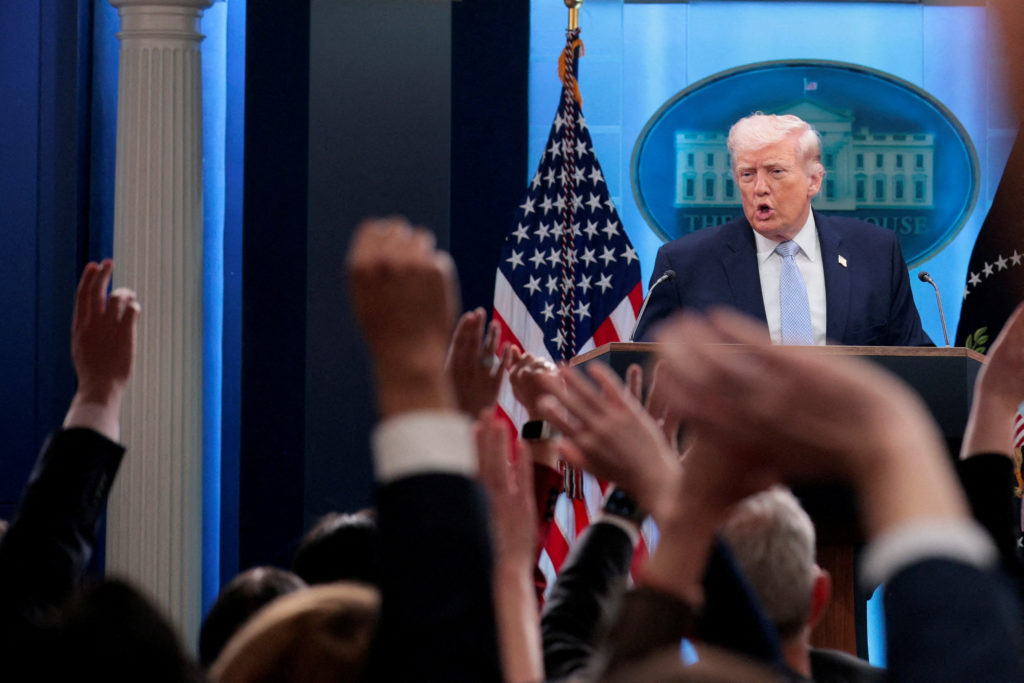
President Trump stated Israeli strikes on Lebanon are a separate skirmish and not part of the U.S.-Iran ceasefire, citing Hezbollah as the reason Lebanon was excluded; the White House press secretary reiterated Lebanon is not included. Separately, Trump described a proposal to allow Iran to charge a toll on ships transiting the Strait of Hormuz as a potential joint-revenue mechanism, raising the prospect of changes to the previous free flow of shipping. Implication for portfolios: elevated regional friction could add risk premia to oil and shipping markets (higher freight/insurance costs) and support defense-related exposure; monitor Brent/WTI, tanker routes and any escalation between Hezbollah and Israel.
Ambiguity about the geographic scope of a ceasefire and the prospect of monetizing chokepoint transits converts a political negotiation into a tradable supply-risk premium. Even limited, repeated disruptions to sea lanes raise spot freight and insurance costs immediately (days–weeks) and can mechanically add $3–8/bbl to waterborne Brent via longer voyages and higher tanker layup/idle spreads; a full chokepoint closure remains a low-probability, high-impact tail event that historically drove oil +$20–40/bbl.
The closest-to-the-camera beneficiaries are owners of tankers and LNG carriers plus marine insurers: war-risk and P&I premiums reprice quickly and lift time-charter equivalent (TCE) revenue for VLCCs/Suezmax/LNG carriers. That rerouting also creates durable regional gas price dispersion — Asia/Europe LNG spreads can widen materially if voyages extend by 7–14 days, creating optionality for owners of flexible LNG tonnage. Defense primes and domestic equipment suppliers are secondary beneficiaries via accelerated procurement and higher political probability of defense budgets being front-loaded.
Time horizons matter: market microstructure (rates, insurance) moves in days–weeks; physical crude and refined product price effects crystallize over weeks–months as inventories are drawn down; structural rerouting and capex responses play out over quarters–years. Key catalysts to watch that would reverse the premium: a clear, enforceable guarantee for shipping lanes, rapid diplomatic payoffs, or a credible multinational naval escort reducing war-risk premiums. Assign a 5–15% 3-month probability to a closure-level disruption; portfolios should be positioned for asymmetric upside in commodity and shipping exposures, but hedged against rapid de-escalation.
AI-powered research, real-time alerts, and portfolio analytics for institutional investors.
Request DemoOverall Sentiment
neutral
Sentiment Score
0.00
