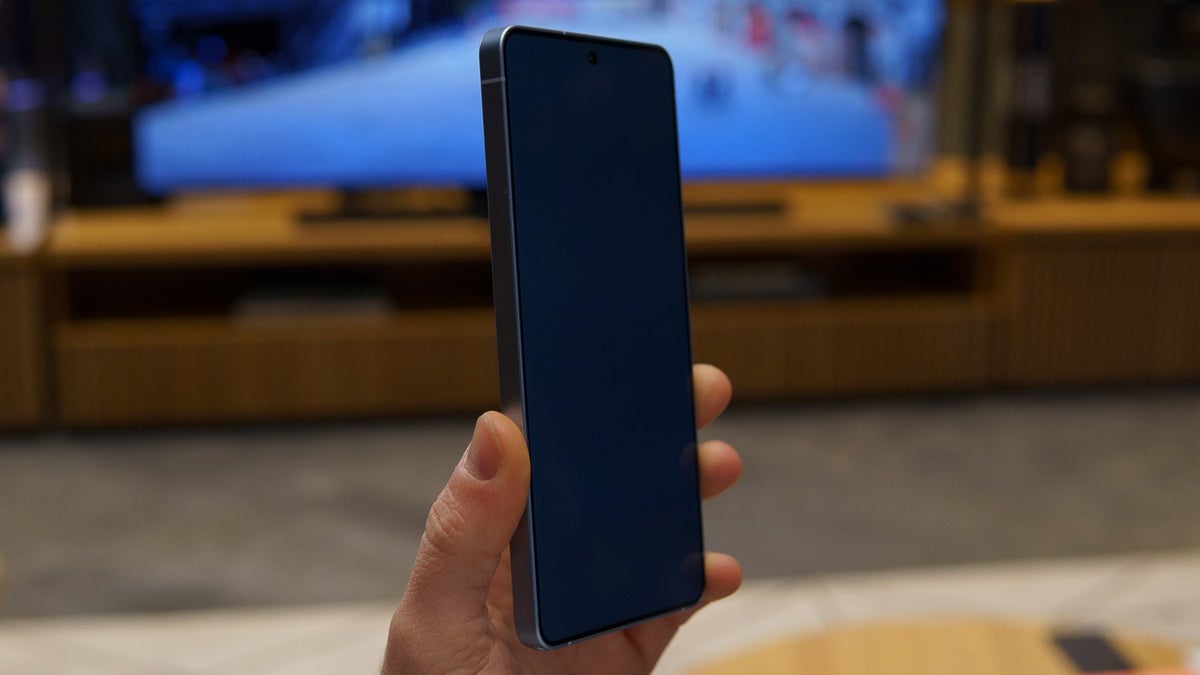
Samsung is showcasing an improved 6.8-inch Sensor OLED at Display Week 2026, now at 500 PPI, up 33% from last year's prototype. The display can measure health metrics such as heart rate and blood pressure by combining OLED elements with organic photodiodes, while also using Flex Magic Pixel privacy technology to obscure sensitive data at side angles. The announcement is innovative and strategically positive for Samsung Display, but near-term market impact appears limited until commercialization is clearer.
The strategically important takeaway is not the biometric feature itself, but that Samsung is pushing display modules toward becoming sensor-rich compute surfaces. If this class of panel migrates into premium phones, it raises the value of display IP while making the screen a harder-to-copy differentiator, which is supportive for AAPL’s and Samsung’s premium pricing power over a multi-year horizon. The second-order effect is that health data capture shifts from an app/OS layer into the hardware layer, increasing switching costs and creating a new data moat that could later feed subscriptions, insurance partnerships, or on-device AI health workflows.
Near term, the market is likely to overestimate adoption speed and underestimate integration friction. Putting optical sensing into the display competes for stack space, yields, power budget, and industrial design tolerances, so commercialization is more likely a 24-36 month story than a 6-12 month one. That means the first monetization may not be handset volume; it may instead show up in component mix, higher ASPs for flagship panels, and incremental attach opportunities for privacy/security features.
The contrarian angle is that this is less a smartwatch killer than a funnel extender. If phones become capable of basic vitals, wearables gain a clearer upgrade path to deeper longitudinal metrics, so the real winner could be the ecosystem that controls both device classes and health software. Privacy is the hidden catalyst: side-angle masking of medical data suggests regulators and enterprise buyers may accept the feature faster than consumer wellness use cases, but any concern over medical accuracy or biometric data handling could delay rollout and compress sentiment quickly.
AI-powered research, real-time alerts, and portfolio analytics for institutional investors.
Request DemoOverall Sentiment
mildly positive
Sentiment Score
0.20
Ticker Sentiment
