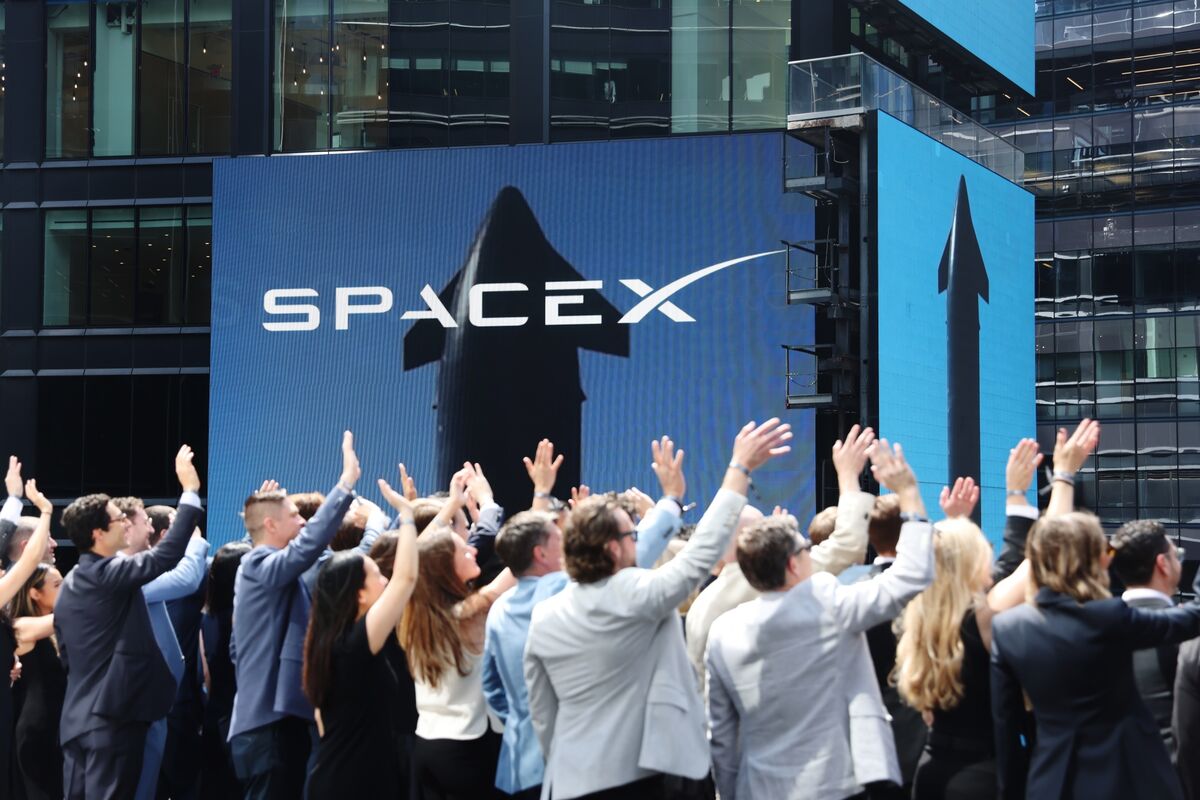
SpaceX has launched its first-ever U.S. dollar investment-grade bond offering, issuing senior unsecured notes to help fund its AI ambitions. The move signals access to cheaper, higher-quality debt financing and comes after its record $75 billion IPO. While the filing is preliminary and subject to market conditions, it points to a potentially large borrowing program ahead.
This is less a one-off financing event than a signal that private-market balance sheets are starting to behave like late-cycle public issuers: investment-grade debt is being used to pre-fund a much larger capex and strategic push, which tends to compress equity optionality only if execution is slow. The first-order winner is the credit complex itself: high-quality corporate supply from a marquee growth issuer should be absorbed easily, but it will also set a pricing anchor for other cash-rich private names that want to monetize “platform risk” without selling equity.
The second-order effect is on the AI supply chain. If this borrowing wave is real, the bottleneck shifts from capital availability to power, networking, inference hardware, launch infrastructure, and data-center-adjacent vendors that can convert new capex into near-term revenue. That favors picks-and-shovels names over the issuer itself, because the market usually discounts ambitious vertical integration but pays up for suppliers with recurring demand and better visibility.
The main risk is not financing cost; it is execution timing. If the capital raise is front-loaded but monetization lags 12-24 months, the company’s cost of capital rises via spread widening and equity-market skepticism, which can pressure any adjacent private-market valuation comps. A second tail risk is sentiment spillover: strong demand for one high-profile IG deal could tempt weaker sponsors to come anyway, creating a short-lived supply glut in investment-grade tech credit over the next few weeks.
Consensus may be underestimating how much this reinforces a bifurcation between “strategic AI infrastructure” and “AI narrative.” The market is likely to reward assets that provide direct picks-and-shovels exposure while becoming more skeptical of unprofitable software names that still need external funding. In that sense, the bond deal is mildly credit-positive for the issuer but potentially equity-negative for the broader long-duration growth basket if it normalizes heavier leverage as the preferred funding source.
AI-powered research, real-time alerts, and portfolio analytics for institutional investors.
Request DemoOverall Sentiment
mildly positive
Sentiment Score
0.35
