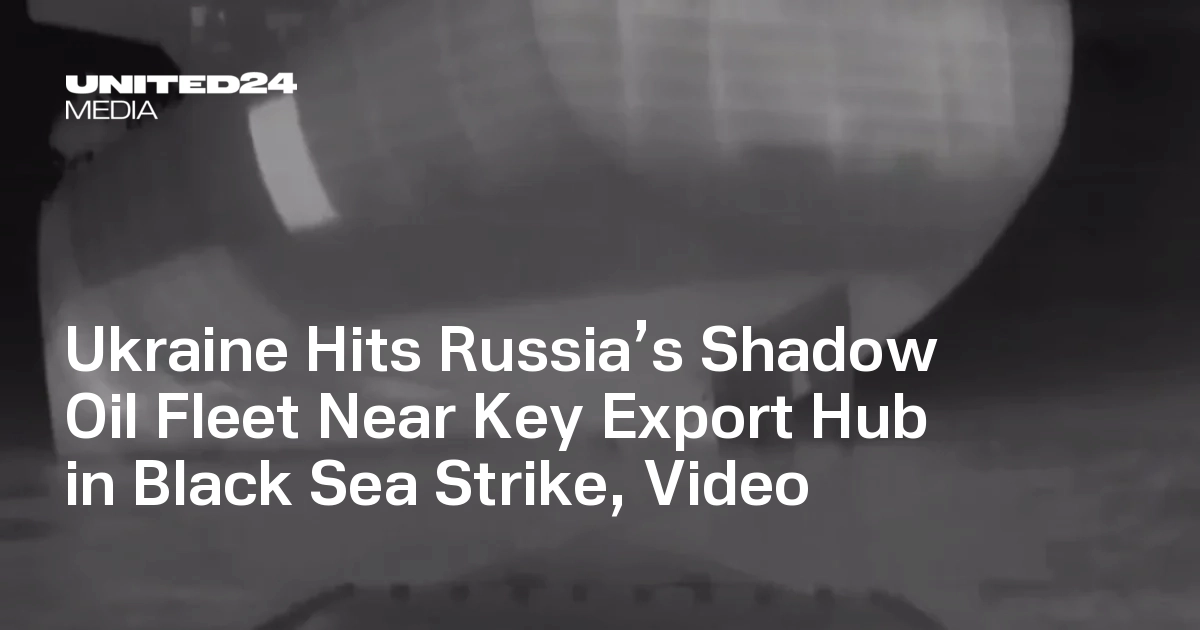
Ukraine struck two Russian oil tankers linked to the shadow fleet near the entrance to Novorossiysk, a key Black Sea oil export hub. The attacks target Russia’s maritime oil logistics and sanctions-evasion network, adding pressure to export flows and energy infrastructure. The article also cites earlier Ukrainian drone strikes on the sanctioned tanker MARQUISE and Russian vessels guarding the Kerch Bridge, underscoring escalating disruption in the Black Sea.
This is not just a supply-loss headline; it is a credibility shock to Russia’s maritime export system. The first-order volume impact may be limited if damaged cargoes are replaced over time, but the second-order effect is higher friction costs: more AIS spoofing risk, wider insurance premia, longer loading queues, and a bigger discount demanded by buyers who need certainty of delivery. That tends to matter most for the marginal barrel, where small changes in delivered cost can reroute flows and tighten prompt physical balances even if headline export numbers barely move.
The more important market implication is that Ukraine is attacking the logistics layer, not only production. If export hubs and escort vessels become persistent targets, Russia is forced to choose between concentration and dispersion: either keep using fewer visible routes and accept repeated disruption, or spread volumes across smaller, less efficient pathways that increase turnaround time and raise hidden capex/opex. In the medium term, that can compress netbacks for Russian crude and products without needing a large decline in upstream output.
For energy markets, the risk is a short-term Black Sea freight spike and wider regional pricing dislocations rather than a broad global shortage. Watch for knock-on effects in Mediterranean refiners, marine insurers, and shipping names with exposure to higher war-risk premiums; these tend to react before oil benchmarks do. The key catalyst window is days to weeks for shipping and insurance repricing, but months if attacks become routine and force Russia to restructure export routing.
The contrarian view is that the market may overestimate permanence. Russia has shown an ability to adapt by shifting logistics, using intermediaries, and absorbing higher transport friction, so unless the campaign scales materially, the effect could fade into a higher-cost equilibrium rather than a true export constraint. That means the best trades are likely in relative-value dislocations around freight, insurance, and regional crude differentials—not a wholesale directional bet on crude.
AI-powered research, real-time alerts, and portfolio analytics for institutional investors.
Request DemoOverall Sentiment
mildly negative
Sentiment Score
-0.35
