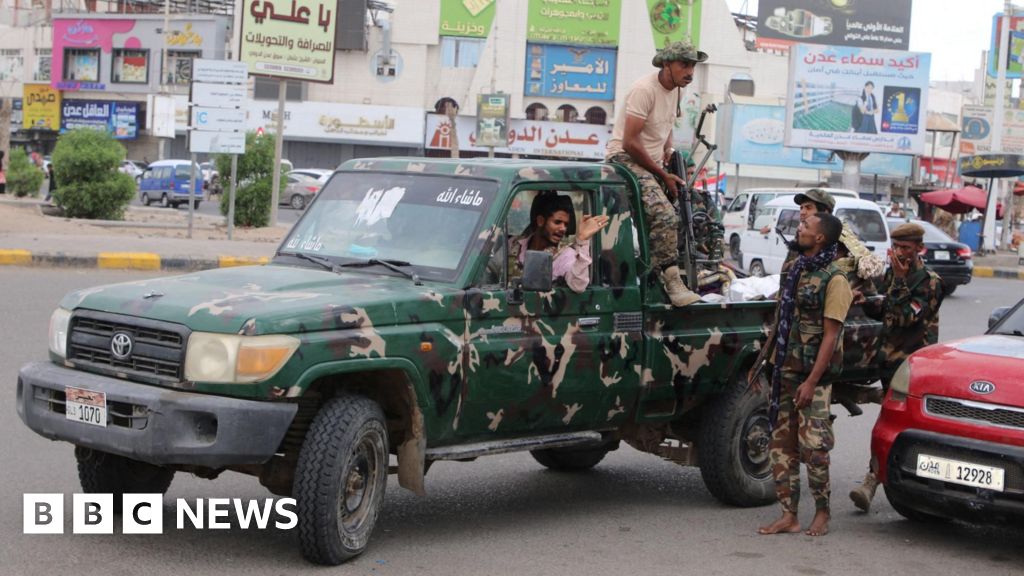
Saudi-led coalition officials allege UAE officers helped smuggle Southern Transitional Council leader Aidarous al‑Zubaidi out of Aden to Somaliland and then to Abu Dhabi via Mogadishu, after he was expelled from Yemen's presidential council and accused of treason. The coalition said it struck STC forces moved from Aden and targeted a shipment of weapons it blamed on the UAE, while the STC dismissed the strikes as unjustified; witnesses and officials say Saudi-backed forces have retaken Hadramawt, al‑Mahra and are asserting control over Aden. The episode deepens a rift between Saudi Arabia and the UAE, heightens instability on Saudi Arabia’s southern border and raises regional political and security risks that could affect investor risk premia in Gulf and emerging market exposures.
Market structure: The Saudi–UAE rift and renewed fighting in southern Yemen increase price power for energy producers and underwriting/defense service providers while pressuring Gulf-linked EM credit and regional logistics. A chokepoint risk to Bab el‑Mandeb (handles up to ~6% of seaborne crude) implies intermittent supply tightening and a 5–20% prospective swing in Brent if shipping is disrupted for weeks. FX and sovereign spreads of smaller Gulf-linked issuers should widen; Saudi/UAE core assets likely cushioned but regional EM/sovereign debt is sensitive.
Risk assessment: Tail risks include miscalculation between coalition partners or interdiction of commercial traffic causing rapid oil spikes (10–40%); assign a 10–25% probability over 3 months but very high impact. Immediate (days): risk-off, insurance premiums and freight rates jump; short-term (weeks–months): rerouting increases costs 10–30%; long-term (quarters+): realignment of Gulf military posture and OPEC policy could reset baseline prices. Hidden dependencies: P&I insurance and charter re-routing capacity, Somalia/Somaliland airspace investigations, and UAE/Saudi diplomatic actions.
Trade implications: Tactical winners are integrated majors (XOM, CVX) and large defense primes (RTX, LMT); tactical losers include Gulf EM credit and regional shipping names. Volatility trades: cheap asymmetric call exposure on oil (1–3 month call spreads) and selective longs in energy/defense for 3–12 months; reduce concentrated Gulf sovereign/debt exposure now.
Contrarian angles: Consensus underestimates insurance/logistics second‑order impacts and overestimates duration of price moves—historical Red Sea shocks tended to mean‑revert in 4–8 weeks absent production cuts. If Brent >+15% in 2 weeks, volatility will likely overshoot and create an opportunity to sell covered calls or short central-dated oil volatility; conversely, a rapid diplomatic de‑escalation could remove the premium quickly, so size trades accordingly.
AI-powered research, real-time alerts, and portfolio analytics for institutional investors.
Request DemoOverall Sentiment
moderately negative
Sentiment Score
-0.50
