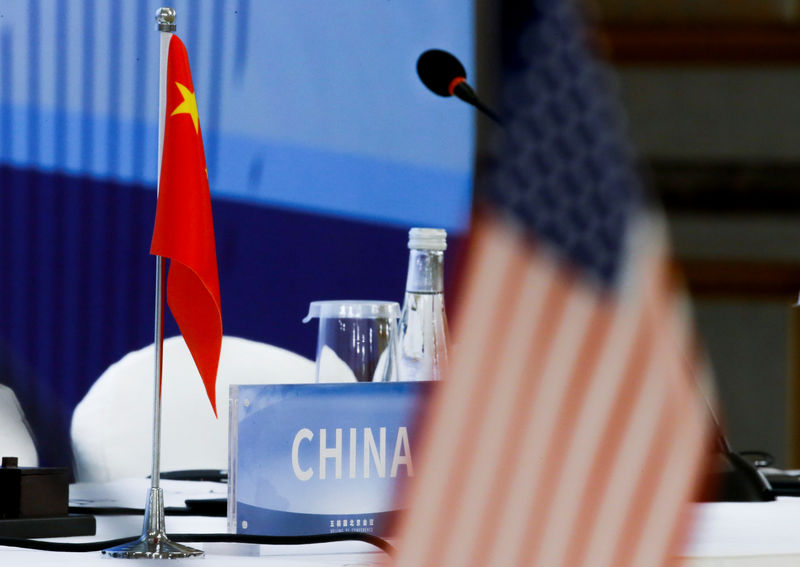
Shanghai Composite rose 0.7% to its highest level since July 2015 and the CSI 300 gained 1% as investors bought technology stocks ahead of Trump-Xi talks. Nvidia shares and Chinese AI stocks were supported after Trump confirmed Jensen Huang will join the Beijing visit. The market is pricing in a more constructive backdrop for trade and AI security discussions, while reducing concern over the Iran war and inflation.
This is less about one CEO visit and more about a temporary reduction in policy uncertainty around the AI capex stack. When geopolitics shifts from “export-control escalation” to “managed competition,” the first derivative beneficiaries are the hardware enablers, but the second derivative winner is likely the China-facing AI ecosystem: local model trainers, cloud inference demand, and domestic semiconductor substitution efforts. The market is also implicitly pricing a lower probability of abrupt incremental restrictions on advanced GPUs in the next 1-2 quarters, which matters because AI spend is highly timing-sensitive and can re-rate quickly when procurement visibility improves.
The bigger trade is that any détente narrative may be fragile and asymmetric. NVIDIA can rerate on better access expectations, but the downside from a reversal is larger because China revenue visibility is already politically discounted; if talks disappoint, the stock can give back the “geopolitics premium” fast even if fundamental demand remains intact. Meanwhile, Chinese AI names may pop on sentiment, but the structural constraint is still access to leading-edge compute, so the rally is more likely to be a trading event unless it is accompanied by concrete relaxation in export or licensing rules.
What the consensus may be missing is the supply-chain spillover: even a modest thaw would likely benefit advanced packaging, memory, networking, and foundry-adjacent names before it meaningfully changes end-demand. On the other hand, a friendlier tone can also embolden Washington to extract concessions elsewhere, making this an event-risk setup rather than a clean secular shift. The right framing is to own the beneficiaries of reduced policy uncertainty, but keep duration short because the market is likely overconfident in a durable truce from a single summit.
AI-powered research, real-time alerts, and portfolio analytics for institutional investors.
Request DemoOverall Sentiment
mildly positive
Sentiment Score
0.20
Ticker Sentiment
