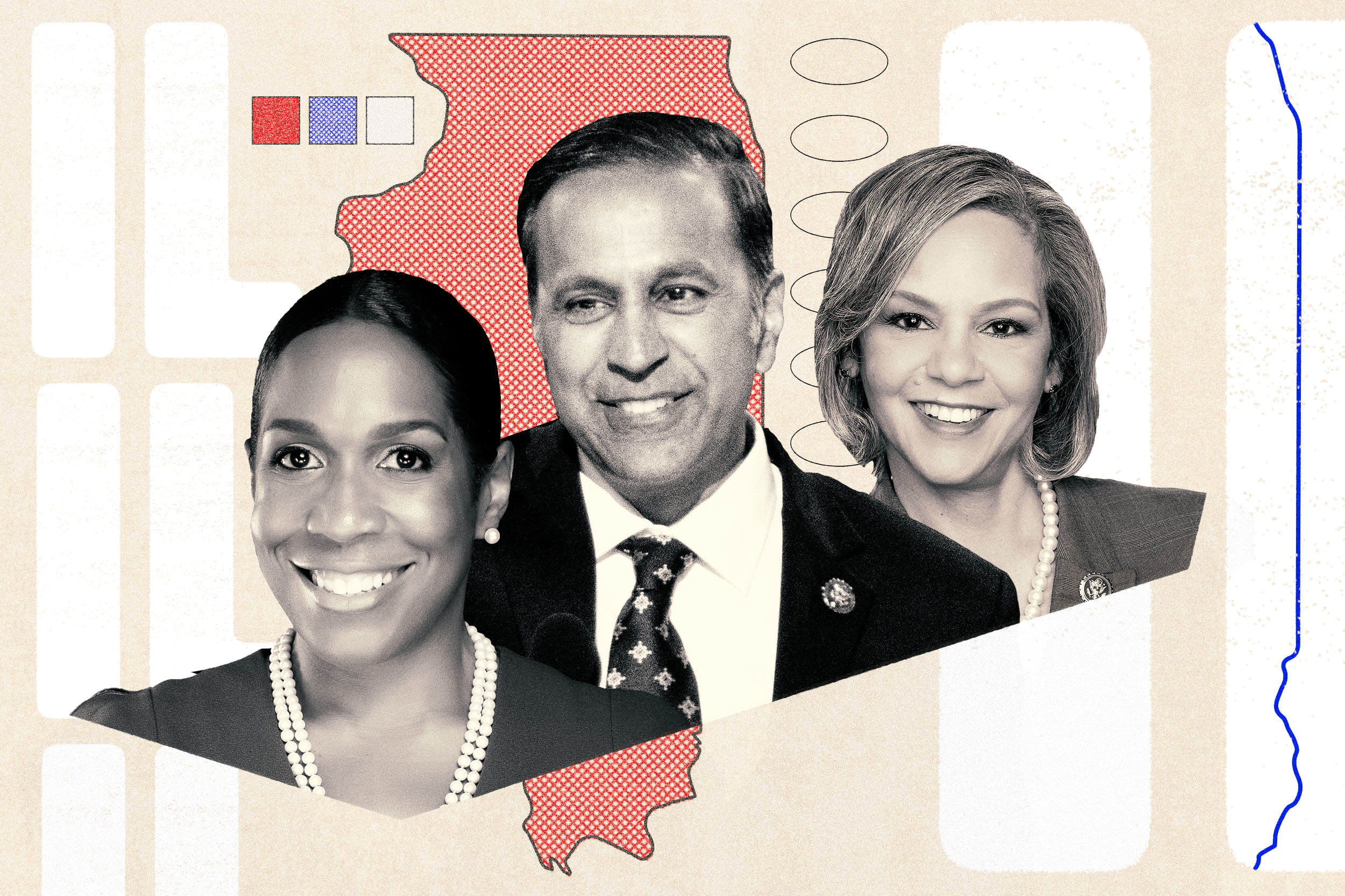
Krishnamoorthi has amassed a $30 million war chest and currently leads most public polls, while Gov. JB Pritzker has funneled at least $5 million into a PAC backing Lt. Gov. Juliana Stratton; the Democratic primary winner is a near-certain pick for Sen. Durbin’s seat. The race has become acrimonious, featuring crypto-backed attack ads and detailed scrutiny of campaign finances, heightening intra-party tensions between the Congressional Black Caucus and establishment allies. For investors, this is a state political risk story with limited near-term market impact but potential relevance for policy signaling and future statewide political alignment.
This Illinois primary is amplifying two funding narratives that matter to markets: heavy, concentrated spending from wealthy state actors and opaque crypto-backed dollars. In the near term (days–weeks) expect outsized local TV and digital ad buying to elevate revenue and margin for broadcasters with significant Illinois footprints relative to national peers, while spiking short-term CPMs across political-heavy local markets.
A mid-term (3–12 month) second-order effect is regulatory crossfire: high-profile crypto political spending invites targeted state and federal inquiries that raise compliance costs for exchanges and custodians, and could accelerate rulemaking or enforcement actions tied to campaign-finance transparency. That path increases operating risk for public crypto platforms, but also creates durable demand for AML/KYC and campaign-accounting services.
Longer horizon (12–36 months) this intra-party fight reshapes donor relationships — donors, PACs and governors are reallocating capital into a narrower set of national vehicles, which can compress fundraising for mid-tier state-level races and benefit firms that monetize recurring political ad cycles (broadcasters, programmatic platforms) while reducing demand elasticity for boutique political consultancies. The market consensus underprices how quickly regulatory attention can translate into quantifiable revenue hits for crypto platforms (20–40% downside in transactional volume in worst-case enforcement scenarios) versus the relatively small but immediate windfall for local media during concentrated ad pushes.
AI-powered research, real-time alerts, and portfolio analytics for institutional investors.
Request DemoOverall Sentiment
mildly negative
Sentiment Score
-0.20
