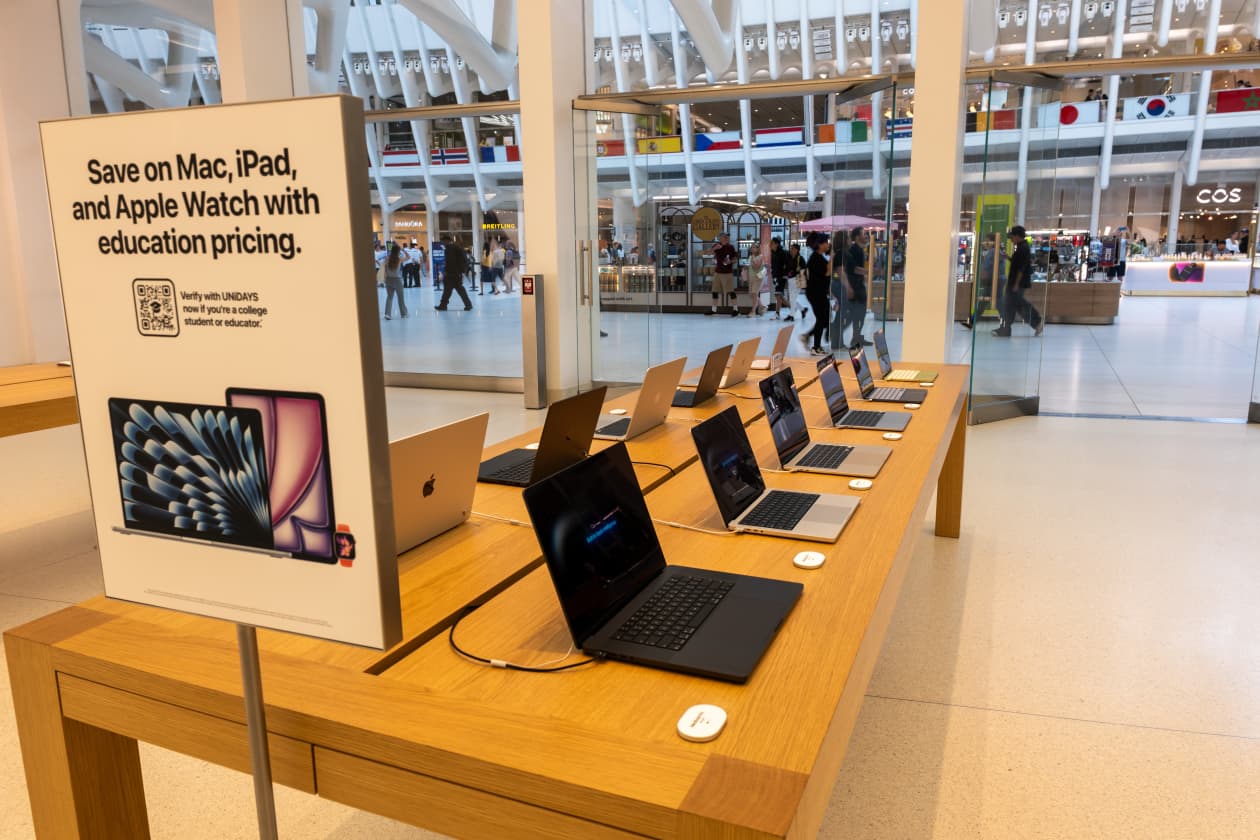
Apple is reportedly seeking U.S. approval to use ChangXin Memory Technologies chips as a lower-cost alternative amid a memory crunch that has already forced price increases on MacBooks and iPads. The article says Micron, SK Hynix and Samsung still dominate AI-related memory applications, implying Apple's China pivot may not fully alleviate the broader chip shortage. The key issue is supply-chain and export-control risk rather than an immediate earnings event.
This is less about Apple finding a low-cost supplier and more about the supply chain becoming a geopolitical options market. If Apple gets a waiver, the immediate winner is margin protection on legacy memory content, but the medium-term loser is Apple’s bargaining power: any approval implicitly validates a China-onshore memory path that could force its Korean suppliers to reprice risk elsewhere in the stack. That matters because AI memory demand is the tightest part of the cycle, so even a partial shift into China won’t meaningfully relieve the constraint for high-bandwidth and advanced server-grade memory.
The second-order effect is on capex allocation: if ChangXin gains share in consumer devices, Micron/Samsung/SK Hynix can keep higher-end capacity dedicated to AI, which is actually bullish for their pricing power over the next 2-4 quarters. In other words, Apple may accidentally accelerate bifurcation in memory markets: commodity/mobile memory gets cheaper over time, while AI-grade memory stays scarce and structurally expensive. That should preserve gross margin tailwinds for the names with the best exposure to datacenter demand rather than consumer electronics.
For Apple, the near-term catalyst is regulatory approval, but the risk is that the process becomes a multi-month political negotiation, not a procurement decision. The tail risk is a delayed or conditional waiver that forces Apple to keep paying up for non-China supply while the market had already priced in relief. Over 6-12 months, the bigger issue is strategic: if Apple leans into China memory to save basis points now, it increases future export-control and reputational risk on a much larger installed base.
The contrarian view is that the market may be underestimating how little this changes the AI memory crunch. The headline reads like supply diversification, but the real constraint is not total bits; it is qualified bits for AI workloads. If anything, this supports the idea that memory is not a monolithic trade: consumer-device memory normalization can coexist with continued upside in AI memory pricing.
AI-powered research, real-time alerts, and portfolio analytics for institutional investors.
Request DemoOverall Sentiment
mildly negative
Sentiment Score
-0.25
Ticker Sentiment
