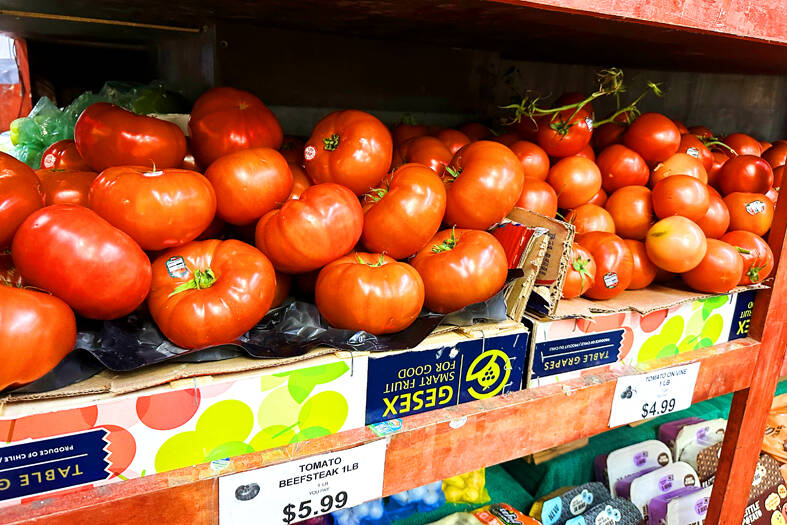
Tomato prices are up about 40% year over year, far outpacing other groceries, with US tariff collections on tomatoes surging from $16,424 in 2024 to about $4.6 million. The article links the spike to the end of duty-free Mexican imports, a 17% tariff on arrivals, higher shipping costs from the Iran war, and weather-related supply pressures. The broader piece also notes Starlux’s international expansion plans, ASML’s Taiwan hiring increase, and Nvidia’s Taiwan HQ event, but the main market-relevant message is renewed inflation pressure from tariffs and supply disruptions.
The inflation impulse here is less about tomatoes than about policy transmission: tariffs and logistics shocks are turning a perishable commodity into a high-frequency signal that consumers feel immediately. That matters because food inflation bleeds into expectations faster than other categories, and once households start seeing “small basket” sticker shock, it raises resistance to discretionary spending even if broader CPI stabilizes. The second-order effect is margin compression in food service and convenience retail, where pricing power is weakest and menu repricing lags input costs by weeks to months.
For equities, the immediate losers are operators with tomato-heavy menus and low ticket sizes; they absorb cost inflation before they can re-engineer sourcing or reformulate recipes. The more interesting knock-on is that higher produce costs can accelerate demand for private-label, frozen, or shelf-stable substitutes, benefiting grocers and food distributors with better procurement leverage while pressuring restaurants reliant on fresh ingredients. If elevated input inflation persists into the next harvest window, expect a widening performance gap between chains with dynamic menu pricing and those dependent on traffic growth rather than mix.
On the semiconductor side, the article’s Taiwan capex signals are directionally supportive but for different reasons. ASML’s headcount expansion points to a customer-support and field-service bottleneck, implying more installed base complexity and potentially stronger service revenue durability; NVDA’s Taiwan HQ push reinforces ecosystem entrenchment with TSM as the indispensable manufacturing partner. The risk is that geopolitical noise around Taiwan and broader trade friction could increase localization requirements and duplicate supply-chain costs, which is supportive for equipment/service vendors but creates valuation risk for companies exposed to concentrated manufacturing geographies.
Contrarian view: the tomato story is probably near peak visibility, not peak inflation. Once domestic harvest ramps, the price spike should mean-revert faster than headline CPI narratives suggest, and the market may over-discount a lasting consumer squeeze. That creates a short-lived setup in food-service names if investors extrapolate peak input costs too far into 2H, while the more durable trade is in firms with structural exposure to Taiwan capex and after-sales support rather than one-off shipment growth.
AI-powered research, real-time alerts, and portfolio analytics for institutional investors.
Request DemoOverall Sentiment
mildly negative
Sentiment Score
-0.35
Ticker Sentiment
