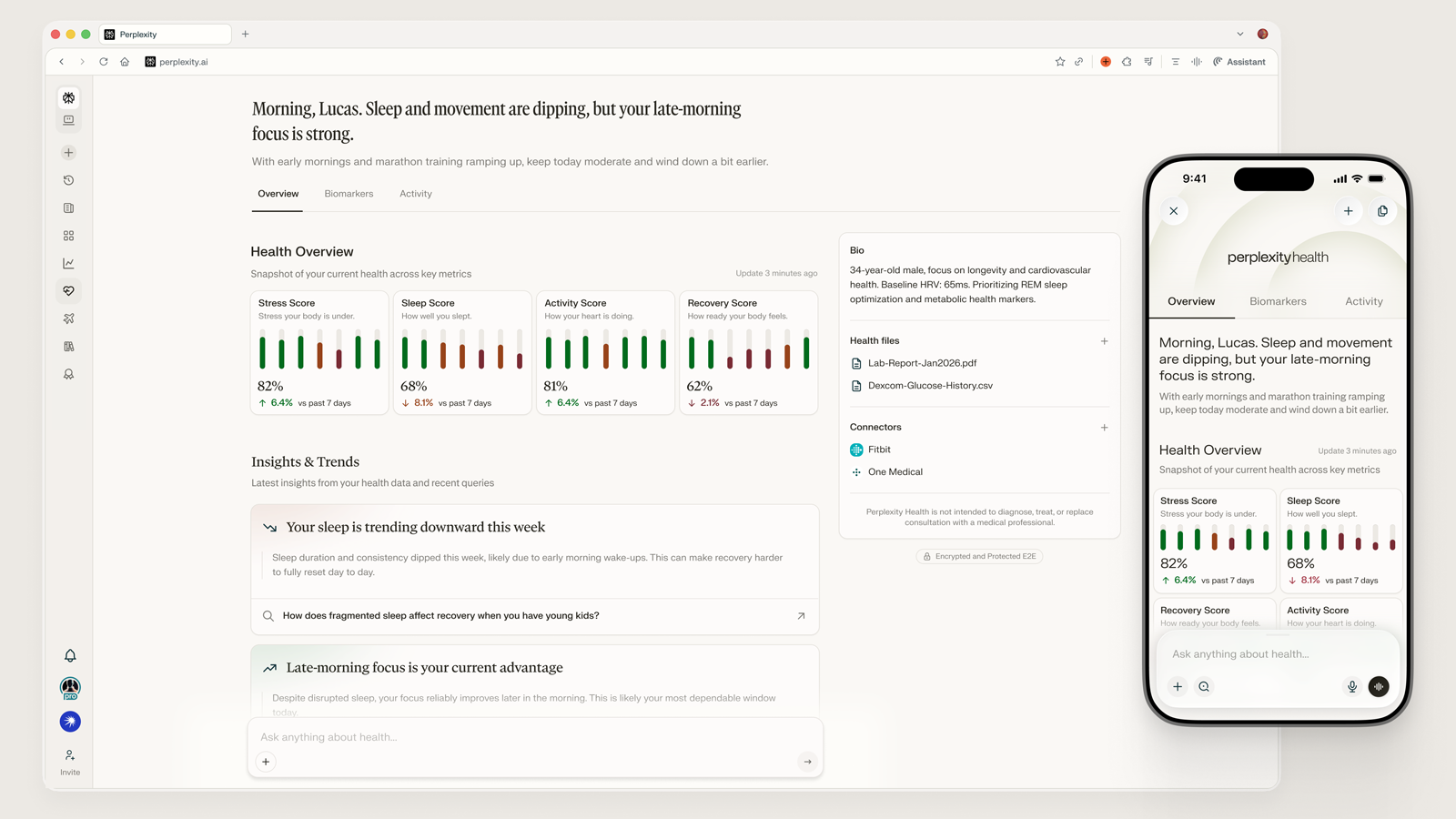
Perplexity launched a consumer-focused AI health tool on March 19, 2026 that provides personalized responses to health questions by ingesting users' medical records and other data. The product may accelerate consumer adoption of AI-driven health assistants and benefit AI/healthcare service providers, but it raises data privacy and regulatory risk and is unlikely to move markets in the near term.
The immediate commercial battleground will not be between consumer apps but between platform owners that control clinical data, identity and reimbursement rails. Whoever owns the EHR-to-consumer integration and the inference layer (cloud or on-device) captures recurring SaaS and inference-margin revenue; expect the app maker to be a distribution partner or acquisition target rather than the long-term cash generator. Adoption will therefore follow provider procurement cycles and payer incentives, not consumer downloads — meaningful revenue inflection likely takes 6–24 months as vendors close pilot-to-production deals.
Regulatory and liability vectors are the principal tail risks. A single high-profile adverse outcome or class-action over misdiagnosis could trigger rapid enforcement (HHS/FTC/FDA/State AG) and force product pullback or reclassification as a regulated medical device; that reversal can occur within weeks of an adverse event but its full market effect will play out over 6–18 months. Data-privacy breaches create a separate fast-acting downside: a large breach would both reduce consumer willingness to share records and materially raise customer acquisition costs for consumer-facing entrants.
Second-order supply-chain winners are security and cloud incumbents, and EHR vendors with API monetization pathways: expect 12–36 month uplift in security software spend from providers and a separate revenue pool for EHR/cloud hosting and inference orchestration. Conversely, stand-alone consumer health apps without deep provider integration face compression of unit economics as CAC rises and liability insurers price exposure into partner contracts. The consensus focus on front-end UX underestimates the economic gravity of back-end data rights, billing workflows and clinical governance; outcomes-driven buyers will pay premiums for integrated, auditable stacks.
AI-powered research, real-time alerts, and portfolio analytics for institutional investors.
Request DemoOverall Sentiment
neutral
Sentiment Score
0.00
