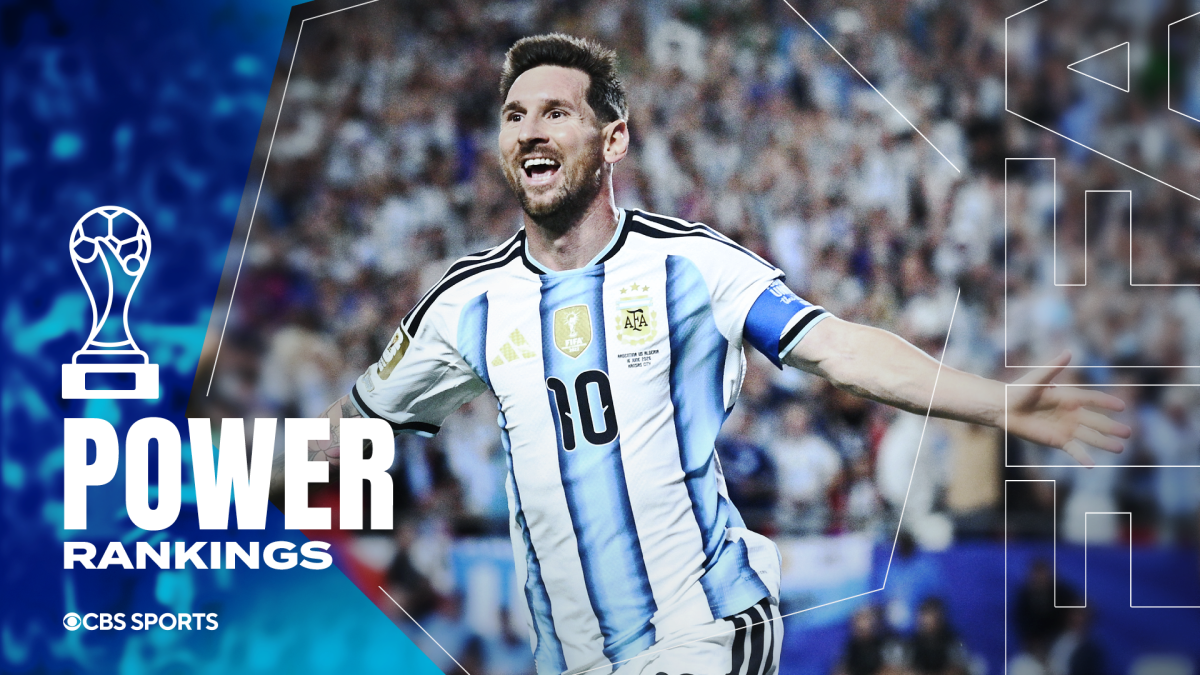
The article is a World Cup power-rankings update after the first round of matches, highlighting early surprises such as Spain's 0-0 draw with Cabo Verde, Portugal's draw with DR Congo, and strong starts from France, Argentina, the United States, and others. It is primarily sports commentary rather than financial news, with no direct market-moving corporate or macroeconomic implications. The piece is sentiment-neutral overall, reflecting tournament volatility and shifting expectations rather than economic or investment developments.
The first-order market read is not about the tournament itself; it is about how quickly the narrative is being re-priced around “elite” teams versus volatility in outcomes. In media terms, every shock result increases audience dispersion and should favor rights-holders, clip-driven digital publishers, and betting-adjacent engagement, while reducing the value of a single dominant storyline. The more the event looks unpredictable, the more second-screen consumption rises and the more inventory gets fragmented across highlights, recaps, and social video rather than linear broadcast alone.
The bigger second-order effect is on positioning. When a marquee team underperforms early, the consensus typically overreacts by de-risking exposure to their associated media ecosystem and sponsor basket; that tends to be a mistake because knockout-stage optionality remains high and the next match can restore the narrative quickly. Conversely, early overperformers often get pulled forward too aggressively in sentiment, but the commercial uplift usually lags performance by several weeks, so the trade is often in the refocus on teams with large global followings rather than the current darlings.
Travel and leisure beneficiaries should be viewed through the lens of host-city velocity, not just attendance. Upset-heavy tournaments are better for in-stadium concession mix, local mobility, and short-booking accommodation demand because fans extend stays when the bracket remains open and fewer matches become “dead rubbers.” The risk is weather, security, or transport disruption—those matter more than on-field results for daily spend capture and can reverse ancillary demand within 48-72 hours.
The contrarian view is that the market may be underestimating how quickly the story can re-concentrate if a few heavyweight teams win convincingly in game two. That would compress engagement into a smaller set of matches, benefiting the biggest rights holder and the most globally distributed sponsors, while weakening smaller-content monetization. In other words, volatility is good for now, but the trade only persists if the bracket remains messy through the end of group play.
AI-powered research, real-time alerts, and portfolio analytics for institutional investors.
Request DemoOverall Sentiment
neutral
Sentiment Score
0.15
