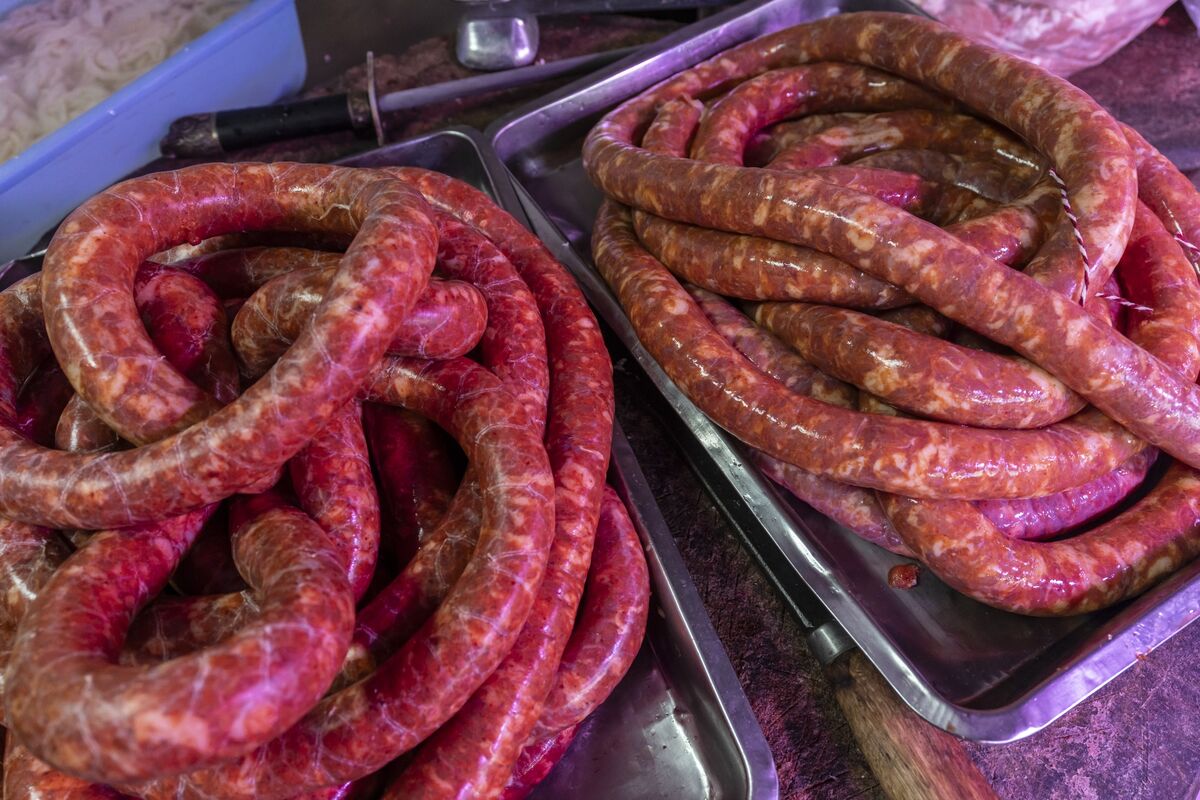
Wholesale pork prices in China have fallen 18% year-to-date in 2025 to their weakest level in over three years, despite government culling of the breeding herd and the usual seasonal demand uplift. The sustained retreat in China’s most-consumed protein signals fragile consumer confidence and softer domestic demand, pressuring producers and potentially dampening food-driven inflation, with wider implications for consumption-linked sectors and emerging-market economic momentum.
Market structure: An 18% YTD drop in wholesale pork (lowest in >3 years) directly compresses margins for pure-play hog producers and feed suppliers while acting as a net transfer of real purchasing power to Chinese consumers and food-service operators. Large integrated or diversified agribusinesses with processing/exports (e.g., COFCO-like franchises) gain relative pricing power as raw input costs fall; small/backyard producers and regional breeders are the first losers. Oversupply/weak demand is the dominant signal — seasonal demand and a breeding-herd cull have not offset consumption weakness, implying demand elasticity (income-sensitive) is currently low. Risk assessment: Tail risks include a fast policy response (subsidies, emergency purchases) that props prices, or a disease shock (ASF recurrence) that would spike prices; both are low-probability but high-impact for opposite directions. Time horizons: immediate (days) = price/volatility spikes around policy headlines; short-term (1–3 months) = earnings pressure for listed producers; medium (6–12 months) = potential supply-driven rebound if herd liquidation accelerates. Hidden dependencies: feed (soy/corn) cost trajectory and export flows (SE Asia) can materially change margins and FX paths; catalysts include Lunar New Year demand, MOA announcements in next 30–60 days, or atypical weather. Trade implications: Direct tactical trades are to short concentrated hog producers and buy Chinese duration/deflation-sensitive assets: expect a 10–30bp downward pressure on 10yr CGB yields over 1–3 months if CPI disinflates further. Options: implement 3-month put spreads on Muyuan (002714.SZ) / Wen’s (300498.SZ) to cap premium and express downside; consider long-tail 9–12 month call options on the same names as a contrarian asymmetric play. Sector rotation: reduce exposure to China animal-protein equities and increase allocation to Chinese sovereign bonds and food retailers/importers with diversified protein portfolios. Contrarian angles: Consensus discounts a protracted recovery; history (post-ASF 2019–21) shows deep price troughs can precede sharp 30–50% rebounds when small producers exit and restocking begins — expect a potential squeeze 6–12 months out. The market may be overpricing permanent demand destruction; structured trades that are short-duration bearish but leave optionality for a medium-term long (e.g., short 3mo puts + long 12mo calls) capture this. Unintended consequence: rapid policy support or targeted subsidies could flatten producer losses and force short-covering, so size and stop rules matter.
AI-powered research, real-time alerts, and portfolio analytics for institutional investors.
Request DemoOverall Sentiment
moderately negative
Sentiment Score
-0.42
