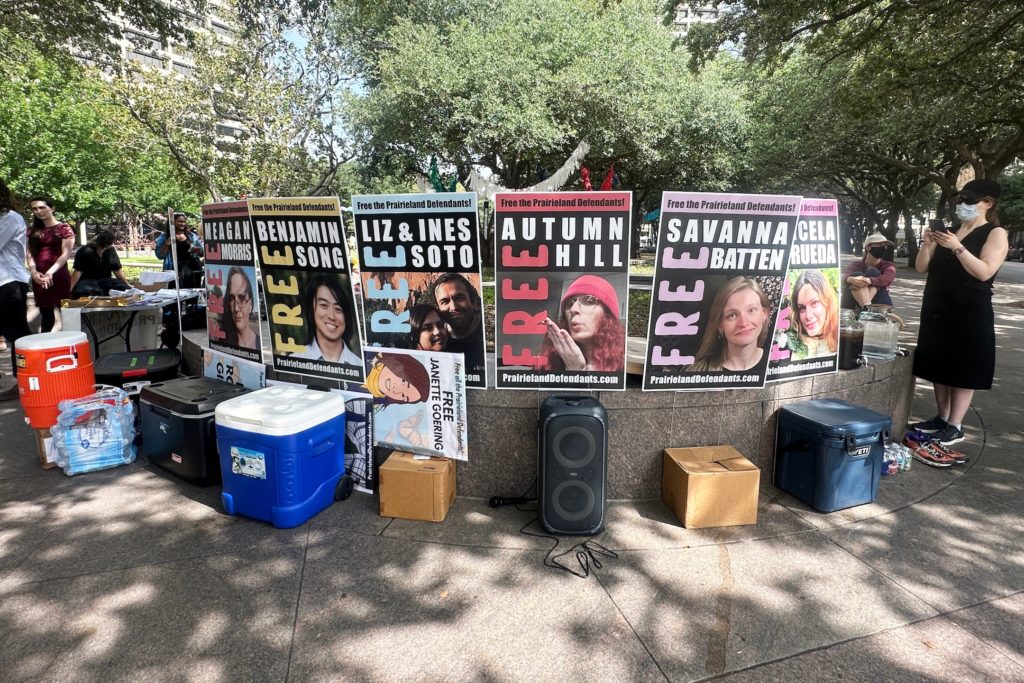
Nine protesters tied to an anti-ICE demonstration in Texas received prison sentences ranging from 30 to 100 years, with the longest far exceeding the 22-year maximum handed to Jan. 6 defendants. The case reflects an aggressive DOJ posture under the administration's expanded domestic-terror framing of Antifa, despite no federal domestic-terrorism charge existing in U.S. law. The article is primarily about civil liberties, protest policing, and sentencing, with limited direct market impact.
This is less a one-off sentencing story than a signal that the executive branch is trying to build a reusable domestic-security playbook. The market-relevant second-order effect is not direct sector exposure but a higher probability of sustained, election-cycle-driven volatility in protest activity, municipal security budgets, and federal enforcement intensity. That tends to benefit firms with recurring demand tied to surveillance, crowd control, detention logistics, and courthouse/security infrastructure, while increasing legal and reputational risk for contractors touched by immigration enforcement or public-order operations.
The bigger incremental risk is chilling effect, which can reduce the frequency and scale of demonstrations over the next 6-18 months, but it also raises the odds of more radicalized, decentralized protest behavior. That shifts spending away from visible compliance and toward less visible security, monitoring, and intelligence layers. If that pattern persists, procurement should lean toward software, analytics, body-worn devices, perimeter systems, and facility hardening rather than manpower-heavy legacy security models.
Consensus may underappreciate how quickly this can migrate from isolated prosecutions to budgeting and legislation. If the administration succeeds in normalizing the domestic-terror framing, the next catalyst is not a court ruling but agency guidance and state-federal task force expansion, which could hit within one or two budget cycles. The reversal case is judicial restraint or a high-profile appellate loss that reasserts First Amendment limits; absent that, the overhang on protest-related sectors should persist for months rather than days.
AI-powered research, real-time alerts, and portfolio analytics for institutional investors.
Overall Sentiment
moderately negative
Sentiment Score
-0.35
