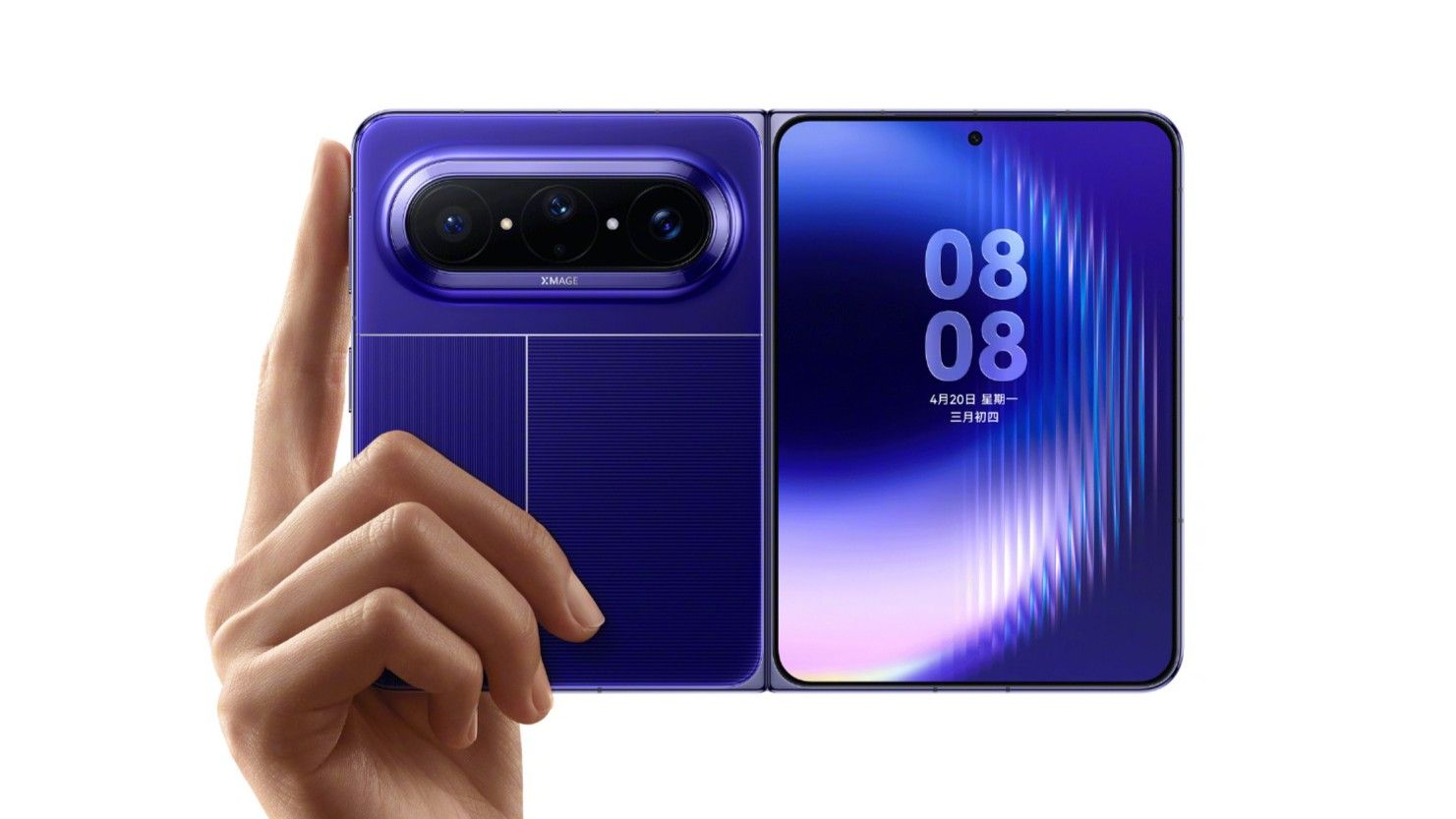
Huawei has officially launched the Pura X Max, a new horizontally wide foldable, with preorders live in China requiring a 1,000 yuan deposit and full payment starting April 20. The device appears positioned to challenge rumored wide foldables from Samsung and Apple, with expected displays of about 5.5 inches outer and 7.69 inches inner, though global availability and final pricing remain unconfirmed. The news is positive for Huawei’s hardware differentiation but likely limited in immediate market impact.
This is less about one handset and more about feature geometry becoming a new battleground in premium devices. A wider foldable format improves utility density for media, multitasking, and document work, which can pull the category from novelty toward “replace-a-small-tablet” behavior; that matters because the next incremental buyer is not a spec chaser but a productivity upgrader. If that framing sticks, the competitive response shifts from camera and hinge marketing to screen aspect ratio, app optimization, and OS-level continuity, which is where platform owners can defend share more effectively than OEMs. For AAPL, the read-through is negative at the margin because a credible wide-form factor pressures the iPhone Fold narrative before Apple can control the category definition. Apple typically wins by waiting until ergonomics and software are solved, but that same discipline becomes a liability if consumers start associating foldables with better closed-state usability over the next 6-12 months. The risk is not immediate unit share loss; it is that Apple’s eventual entry gets benchmarked against a more mature form factor, forcing a higher-spec launch that could compress gross margin or delay timing. GOOGL is slightly positive because broader aspect ratios raise the value of app scaling, multitasking, and cross-device continuity—areas where Android can differentiate if OEMs actually execute. Second-order, this could benefit display suppliers and hinge/mechanical component vendors before it helps handset OEMs, since early adopters will pay for novelty and ergonomics while platform monetization remains intact. The contrarian point: if this remains a China-only product with limited Google services, it may be a design signal rather than a demand signal, meaning the market could overestimate near-term competitive threat to Apple while underestimating the software opportunity for Android ecosystems. Catalyst horizon is months, not days: the launch itself can move sentiment, but real signal comes from preorder conversion, review consensus on one-handed usability, and whether Samsung’s rumored wide-fold response accelerates into a 2026 product cycle. Tail risk is that the category still caps out as a niche premium SKU, in which case this is more of a PR win than a share shift. The more important watch item is whether app developers and OEMs start optimizing for 16:10-style foldables, which would make this a platform shift rather than a single-device event.
AI-powered research, real-time alerts, and portfolio analytics for institutional investors.
Request DemoOverall Sentiment
mildly positive
Sentiment Score
0.15
Ticker Sentiment
