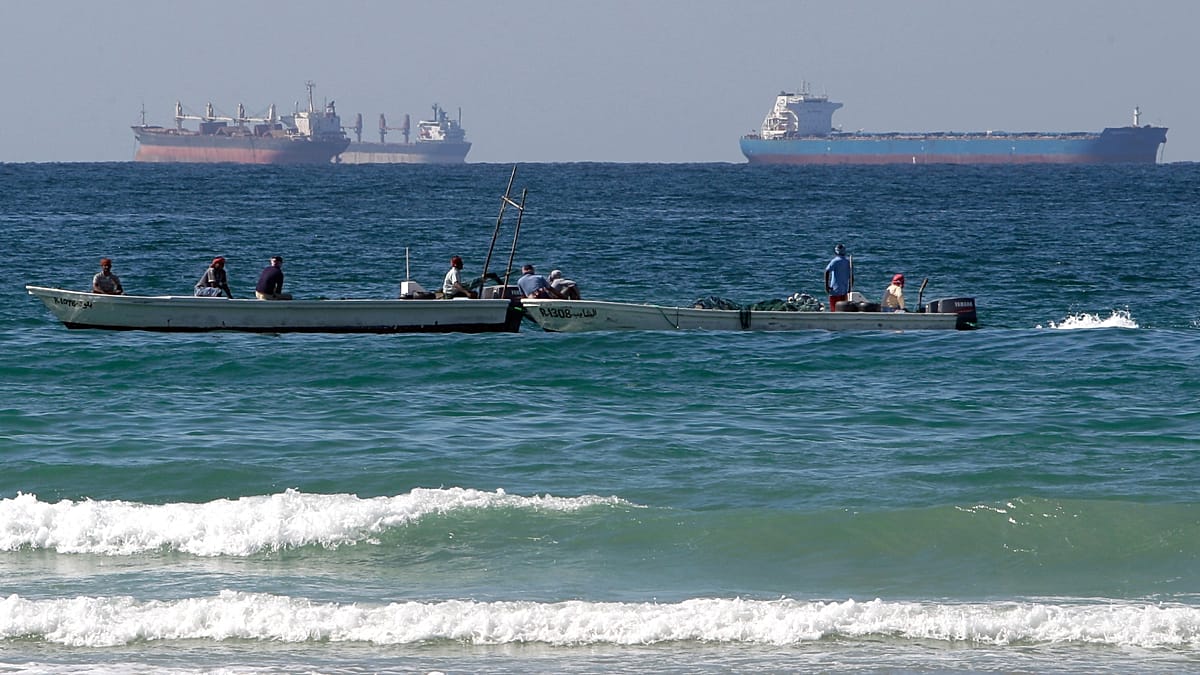
A Marshall Islands‑flagged oil tanker, MKD VYOM, was struck by a drone boat roughly 52 nm off Muscat, causing an explosion in the main engine room, a fire, and the death of one Indian crew member; 21 crew (16 Indian, 4 Bangladeshi, 1 Ukrainian) were evacuated to MV SAND. The attack — coming after a separate incident off Musandam and amid US‑Israeli strikes on Iran — has prompted major carriers (Maersk, Hapag‑Lloyd, CMA CGM, NYK, MOL, K Line) to suspend transits through the Strait of Hormuz, pushed war‑risk insurance and security costs higher, and led to a roughly 40–70% drop in traffic through the waterway with ~150 tankers at anchor. Traders drove Brent and US crude about 7% higher (Brent ~$78.4, US crude ~$72 at time of reporting), risking interruption of an estimated 20–30% of global seaborne oil trade and significant near‑term disruptions to LNG and supply chains until regional security stabilizes.
Market structure: Immediate winners are upstream oil producers (XOM, CVX) and tanker owners with spot exposure (FRO, EURN) as ~20–30% of seaborne oil trade is effectively paused and Brent jumped ~7% to $78. Shipping and logistics operators with transits through Hormuz (MAERSK/AMKBY, HLAGF) are losers from suspended voyages and rerouting costs; expect freight rate spikes and higher TCEs for open-hemisphere tankers while container carriers see margin compression and blanked sailings within days–weeks.
Risk assessment: Tail risks include a full international blockade or a US–Iran escalation pushing Brent >$100 within weeks (low-prob, high-impact) and protracted insurer pullbacks that could immobilize >50% of tanker capacity. Near-term (days) expect volatility and supply scares; medium (months) see elevated freight and insurance pricing; long-term (quarters) could re-shape routes, higher structural shipping costs and permanent insurance premia.
Trade implications: Tactical: buy physical/financial crude exposure (short-dated call spreads) and selective long tanker equities; hedge with short consumer discretionary/airlines (AAL, DAL) and FX exposure in oil-importing EMs. Use options to monetize a volatility spike while capping capital: 1–3 month call spreads on WTI and 3–6 month put protection on carriers/airlines.
Contrarian: Consensus overstates permanence — insurance markets historically normalize in 8–12 weeks after de-escalation and rerouting yields fade as spot freight normalizes. If geopolitics cools and Brent falls back below $75, energy equities in the oilfield services and refiners will lag and mean-revert; price triggers ($75–$85 Brent) should be used to scale positions rather than binary all-in moves.
AI-powered research, real-time alerts, and portfolio analytics for institutional investors.
Request TrialOverall Sentiment
strongly negative
Sentiment Score
-0.70
