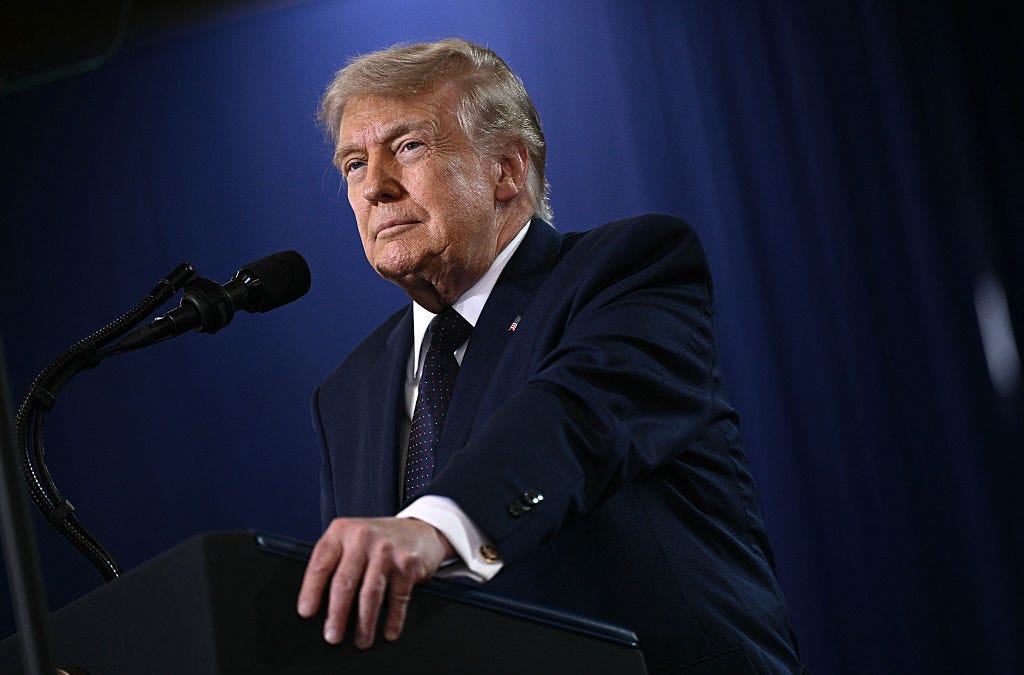
Trump says an agreement reopening the Strait of Hormuz is now "largely negotiated," easing immediate war-risk concerns but signaling no clean victory in the Iran conflict. The article argues the military campaign has already severely degraded Iran's nuclear weapons program, with expert David Albright saying Tehran's timeline to build a nuclear weapon has shifted from near-certainty within months to a far longer, less likely path. The political backlash from both Republican hawks and Democratic opponents underscores continued volatility around U.S.-Iran policy and regional security.
The market implication is less about a clean de-escalation and more about a narrower risk premium migrating from an open-ended conflict into a policy credibility trade. If a corridor/security arrangement is perceived as durable, the immediate loser is the classic geopolitical hedge basket: energy volatility, defense urgency trades, and select shipping names that were bid on tail-risk rather than on fundamentals. But the second-order winner is not obvious: lower odds of a sustained Hormuz shock improve forward visibility for import-intensive cyclicals, European industrials, and global airlines, while also easing pressure on inflation-sensitive duration and credit.
The bigger medium-term effect is on regime expectations. A negotiated outcome after military degradation can reinforce the idea that coercive pressure plus limited strikes can cap adversary capabilities without requiring full regime collapse, which should support a higher structural floor for sanction enforcement and intermittent containment actions over the next 3-12 months. That argues for a choppier rather than a one-way unwind in crude and defense, because each headline about compliance, inspections, or proxy reprisals can reprice risk faster than fundamentals can adjust.
The contrarian read is that the consensus is over-indexing on either "retreat" or "victory." Markets often misprice the value of reduced nuclear breakout risk and overpay for binary conflict outcomes; if breakout timelines were materially pushed out, the real asset-price impact is a compression of tail-risk skew, not a collapse in spot crude. The tail risk is a spoiler event: any attack on shipping, a failed verification mechanism, or domestic political backlash in Washington could reopen the premium within days, and defense/shipping volatility would respond faster than equities.
AI-powered research, real-time alerts, and portfolio analytics for institutional investors.
Request DemoOverall Sentiment
mildly negative
Sentiment Score
-0.15
