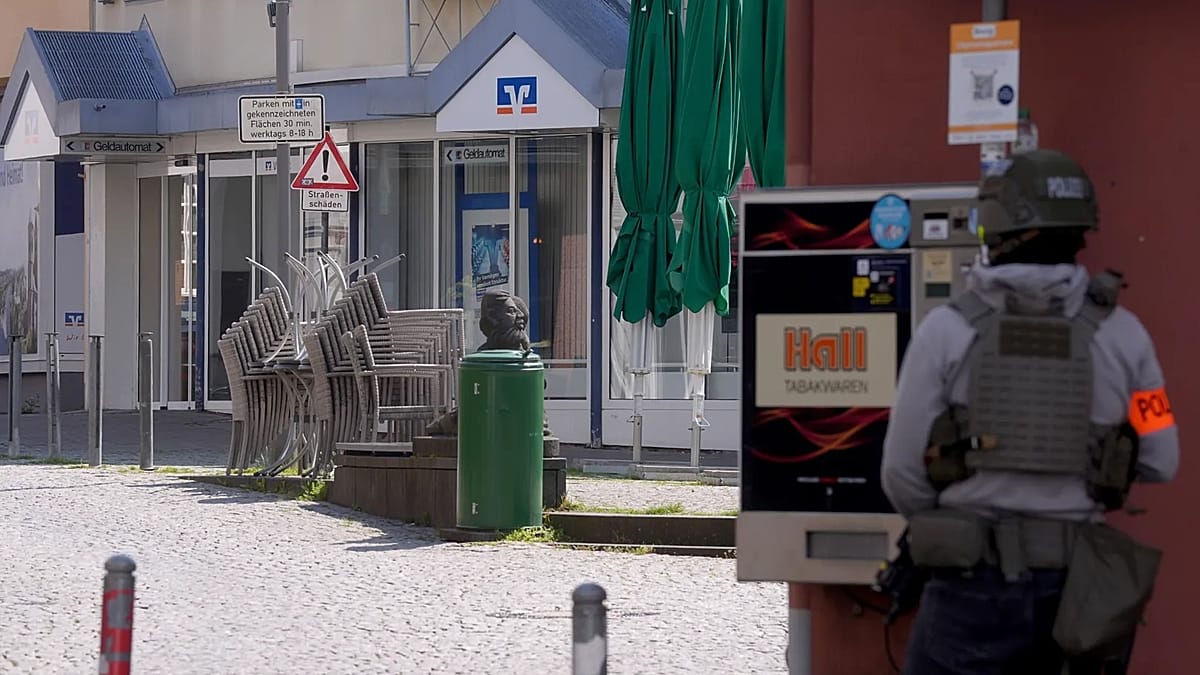
Armed bank robbers took multiple hostages at a bank in Sinzig, western Germany, with police saying the driver of a cash transport vehicle was among those held. Officers surrounded the bank and said there was currently no danger outside the cordoned-off area, but details were being withheld for tactical reasons. The incident is negative for local banking/security sentiment but is unlikely to have broad market impact.
This is not an asset-specific event, but it is a high-signal reminder that European banks sit on a latent operational/security tail risk that markets usually treat as immaterial until a single event forces a rethink. The direct economic loss from one robbery is negligible, yet the second-order effect is higher security spend, slower branch throughput, and an incremental “friction tax” on cash-handling, armored transport, and branch footprints across mid-tier German lenders and cash logistics providers.
The more interesting channel is reputational and regulatory. A prolonged hostage incident tied to a bank vault or cash transfer process can trigger questions about physical risk controls, especially for institutions still dependent on branch networks in smaller towns. That tends to accelerate a pre-existing structural shift toward digitization and branch rationalization, which is negative for high-cost retail networks and neutral-to-positive for large banks and payment rails that benefit from reduced cash usage over a 6-24 month horizon.
The tail risk is not the robbery itself; it is copycat behavior and policy reaction. If the event drags on or turns violent, local insurers can reprice security coverage, and banks may be forced to upgrade armored-car protocols and vault access standards quickly, compressing margins in already low-return retail banking. The market is likely to underappreciate this because the headline looks local and transient, but the cumulative effect is a modestly higher cost base for cash-intensive financial infrastructure.
Contrarian read: the knee-jerk risk-off response is probably overstated unless there is broader evidence of rising physical security incidents across the region. For public markets, this is more a micro-cost inflation story than a systemic banking stress signal; the better trade is to fade any indiscriminate selloff in German financials while leaning into winners from cash displacement and digital payments adoption.
AI-powered research, real-time alerts, and portfolio analytics for institutional investors.
Request DemoOverall Sentiment
strongly negative
Sentiment Score
-0.55
