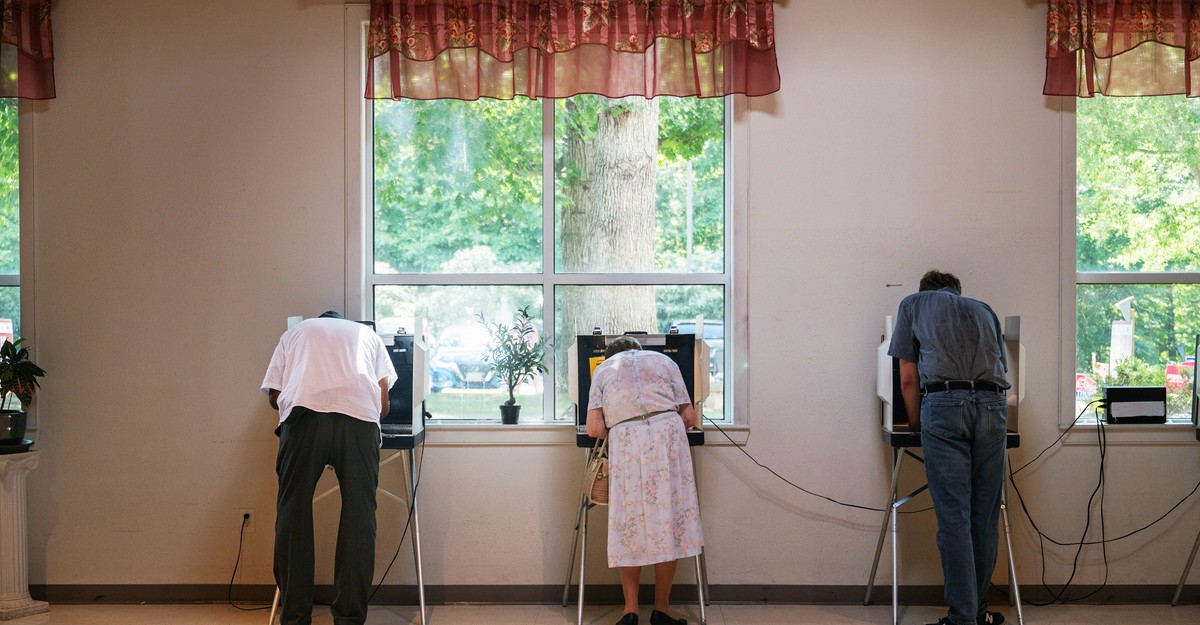
Virginia voters approved a new House map by about 3 points, potentially giving Democrats 4 additional seats currently held by Republicans. Combined with California’s earlier referendum, Democrats may have secured roughly 9 extra seats through redistricting, narrowing the GOP’s earlier advantage. The article highlights an ongoing partisan redistricting battle that could still shift again in Florida and through a possible Supreme Court ruling on the Voting Rights Act.
The immediate market read-through is not partisan theater but a shift in House-seat distribution risk that matters for the 2026 policy path. A materially higher probability of a Democratic House raises the odds of legislative gridlock on tariffs, industrial policy, and executive-branch overreach, which is modestly positive for long-duration assets that are sensitive to policy uncertainty and negative for sectors priced for continued deregulatory momentum. The first-order trade is not a rotation into “Democrat winners,” but a compression of the odds that the current administration can convert its agenda into durable statutory change.
The more interesting second-order effect is timing. The gerrymandering battle is front-loading political spend into 2025–26, which should crowd out some issue-based advertising and depress local fundraising efficiency in the next cycle. That is usually a tailwind for incumbents in low-salience districts, but if the referendum trend persists it becomes an amplifier for nationalization: candidates run against the White House rather than local conditions, increasing volatility in swing-seat polling and making names tied to consumer sentiment, healthcare access, and ACA subsidies more sensitive to headline risk.
The main reversal catalyst is legal, not electoral. A Supreme Court narrowing of Voting Rights Act constraints would reopen Republican upside in the South faster than Democrats can replicate ballot-measure gains, with the highest leverage in 2028 rather than 2026 because state map changes compound over time. That means the current Democratic advantage is likely real but temporary, and the market should treat it as a two-cycle rather than structural regime change.
Contrarian view: the consensus is likely overstating the durability of either side’s lead because both parties are now incentivized to escalate, which lowers the informational value of each local win. The bigger risk is not which party draws more seats today, but whether voter fatigue and donor exhaustion reduce marginal turnout in the very suburban districts that decide control; that argues for buying volatility rather than a directional political bet.
AI-powered research, real-time alerts, and portfolio analytics for institutional investors.
Request TrialOverall Sentiment
neutral
Sentiment Score
0.05
