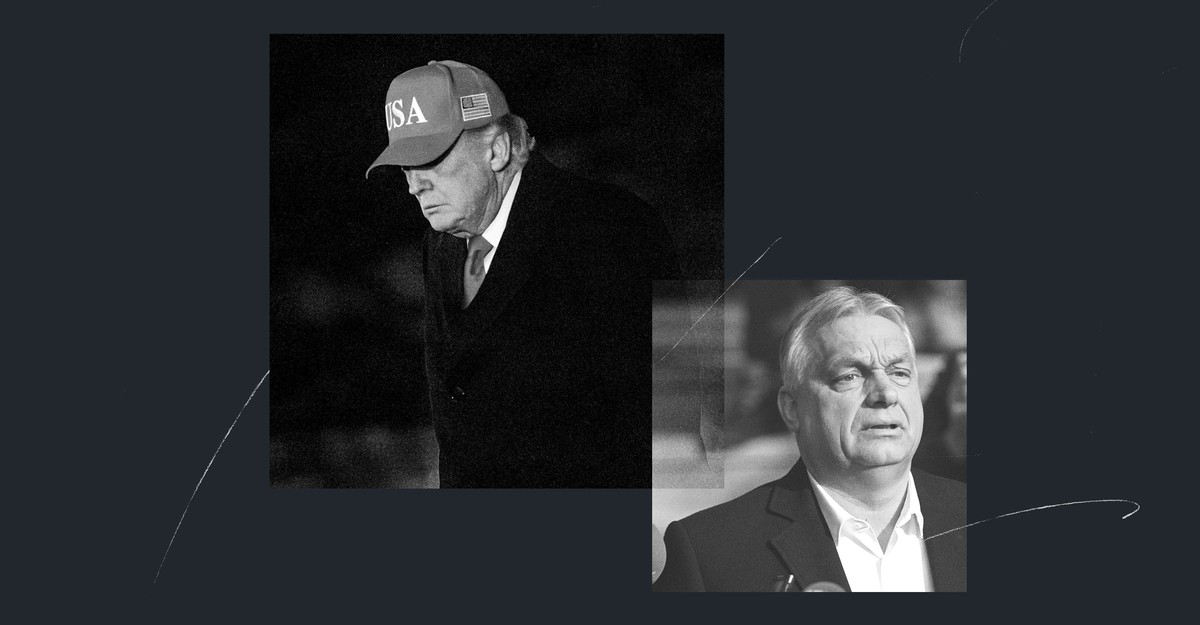
Viktor Orbán lost Hungary’s election after an unusually visible intervention by Donald Trump, J.D. Vance, and other U.S. officials, including endorsements, campaign appearances, and implied economic support. The result undermines the MAGA-aligned Washington-Budapest nexus and could trigger a broader unwind of pro-Orbán think-tank and policy networks. The article frames the outcome as a setback for far-right international coordination rather than a direct market event.
The immediate market impact is not in Hungarian equities per se, but in the tradable signal for European far-right cohesion and U.S. foreign-policy credibility. A defeated pro-Trump ally weakens the narrative that MAGA-style nationalism is an exportable governing template, which matters because that brand has been used to legitimize policy spillovers into Europe, migration politics, and defense posture. The second-order effect is a modest relief bid for the euro and European risk assets if investors had been discounting a broader illiberal bloc gaining institutional strength ahead of the 2025-26 election cycle. The bigger consequence is for the ecosystem around policy-adjacent think tanks, consulting shops, and quasi-public institutions that monetize transatlantic ideological alignment. If funding channels are investigated or curtailed, the losers are not just local political operators; they are Washington-based influence networks that have benefited from Budapest as a low-cost proof-of-concept market. That creates a multi-quarter earnings headwind for firms exposed to geopolitical advisory, advocacy, and government-relations spend tied to populist governments. On timing, the first-order reversal could be fast in sentiment terms, but the structural risk is longer-dated: any perceived failure of U.S.-backed intervention reduces the probability that other European contests become a frictionless MAGA template. The contrarian point is that this may be overread as a durable ideological defeat; populist politics tends to rebase quickly after a setback, and the transaction risk is that investors fade the theme just as a new, more competent local operator rebrands it. In other words, the style trade is impaired, but the underlying voter demand is not necessarily broken.
AI-powered research, real-time alerts, and portfolio analytics for institutional investors.
Overall Sentiment
moderately negative
Sentiment Score
-0.40
