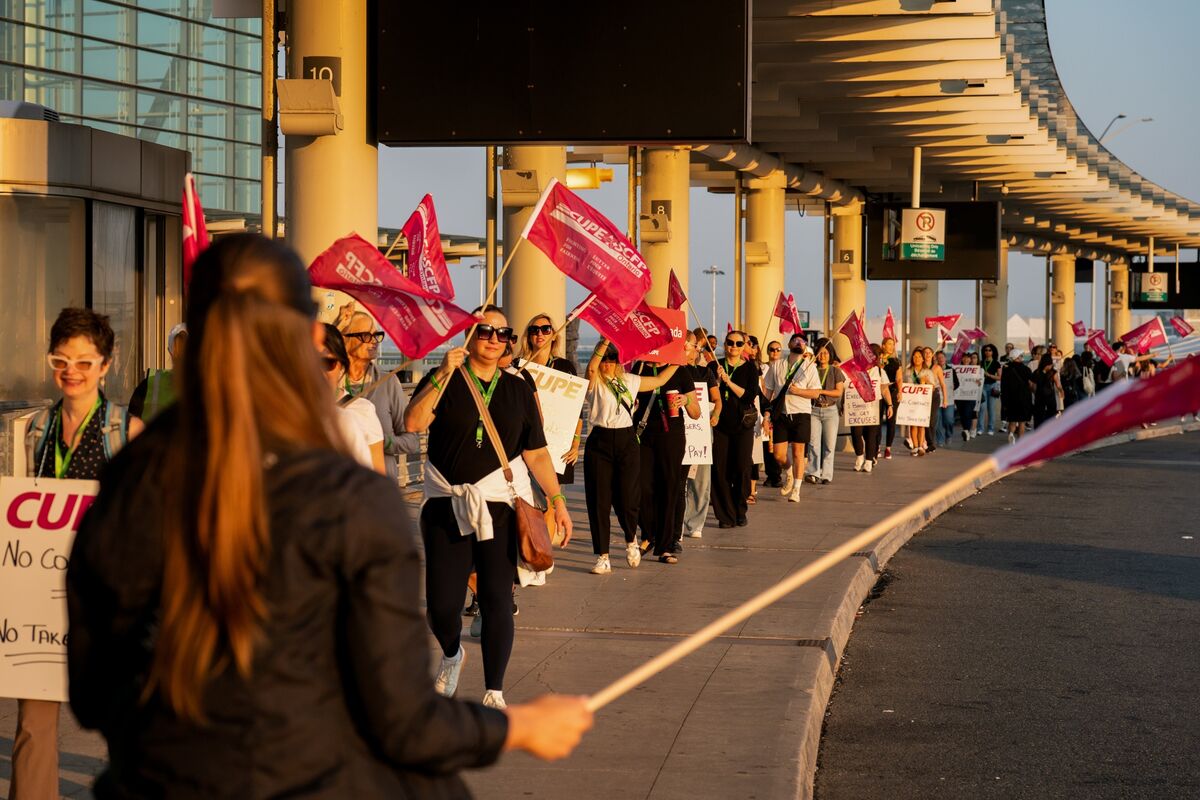
The Canadian government has swiftly intervened in a strike by over 10,000 Air Canada flight attendants, less than 12 hours after it commenced and caused hundreds of flight cancellations. Jobs Minister Patty Hajdu directed the Canada Industrial Relations Board to order the parties back to work, impose final and binding arbitration, and extend the existing contract terms, aiming to immediately restore operations and mitigate significant travel disruption.
The Canadian government has moved swiftly to curtail a strike by over 10,000 Air Canada flight attendants, referring the dispute to the Canada Industrial Relations Board less than 12 hours after it commenced. This decisive intervention, which seeks to enforce a back-to-work order and impose final and binding arbitration, significantly mitigates the immediate operational and financial risks to the airline. The strike had already resulted in hundreds of flight cancellations, but the government's action signals a low tolerance for prolonged disruption at the national carrier. By pushing for arbitration and an extension of the existing contract until a resolution, the government is effectively short-circuiting the labor action, shifting the focus from an open-ended dispute to a structured, state-overseen process. This development materially alters the outlook, as the uncertainty of a protracted strike is replaced by the more predictable, albeit still uncertain, outcome of an arbitrated settlement which will determine future labor costs.
AI-powered research, real-time alerts, and portfolio analytics for institutional investors.
Request DemoOverall Sentiment
mildly positive
Sentiment Score
0.30
