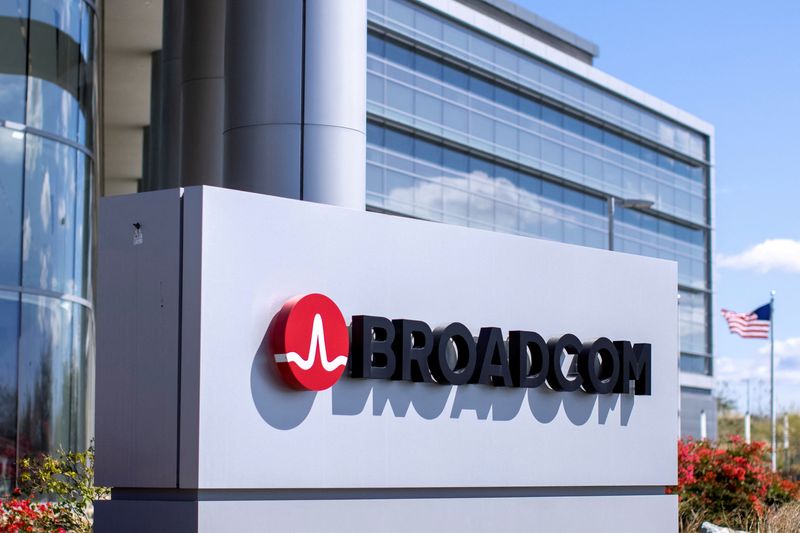
Apollo Global Management and Blackstone are reportedly in talks to provide about $35 billion of financing for Broadcom's AI chip development, one of the largest private credit transactions on record. The funding would support Broadcom's production of chips for AI applications and follows prior partnerships with Google and Anthropic, which included access to an additional 3.5 gigawatts of TPU-based AI compute capacity beginning in 2027. The deal is still under negotiation, but it underscores strong demand for AI infrastructure financing.
This is less a Broadcom story than a validation of AI capex moving from vendor-financed to project-financed. Once hyperscaler-style infrastructure is underwritten with private credit, the binding constraint shifts from balance-sheet capacity to deployment cadence, which should tighten the gap between chip design wins and revenue recognition for the platform beneficiaries. That supports AVGO’s strategic moat, but it also creates a financing-services overhang: Apollo and Blackstone effectively become toll collectors on AI buildouts, monetizing a spread that public equity holders are not capturing directly.
The second-order effect is that private credit is now competing with bank syndicates and public debt for the “AI utility” financing stack. That should compress spreads for the best-quality issuers while pushing weaker AI-linked borrowers toward higher all-in funding costs or delayed projects over the next 6-18 months. In other words, this is bullish for the scarce names with contracted demand and strong counterparties, and mildly negative for undifferentiated AI infrastructure plays that still need expensive capital to scale.
Consensus is likely underestimating how much this de-risks AVGO’s long-duration growth narrative: if financing is increasingly arranged alongside design wins, the market may start capitalizing AVGO more like an infrastructure compounder than a cyclical semiconductor vendor. The flip side is execution risk — any delay in customer commercialization, or a pause in private credit appetite, would hit the multiple first and earnings later. That makes the next catalyst window 1-2 quarters, not days: terms, syndication economics, and whether more AI names can replicate this financing template will matter more than the headline size.
Blackstone and Apollo also gain an embedded distribution advantage if they can standardize this product. The real loser is generic mezzanine/structured-credit capital that cannot attach to strategic supply agreements; once the market sees a repeatable template, returns in AI private credit will likely normalize faster than the crowd expects.
AI-powered research, real-time alerts, and portfolio analytics for institutional investors.
Request DemoOverall Sentiment
mildly positive
Sentiment Score
0.35
Ticker Sentiment
