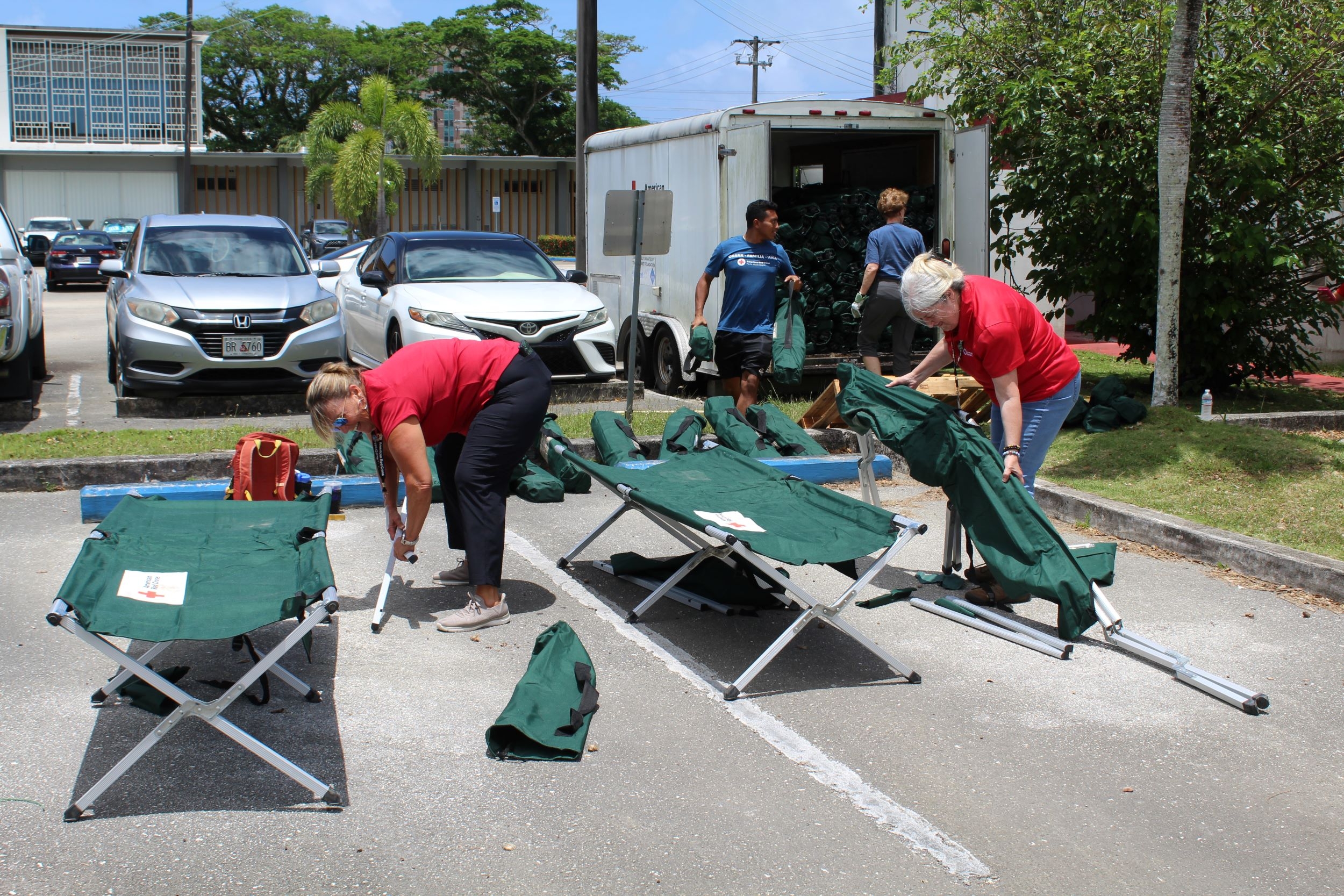
Super Typhoon Sinlaku is expected to bring 175 mph winds and up to 20 inches of rain to Guam and the Mariana Islands, with Tinian and Saipan facing the greatest damage risk. Authorities warn of structural damage, water-supply disruptions, and prolonged power outages, while shelters are already open and more than 700 people spent the night in refuge. The event is a major regional disruption with potential knock-on effects for infrastructure, utilities, and travel.
The marketable event is not the storm headline itself but the forced conversion of a remote logistics node into an emergency-services economy. In the first 72 hours, the key earnings impact is on carriers and parcel networks with Pacific exposure and on insurers with reinsurance-heavy catastrophe books; the direct revenue at risk is small, but incremental costs, aircraft repositioning, missed sailings, and service credits can hit quarterly margins disproportionately. The bigger second-order effect is inventory slippage: island retailers, food distributors, and building-supply channels will see a short-term spike in essentials followed by a demand air pocket once replacement cycles are delayed by damaged ports, roads, and power. The cleanest beneficiary set is less obvious than “storm names”: utilities, restoration contractors, and select consumer staples/discretionary names with emergency replenishment demand. Power restoration and temporary generation can support equipment and components demand, while grocery, snack, beverage, and hygiene categories should see a near-term pull-forward as households stock up before outages; that effect usually lasts days, not months. Conversely, travel exposure is mostly a sentiment trade unless mainland booking patterns are disrupted, but even a small island hub outage can create operational knock-ons for network carriers if repositioning capacity gets constrained. The contrarian angle is that the equity move often over-discounts the disaster in names with limited economic linkage to Guam/CNMI. For many of the listed companies, the fundamental impact is effectively zero, so any broad selloff in transport, retail, or industrials should be faded unless we see evidence of port closures, airport shutdowns, or US military logistics disruption extending beyond the islands. The real tail risk is not the storm’s landfall but a multi-week infrastructure outage that forces air and sea freight rerouting across the Pacific, which could create a temporary but tradable squeeze in expedited shipping and backup-power demand.
AI-powered research, real-time alerts, and portfolio analytics for institutional investors.
Request DemoOverall Sentiment
strongly negative
Sentiment Score
-0.82
Ticker Sentiment
