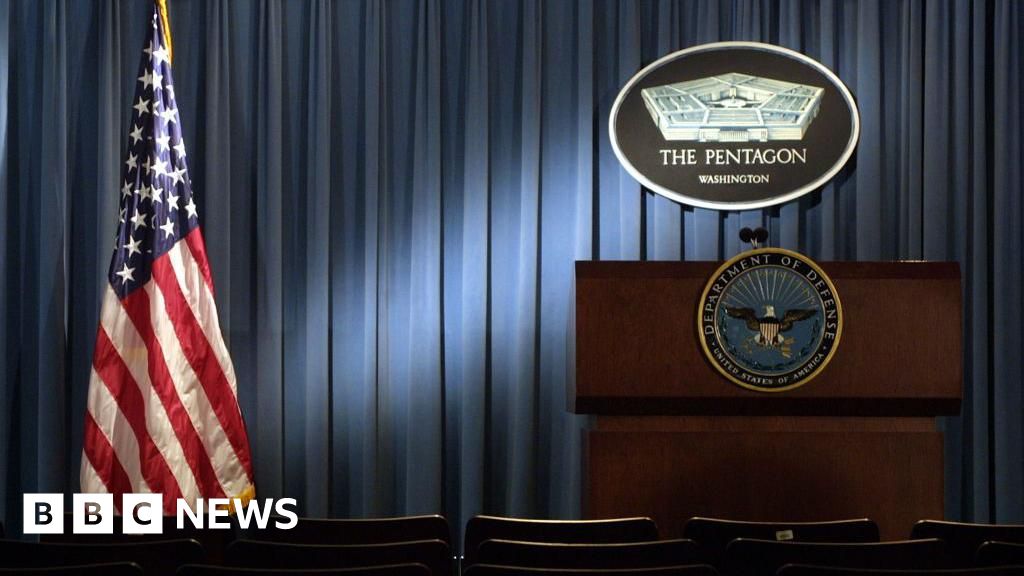
A federal judge (Paul L. Friedman) blocked parts of the Department of Defense's October Pentagon press-access policy, ruling it violates the First and Fifth Amendments and striking down provisions that barred reporters for 'soliciting' information and that labeled access a 'privilege' subject to viewpoint discrimination. The court left other measures (e.g., escort requirements) intact; the policy had already led major outlets to refuse signing and lose daily access, shifting the press corps toward outlets like OANN. The Pentagon says it disagrees with the ruling and will pursue an immediate appeal.
This ruling raises the evidentiary and procedural bar for the government to impose venue-level speech controls, which institutionalizes a litigation pathway for news organizations and will keep Pentagon access policy in legal flux for months-to-years. Expect recurrent legal skirmishes and tighter DOJ/DoD playbooks that attempt narrower, legally defensible restrictions (e.g., time/place/manner rules) — a drawn-out process that generates episodic headline risk but no instantaneous structural closure.
Market mechanics: mainstream national outlets regain relative investigatory parity, which should modestly strengthen subscription/advertising economics for brands with investigative franchises (measurable over 6–18 months). Counterparty effects concentrate on outlets that briefly benefited from exclusive access; their traffic and ad CPMs are the most vulnerable as access normalizes.
For defense industry issuers, more unfiltered coverage raises the frequency and salience of programmatic scrutiny (cost overruns, safety incidents, whistleblower threads). That raises short-term volatility and a higher chance of congressional inquiries or contract re-prioritisations within a 3–12 month window, disproportionately hitting mid/small-cap suppliers with weaker lobbying or legal resources.
Clinically: the next material catalysts are (1) DoD’s appeal filing and emergency relief request (days–weeks), (2) appellate rulings or stays (weeks–months), and (3) any congressional hearings or policy re-writes (1–12 months). Trade windows are therefore discrete — trade headline-driven volatility near procedural milestones, and position for gradual revenue/upside capture into the multi-quarter normalization of access.
AI-powered research, real-time alerts, and portfolio analytics for institutional investors.
Request DemoOverall Sentiment
neutral
Sentiment Score
0.00
Ticker Sentiment
