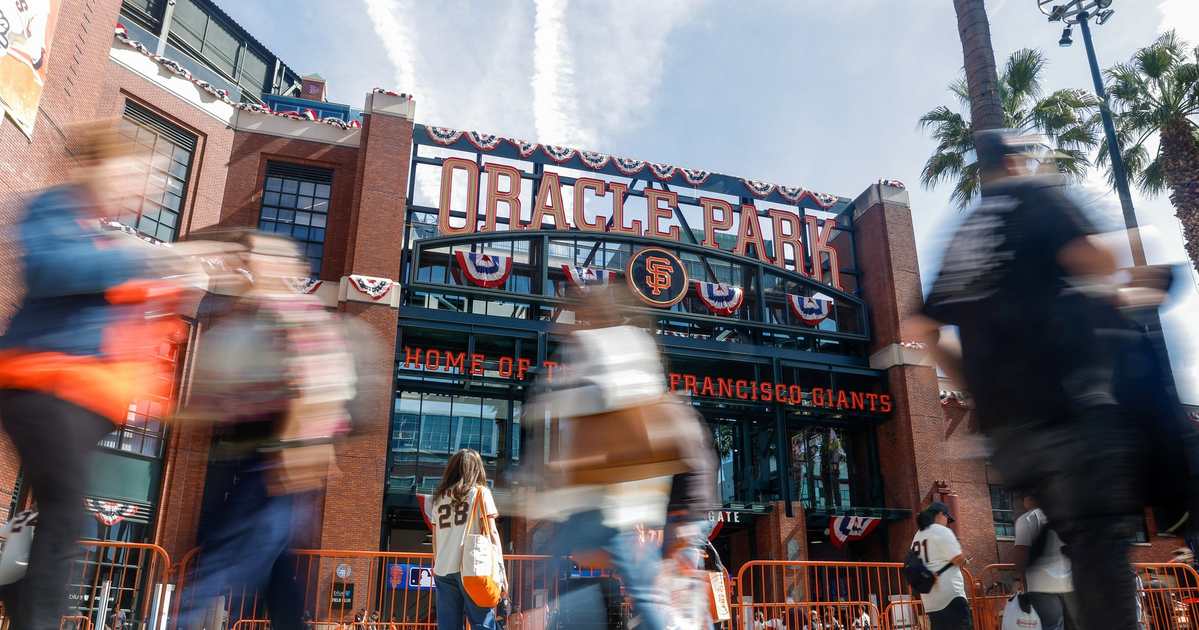
Thrive Eternal, founded by Joshua Kushner, agreed to buy a minority stake in the San Francisco Giants, subject to MLB approval, adding another professional-investment partner to the team’s ownership group. The Giants were valued by Forbes at $4.05 billion last month and have already taken private-equity money from Arctos Sports Partners and Sixth Street, while continuing to raise capital for Oracle Park and related real estate assets. The transaction is strategically positive for the franchise but is unlikely to have broad market impact beyond Bay Area sports ownership trends.
The important signal is not the club transaction itself but the further normalization of sports franchises as quasi-private-equity carry vehicles. That broadens the buyer base for scarce assets, which should compress cap rates on elite team stakes and raise the value of minority interests for existing owners across MLB, NBA, and NFL over the next 12-24 months. The second-order effect is on valuation discipline: if institutional capital keeps bidding into trophy assets, owners have a stronger incentive to extract cash via monetization while keeping operational control, which can support league-level franchise multiples even if on-field performance is volatile.
For the Giants specifically, the new capital is more relevant as a governance and optionality signal than as a direct P&L catalyst. Minority investments rarely change competitive spending immediately, but they can finance non-player assets—real estate, venue upgrades, adjacent entertainment monetization—that improve long-duration economics and make the enterprise less dependent on payroll-to-wins efficiency. That said, this also risks widening the perception gap between “financially sophisticated” ownership and fans who interpret outside capital as a substitute for aggressive roster spending; if baseball results stall, the backlash could intensify over the next few months and become a branding issue rather than a balance-sheet issue.
The contrarian angle is that this is not obviously bullish for the club’s competitive position; it may actually entrench a strategy of optimizing asset value over marginal wins. The market may be underestimating how much of the value creation from these deals accrues to existing owners, not team performance, which means the public equity analogs are thin and the better trade may be in the broader ecosystem: venue operators, adjacent real estate, and sports media inventory that benefits from more institutionalized franchise ownership. The biggest reversal risk is regulatory or political scrutiny if “private capital in sports” becomes associated with fan-unfriendly cost cutting, but that is a 6-18 month narrative risk rather than an immediate cash-flow threat.
AI-powered research, real-time alerts, and portfolio analytics for institutional investors.
Request TrialOverall Sentiment
mildly positive
Sentiment Score
0.20
Ticker Sentiment
