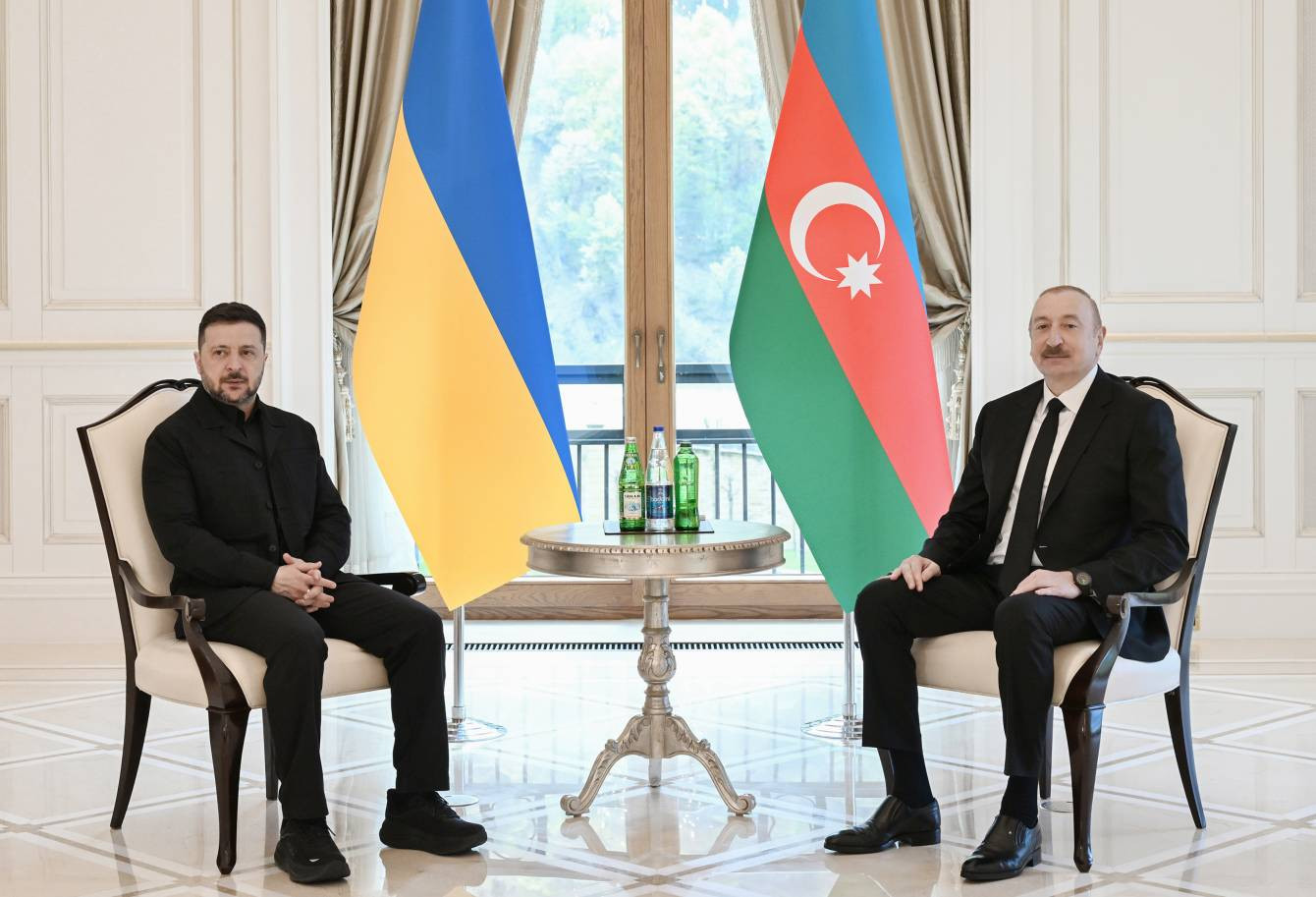
Ukraine and Azerbaijan signed six bilateral documents centered on defense cooperation and joint industrial production during Zelensky’s first visit to Baku since Russia’s full-scale invasion began. The two sides also discussed expanding bilateral trade, which already exceeds $500 million, and new energy investment opportunities involving SOCAR in Ukraine. The agreements deepen strategic ties and point to additional military-technical and economic cooperation.
The incremental value here is not the bilateral optics; it is the signaling that the South Caucasus is becoming a more institutionalized rear-area node for Ukrainian defense procurement, repair, and potentially dispersive manufacturing. That matters because even modest co-production can shorten replacement cycles, diversify sourcing away from single-country bottlenecks, and create a template for other middle-tier states to plug into wartime supply chains without formal alliance commitments.
For markets, the first-order beneficiaries are the non-Russian industrial and logistics ecosystems that can service this re-routing: dual-use machinery, electronics, shipping, insurance, and private defense suppliers with spare capacity. The second-order effect is more interesting: if Azerbaijan deepens defense and energy ties with Kyiv while keeping distance from Moscow, it further erodes Russia’s ability to monopolize transit and political leverage across the corridor linking the Caspian, Black Sea, and Europe. That is bullish for alternative energy routes and for firms exposed to corridor infrastructure, but it also raises the probability of asymmetric Russian retaliation via cyber, sabotage, or trade friction rather than open force.
The contrarian miss is that “co-production” in this region often takes longer to monetize than headlines imply. In the next 1-3 months, the market is more likely to see contract announcements than revenue inflection; the real P&L impact is a 6-18 month story tied to capex allocation, localization rates, and whether financing follows political intent. Also, Azerbaijan’s attempt to balance Ukraine, Turkey, Europe, and Russia creates policy optionality, but optionality is not cash flow unless it translates into bankable projects and exportable output.
Best risk/reward is in viewing this as a corridor and defense-supply-chain theme, not a country beta trade. The upside case is persistent marginal reallocation of procurement and energy flows away from Russian influence; the downside is a diplomatic thaw or Russian pressure that keeps the agreements symbolic. Because the article implies strategic drift rather than an immediate fiscal shock, the market may underprice the durability of the corridor realignment while overpricing near-term earnings impact.
AI-powered research, real-time alerts, and portfolio analytics for institutional investors.
Request DemoOverall Sentiment
mildly positive
Sentiment Score
0.40
