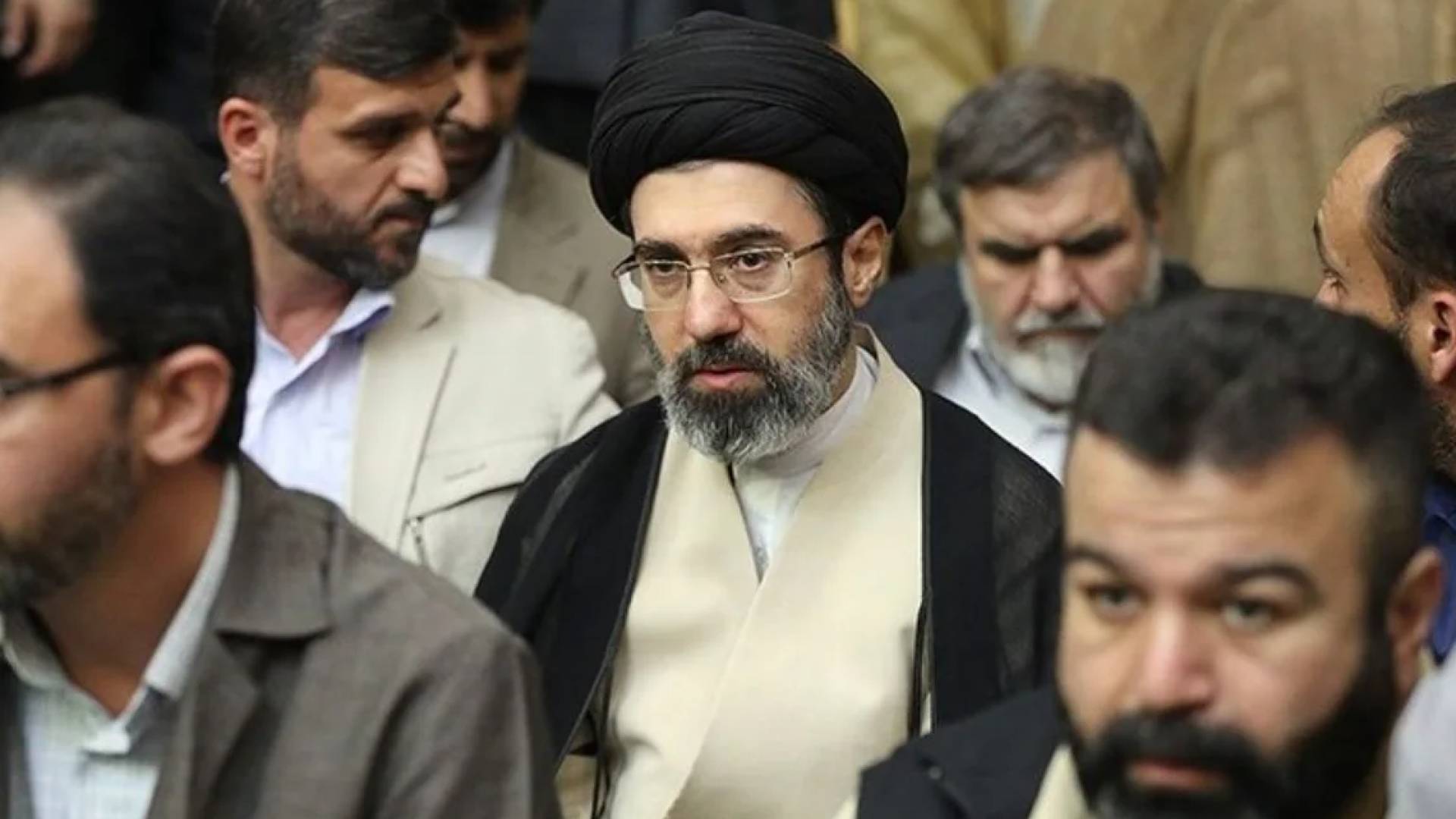
Iranian Supreme Leader Mojtaba Khamenei delivered a speech praising slain Iranian officials and framing the current situation as a "historic resistance" against foreign military forces. He highlighted former President Ebrahim Raisi’s responsibility, youth-focused leadership, justice orientation, and active diplomacy. The remarks are politically significant but contain no direct economic, earnings, or policy action likely to move markets immediately.
This is less a standalone market event than a signal that Tehran is preparing domestic audiences for a prolonged sanctions-and-security regime, which matters because it raises the probability of policy continuity over reform. The second-order implication is that capital allocation stays skewed toward regime resilience: defense, internal security, hard-currency self-sufficiency, and substitution of imports rather than consumer-led growth. That typically suppresses private-sector multiplier effects and keeps any “post-crisis normalization” premium out of Iranian risk assets, if accessible at all.
The more investable read-through is on regional risk premia. Hawkish rhetoric from the top of the Iranian system tends to widen the tail-risk distribution for shipping through the Strait of Hormuz, Gulf insurers, and defense supply chains tied to missile defense, drones, and electronic warfare. Even if no kinetic escalation follows, the market usually prices this through higher implied vol in energy and defense proxies within days, then a slower creep in freight and insurance costs over 1-3 months.
Contrarianly, the market may be overreacting if it assumes speech equals imminent escalation. Iran has incentives to use maximalist language as deterrence while avoiding a direct conflict that would stress its own infrastructure, fiscal base, and internal cohesion. The more durable trade is not a binary war bet but a volatility/fragmentation expression: periodic spikes in Gulf-risk assets, not a sustained trend higher unless there is a concrete trigger such as a maritime incident, proxy attack casualty event, or sanctions enforcement step-up.
For industrial and defense names, the channel is indirect but real: higher missile-defense procurement, drone countermeasure spending, and base-hardening budgets. For shipping and logistics, even a small increase in perceived interdiction risk can reprice route economics, especially for tankers and insurers, before any physical disruption appears. That creates a useful window to position ahead of catalysts rather than after the headline cycle.
AI-powered research, real-time alerts, and portfolio analytics for institutional investors.
Request DemoOverall Sentiment
neutral
Sentiment Score
-0.10
