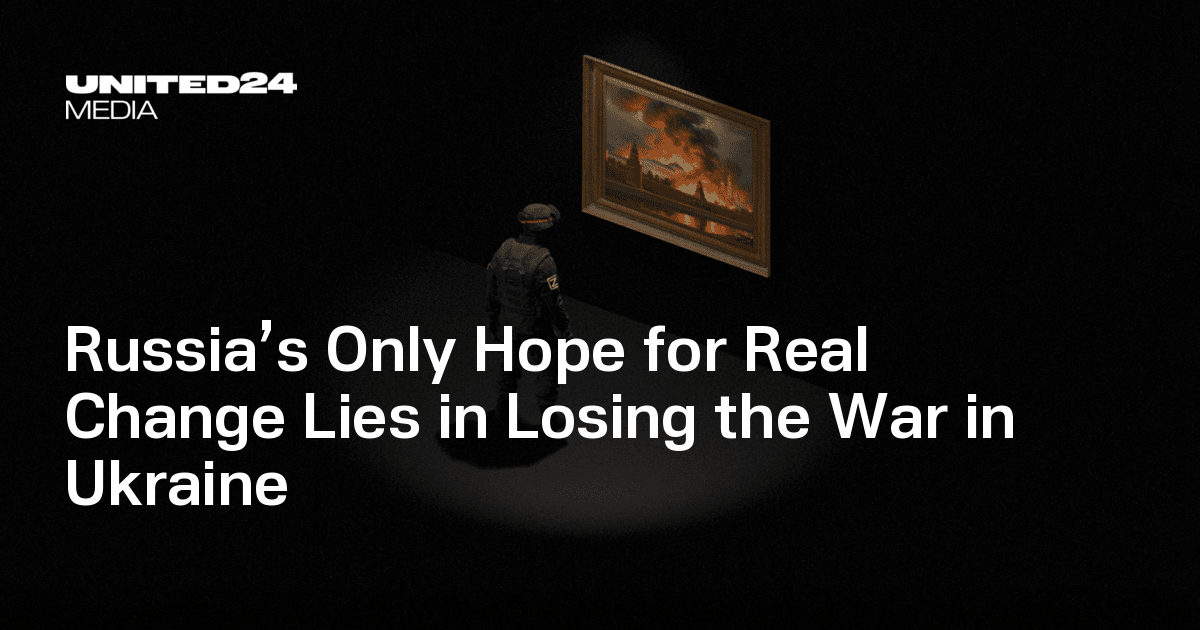
This article argues that Russia's ability to achieve genuine societal reform and accountability for its actions in Ukraine is contingent upon a clear and undeniable military defeat, drawing parallels to post-WWII Germany's reckoning with its past. It posits that without such a decisive loss, Russia will continue to evade collective guilt and responsibility, perpetuating a cycle of denial and propaganda that precludes genuine reflection or lasting peace, thereby indicating prolonged geopolitical instability.
The article posits that Russia's societal reform and accountability for actions in Ukraine are contingent upon a clear military defeat, drawing a parallel to post-WWII Germany. Currently, Russian society exhibits little collective reflection, with 74% of citizens supporting the war as of summer 2025, according to the Levada Center, and officials consistently declining peace negotiations that include accountability. This suggests a deeply entrenched narrative of moral righteousness, hindering any internal impetus for change.
Psychological mechanisms like denial and "collective moral deafness" are cited as factors preventing Russians from acknowledging documented atrocities, including the abduction of nearly 20,000 Ukrainian children, for which the ICC issued arrest warrants for Vladimir Putin and Maria Lvova-Belova. Historically, even Nikita Khrushchev's denunciation of Stalin was superficial, failing to foster broad collective responsibility, a stark contrast to Germany's eventual reckoning after its military defeat.
The analysis concludes that a "truce without accountability is just a pause before the next war," implying that without an undeniable collapse, Russia will continue its current trajectory. This persistent state of denial and aggression, fueled by propaganda, suggests prolonged geopolitical instability and a high probability of future conflicts unless a decisive military failure forces a societal re-evaluation.
AI-powered research, real-time alerts, and portfolio analytics for institutional investors.
Overall Sentiment
strongly negative
Sentiment Score
-0.75
