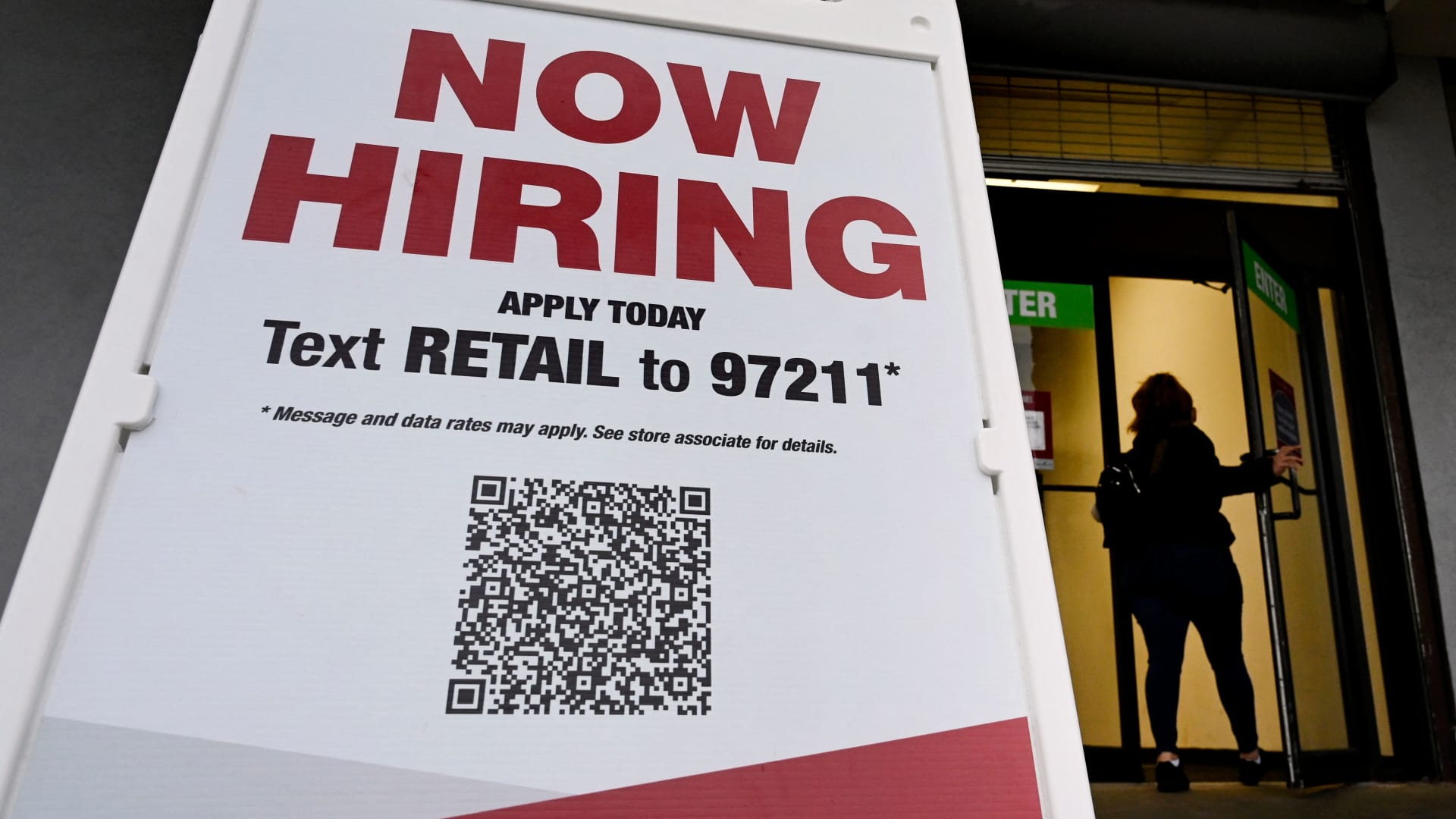
Retail jobs rose by nearly 22,000 in April, lifting retail employment to about 15.5 million, the highest since July 2024, as consumers continued spending despite war in Iran, higher gasoline prices, faster inflation, and tariff concerns. Courier and messenger jobs also increased by 38,000, helping total job growth beat economists' expectations, while retail openings jumped 48% year over year in March. However, record-low consumer sentiment and rising fuel costs point to potential downside for retail hiring and discretionary demand ahead.
The important signal here is not simply that hiring is holding up, but that labor demand is being concentrated in the highest-frequency consumer channels. That usually means management teams are prioritizing in-stock levels and checkout capacity before they see it in reported same-store sales, which is a classic late-cycle tell: fixed-cost absorption looks good for a quarter or two, then staffing reverses quickly if traffic softens. The second-order effect is margin dilution for labor-intensive retailers unless ticket growth re-accelerates, so this is supportive for sales-linked names but not automatically for profitability.
The more interesting read-through is that logistics jobs are still doing a lot of the heavy lifting. If courier and messenger hiring remains strong while general retail employment expands, e-commerce and omnichannel fulfillment are likely taking incremental share from brick-and-mortar, especially in categories with low brand loyalty. That creates a relative winner/loser spread: essential and value-oriented formats can keep flexing labor, while discretionary and appliance-heavy retailers face the most immediate downside if gas prices stay elevated and confidence stays weak.
For WHR, the setup is asymmetric negative because it is exposed to the part of the consumer basket that gets cut first when real disposable income is squeezed by energy. A softer housing/DIY cycle plus weaker big-ticket sentiment can hit volumes faster than pricing can offset, and the market typically overestimates how long replacement demand can bridge a downturn. For MCD, the near-term risk is not traffic collapse but mix: consumers trade down within the menu and compress check growth, which can preserve top-line optics while pressuring store-level margin and franchisee sentiment.
Consensus still seems too anchored on 'resilient consumer' as a single regime, when the more actionable view is bifurcation: necessities and value up, durables and discretionary down. If gasoline stays near multiyear highs for several weeks, the sector’s labor expansion becomes a liability rather than a sign of strength, because staffing is one of the fastest costs to reverse. That makes the next 30-60 days more important than the headline jobs print itself, with subsequent consumer sentiment and retail sales likely the catalysts that force management guidance resets.
AI-powered research, real-time alerts, and portfolio analytics for institutional investors.
Request DemoOverall Sentiment
neutral
Sentiment Score
0.10
Ticker Sentiment
