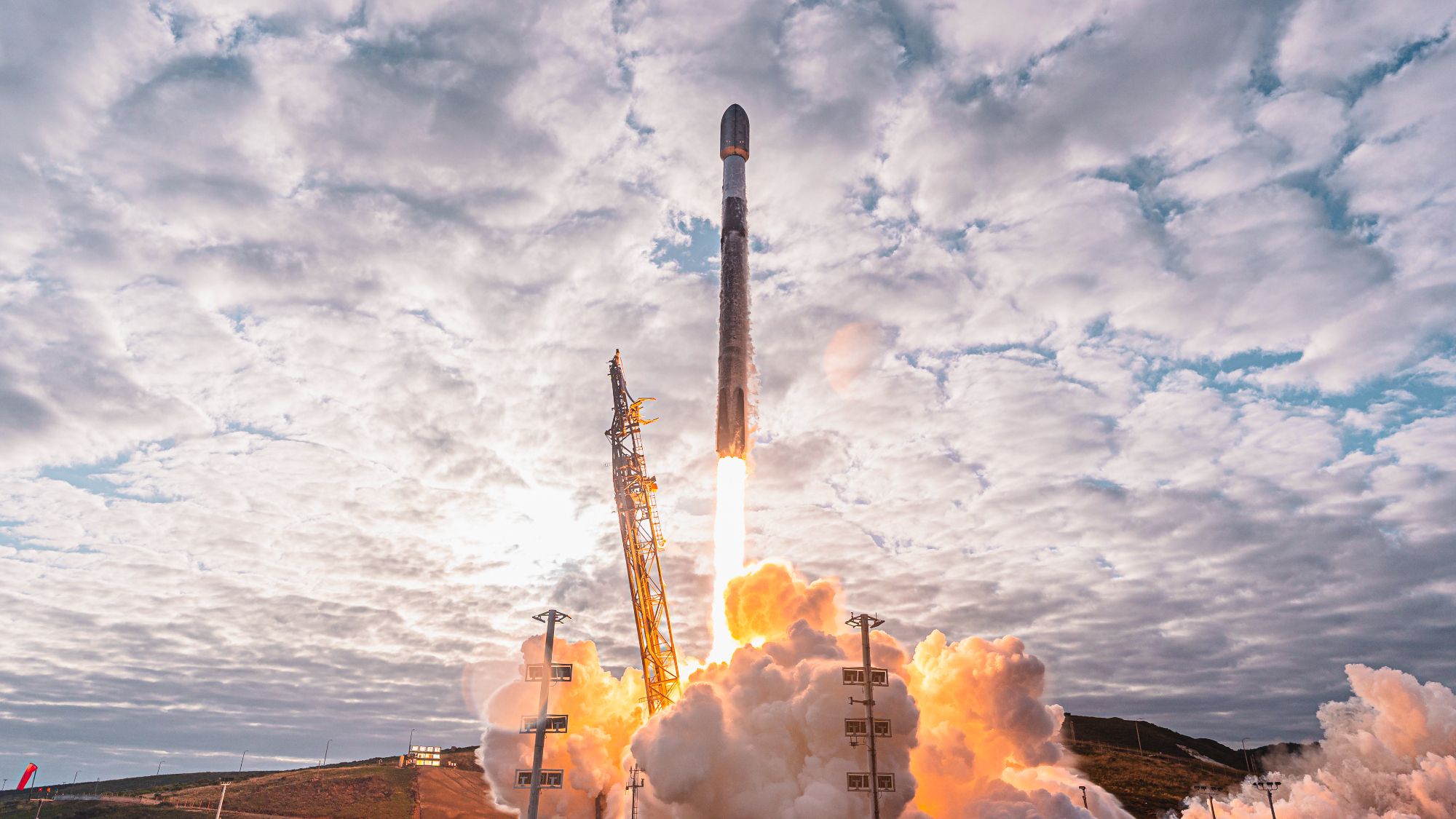
SpaceX is scheduled to launch 45 satellites on a Falcon 9 from Vandenberg Space Force Base early May 3, with a 37-minute launch window opening at 2:59 a.m. EDT. The payload includes the CAS500-2 Earth-observation satellite plus 44 others from multiple operators, and the mission would mark the 33rd launch and landing for booster B1071 if successful. The article is primarily a mission preview and livestream notice, with limited immediate market impact.
This is less a one-off launch story than another data point in the industrialization of orbital logistics: SpaceX is effectively behaving like the UPS of low Earth orbit, and every successful rideshare mission deepens its moat versus alternative launch providers and integrators. The key second-order effect is that launch cadence plus booster reuse compresses unit economics, which should keep pricing pressure on smaller launch firms and on any satellite manufacturer that still relies on bespoke, low-frequency lift. For public markets, the more important signal is not the payload count but the recurring validation that SpaceX can absorb heterogeneous missions without sacrificing turnaround time.
For Planet Labs, the direct read-through is mixed to slightly positive: more launch availability supports constellation refresh and follow-on capacity expansion, but the bigger benefit is competitive normalization of frequent replenishment across the sector. If launch becomes a commodity, the winners will be operators with software, analytics, and customer lock-in rather than whoever merely owns satellites. That argues for the market to keep rewarding downstream data monetization while compressing valuation multiples for pure hardware narratives.
The geopolitical angle is understated: the replacement of a Russia-linked launch path by a U.S. commercial vehicle is a small but persistent transfer of strategic leverage away from legacy state-led access to space. Over months, that should continue to support U.S.-centric space infrastructure, defense-adjacent payload providers, and secure communications ecosystems. The near-term risk is operational execution — any anomaly would matter disproportionately because this booster is close to the reuse record and the mission has multiple customers tied to one launch event.
Consensus is likely over-indexing on the spectacle of reuse and under-indexing on the competitive squeeze this creates for marginal launch players and for satellite OEMs with weaker balance sheets. The move is too small to trade as a standalone event, but it reinforces a multi-quarter trend: more launches, lower friction, faster refresh cycles, and a higher bar for capital intensity anywhere outside the platform layer.
AI-powered research, real-time alerts, and portfolio analytics for institutional investors.
Request DemoOverall Sentiment
neutral
Sentiment Score
0.08
Ticker Sentiment
