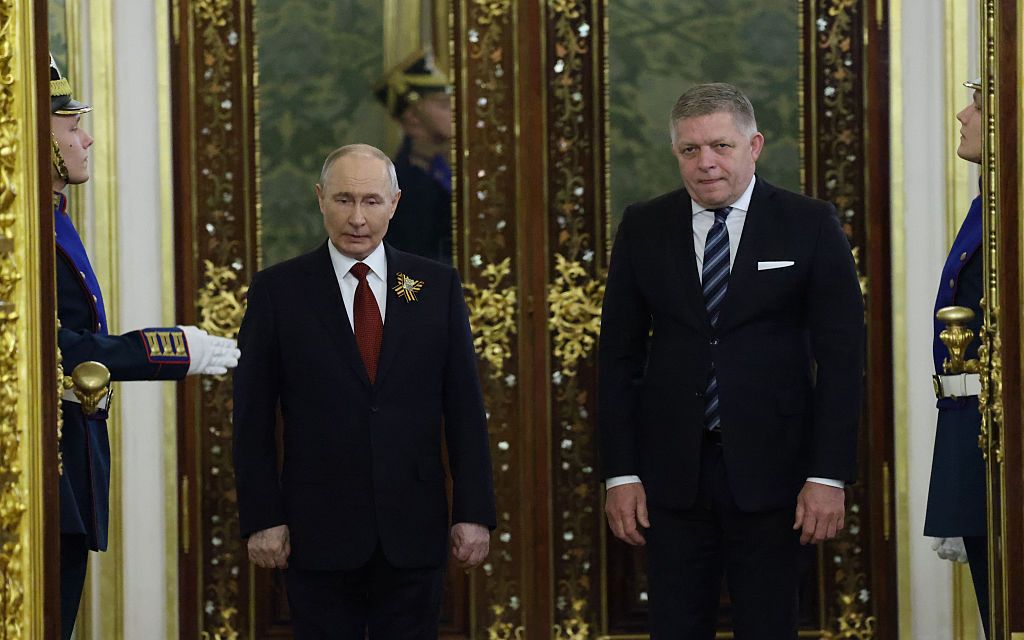
Robert Fico met Vladimir Putin in Moscow on May 9, but the Kremlin says he did not relay any messages from Volodymyr Zelensky. The talks covered the Ukraine war, Russian-Slovak relations, and energy cooperation, including a dormant bilateral commission. The visit drew criticism from European leaders and Slovak opposition figures, but the article contains no direct market-moving policy announcement.
The market implication is less about a single diplomatic anecdote and more about the growing probability of an extended frozen-conflict regime in Eastern Europe. If Bratislava is positioning itself as an informal channel, the near-term benefit accrues to any asset class that prices lower immediate escalation odds: regional sovereign spreads, European gas duration risk, and defense volatility premia all become more sensitive to signaling than to battlefield headlines. The key second-order effect is that mediation theater can delay, not resolve, energy re-pricing; that tends to keep Central European utilities and industrials in a wider risk band for longer.
For Kyiv, the practical downside is reputational and bargaining leverage dilution. A small EU member acting as a bridge can create the appearance of diplomatic optionality while offering little enforcement power, which may lengthen negotiations without changing the military balance. If that perception grows, it can modestly pressure Ukrainian external financing terms over the next 1-3 months because lenders will discount political progress that is not backed by concrete ceasefire architecture.
The contrarian takeaway is that the headline may be over-read as pro-Russia signaling when it may instead reflect domestic Slovak politics and a bid for influence inside the EU. That means any knee-jerk bullish trade on Russian-linked assets or bearish trade on European gas may fade unless there is follow-through: a real working group, prisoner swap, or energy arrangement within 2-6 weeks. Absent that, this is more a volatility event than a trend change, with the bigger impact likely in election optics and coalition stability in Slovakia than in the war itself.
AI-powered research, real-time alerts, and portfolio analytics for institutional investors.
Overall Sentiment
neutral
Sentiment Score
-0.05
Ticker Sentiment
