
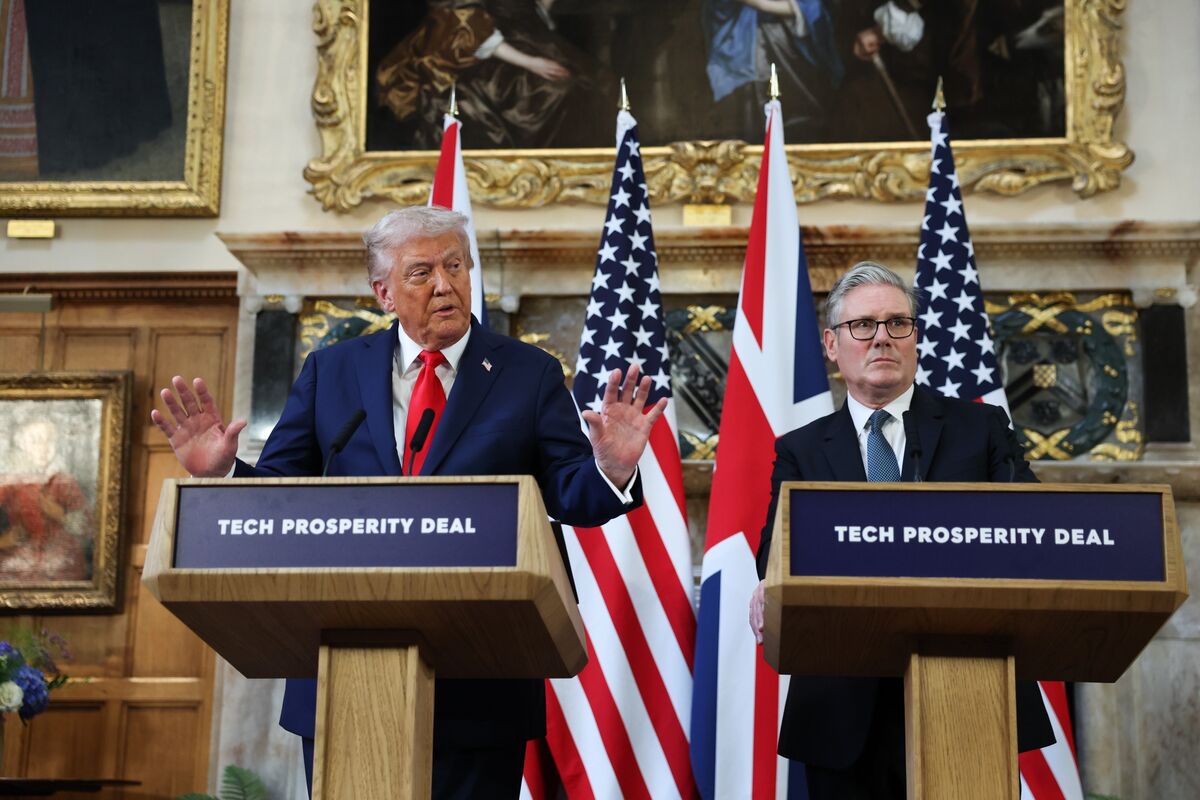
Trump said the US "can always" change the tariff deal terms previously reached with the UK, adding fresh uncertainty to the bilateral trade relationship. The comments point to potential friction over tariffs and broader UK domestic policy, but no immediate policy action was announced. Market impact is likely limited unless the threat becomes formalized into negotiations or new tariff measures.
This is less about the immediate economics of one UK trade arrangement and more about the repricing of policy durability. The market has to start discounting a higher probability that any UK-facing tariff concession can be revisited for domestic political reasons, which increases the option value of hedging UK-exposed revenue streams even if no formal change happens. The first-order impact should be modest; the second-order impact is a widening of the risk premium on UK cyclicals and multinationals that rely on stable transatlantic access.
The vulnerable names are not just exporters into the US, but businesses with thin margins and long lead times where even a small tariff reset can compress EBITDA by 50-150 bps. That matters most for autos, industrials, and specialty manufacturing, where supply chains have limited slack and pricing power is weak. A tariff threat also indirectly supports US domestic substitutes and regional supply-chain re-shoring themes, because procurement teams will treat UK sourcing as a higher-policy-risk input even before any rule changes are enacted.
Catalyst timing is asymmetric: the downside can happen in days via headlines and de-risking, while the upside reversal likely takes months and requires either a public walk-back or a broader deal reaffirmation. The bigger tail risk is not a clean renegotiation but a series of targeted exemptions, sector-specific friction, and procedural delays that steadily erode confidence without forcing a binary market reaction. That makes this more suitable for hedged positioning than outright directional longs or shorts.
Consensus may be underestimating how much of this is a signaling event rather than an immediate trade-policy event. If investors assume the deal is unchanged until official notice, they may miss the fact that procurement and capex decisions are made off perceived policy volatility, not just enacted tariffs. In that sense, the market could be underpricing the persistence of a higher discount rate on UK cross-border trade exposure.
AI-powered research, real-time alerts, and portfolio analytics for institutional investors.
Request TrialOverall Sentiment
mildly negative
Sentiment Score
-0.25
Ticker Sentiment
