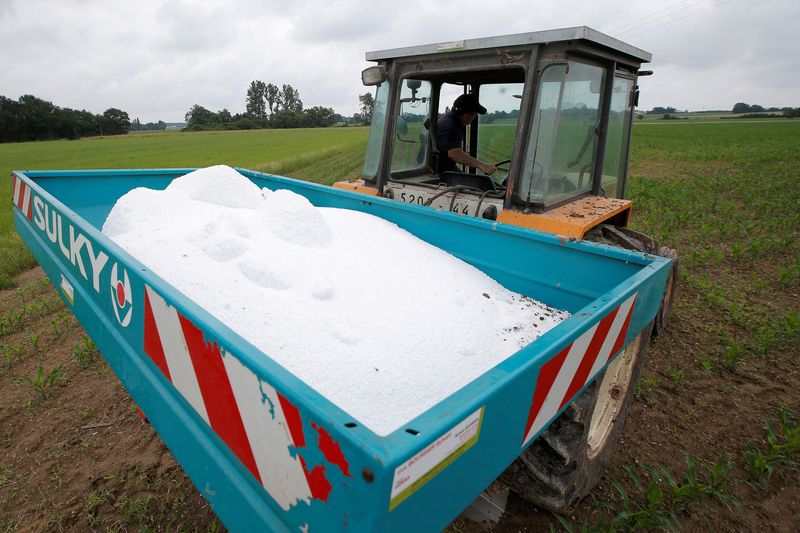
Urea prices have surged more than 50% as Middle East conflict and Strait of Hormuz disruptions tighten nitrogen fertilizer supply, creating a delayed but material inflation risk. Capital Economics expects the peak hit to headline food inflation more than a year from now, with U.K. food inflation potentially above 6% by 2027 and the U.S. and eurozone near 4%. The macro GDP impact looks limited in developed markets, but lower-income emerging markets in Sub-Saharan Africa and South Asia face outsized downside risk.
The underappreciated channel here is not headline food inflation, but the earnings dispersion it creates across ag inputs, food processors, and EM sovereign risk. Nitrogen fertilizer scarcity acts like a delayed tax on acreage productivity: margins for downstream crop producers stay intact near term if farmers defer application, but that only pushes the pain into the next planting cycle when yields and replenishment costs deteriorate simultaneously. The second-order winner is any firm with cheap gas feedstock and non-Middle East nitrogen exposure; the loser set is broader than fertilizer itself and includes seed, machinery, and food distributors exposed to future volume or mix downgrades.
The timing matters. This is a 6-18 month story, not a spike-and-fade energy trade, because the pass-through occurs through planting decisions, inventory drawdowns, then harvest pricing. That lag makes the setup dangerous for consensus macro models: inflation prints may look contained for several quarters, then reaccelerate into 2027 even if crude normalizes earlier. The market is likely to misprice the duration, underweighting food inflation in developed markets and massively underestimating FX and political stress in lower-income importers.
The clearest structural risk is policy response. If governments move to subsidize imports or release strategic stocks, local food prices may be capped temporarily, but fiscal deficits widen and FX reserves come under pressure, which can feed back into broader EM risk premia. The contrarian view is that the move in fertilizer may still be too small relative to the potential demand response: if urea stays elevated, acreage substitution, lower nitrogen intensity, and yield resilience in major exporters could blunt the worst-case inflation path. So the tail is asymmetric, but the base case is a slow-burn margin squeeze rather than a global food shortage.
AI-powered research, real-time alerts, and portfolio analytics for institutional investors.
Request DemoOverall Sentiment
moderately negative
Sentiment Score
-0.45
Ticker Sentiment
