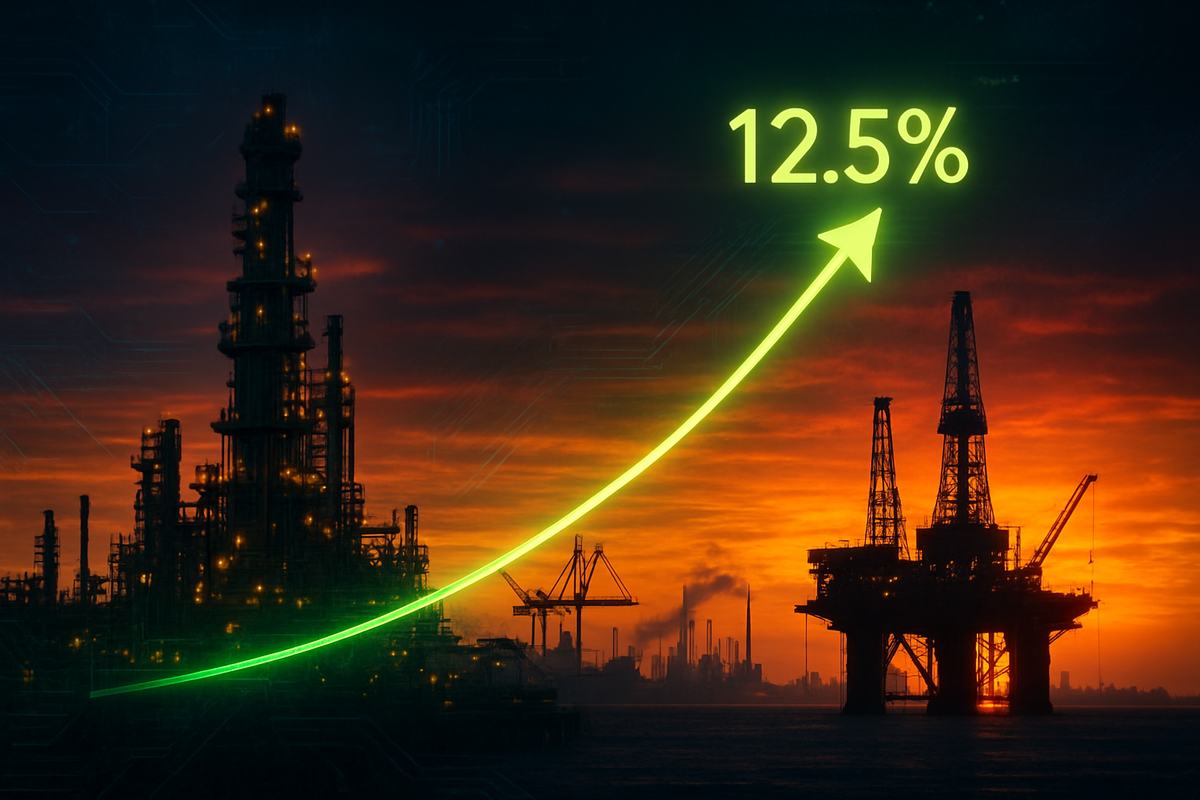
April inflation data showed a 12.5% year-over-year surge in energy prices, contributing roughly 0.8 percentage points to the CPI increase and pushing headline inflation toward 3.3%. Brent crude is approaching $115 per barrel, wholesale electricity prices are up nearly 45% in some regions, and markets are pricing an 80% chance the Fed keeps rates at 3.5%-3.75% rather than cutting this summer. Energy stocks such as XLE are benefiting, while industrials, logistics, and consumer-facing sectors face margin pressure and weaker demand.
This is less an inflation print than a regime test: the market is discovering that energy has re-asserted itself as the marginal driver of both earnings dispersion and policy risk. The first-order beneficiaries are the upstream and integrated names, but the more interesting second-order effect is that their cash flow windfall is likely to be returned to holders rather than redeployed into supply, which extends the tightness and keeps the macro impulse alive into 2027. That creates a self-reinforcing setup where energy outperformance persists even if crude stalls, because capital discipline itself is now the bullish variable.
The loser set is broader than the obvious transport and industrial names. Businesses with high pass-through friction and long contract duration will see margin pressure first, then volume erosion as customers trade down or delay capex; that means the earnings cuts in CAT, UPS, UNP, and BA can cascade into suppliers and service providers not directly tied to fuel. The bigger market risk is not the near-term pop in commodity-linked equities, but the lagged hit to discretionary demand and freight volumes that shows up over the next 2-3 quarters, just as consensus is likely to be leaning on a second-half rebound.
The policy setup is also more hawkish than headline inflation alone suggests. If the Fed signals tolerance for one more hot print, energy equities can keep working; if it reacts to second-round effects, duration and cyclicals both get hit. The contrarian read is that the move may be overbought in energy and underappreciated in industrial short exposure: once the market fully prices a sustained higher utility and fuel cost environment, investors will likely rotate further toward efficiency-enablers and away from physical commodity beta.
The cleanest expression is still relative value, not outright macro. The durable trade is long XLE versus short XLI because the spread benefits both from earnings expansion in energy and estimate compression in industrials. A second-order winner is HON, but only if it proves pricing power in energy-efficiency and automation; that makes it a slower-burn long rather than a near-term hedge.
AI-powered research, real-time alerts, and portfolio analytics for institutional investors.
Request DemoOverall Sentiment
strongly negative
Sentiment Score
-0.55
Ticker Sentiment
