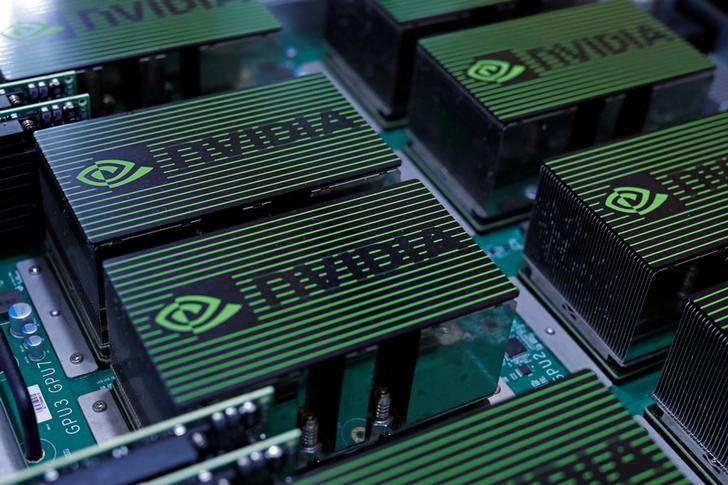
Nvidia’s push into “physical AI” is driving a broad rally across Asian suppliers, with Asian partners now representing about 90% of Nvidia’s production costs versus roughly 65% last year. LG Electronics rose as much as 15%, Nanya Technology gained 10%, and Chinese partners also surged on collaboration news, while hyperscaler AI capex of nearly $200 billion each from Amazon, Microsoft and Alphabet supports the ecosystem. The buildout is already showing up in earnings, with Samsung’s semiconductor division posting a 48-fold profit jump and SK Hynix’s quarterly earnings rising fivefold.
The key market implication is that Nvidia is morphing from a chip supplier into the toll collector for an ecosystem-wide buildout, which should extend its pricing power beyond data-center cycles into embedded compute, robotics, and industrial automation. That broadening of end demand matters because it diversifies revenue away from a few hyperscalers and lengthens the runway for the entire vendor stack, especially suppliers with exposure to boards, memory, packaging, optics, and factory automation.
The second-order winner is not just NVDA, but the North Asian industrial base that can scale precision hardware quickly. This is a classic supply-chain leverage story: once one platform becomes the default standard, component vendors gain mix, volume, and bargaining power simultaneously, while less integrated U.S./European peers risk being structurally under-allocated in the next procurement wave. The fact that AI capex is still being funded by hyperscalers means the near-term demand impulse is durable for at least 2-3 quarters, but the market may be underestimating how much of that spend is already priced into the obvious names.
The main risk is a timing mismatch: “physical AI” is a multi-year monetization theme, while the stocks reacting today are pricing near-term partnership headlines as if they were revenue. If hyperscaler capex pauses, or if export controls / trade policy friction disrupt cross-border manufacturing, the supply-chain beneficiaries can de-rate faster than NVDA itself because their earnings are more cyclical and less software-like. Consensus is likely overconfident that every adjacent hardware supplier participates equally; in practice, the winners will be the few with design-in depth and manufacturing bottlenecks, not the broad basket.
AI-powered research, real-time alerts, and portfolio analytics for institutional investors.
Request DemoOverall Sentiment
moderately positive
Sentiment Score
0.68
Ticker Sentiment
