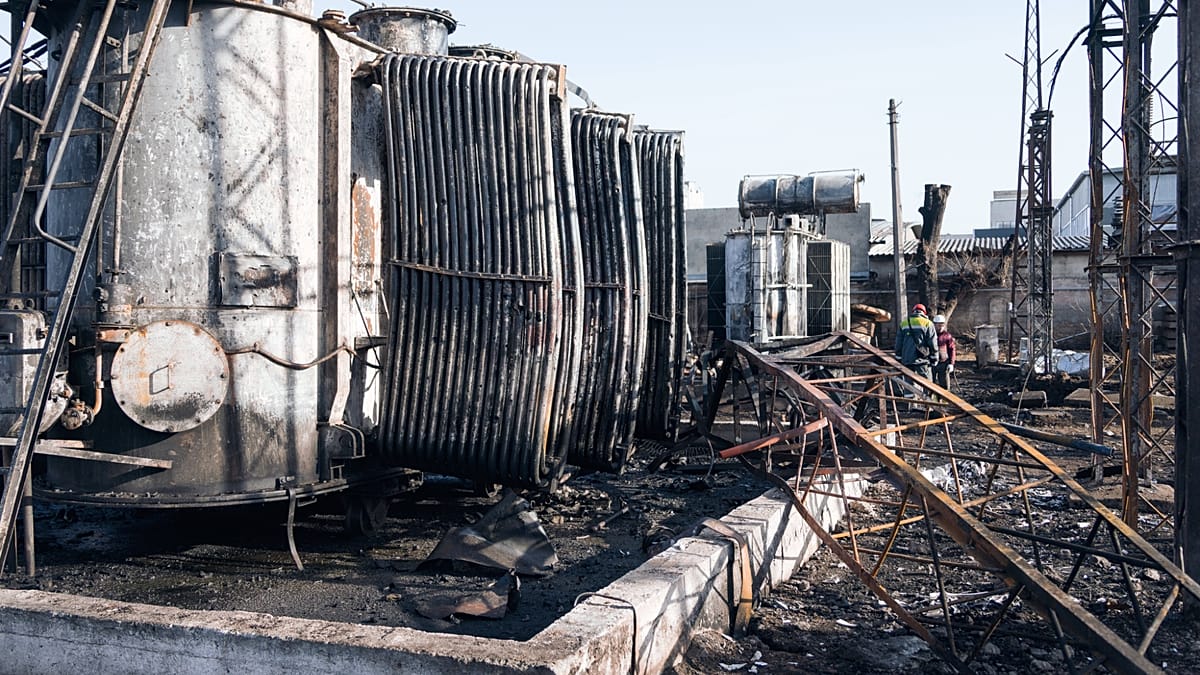
Russian strikes using nearly 100 drones have again targeted Ukrainian energy infrastructure, triggering region-wide blackouts overnight and leaving about 1 million people in Dnipropetrovsk without water and heating while Zaporizhzhia experienced a total blackout that began around 10pm and saw partial restoration after 3am. Critical services including hospitals are operating on generators, public transit has been disrupted and repair work is constrained by ongoing air-raid alerts as temperatures are forecast to fall below -10°C; Kyiv is intensifying diplomatic talks while urgently pressing partners for more air-defence systems to protect civilian infrastructure.
Market structure: Immediate winners are Western defence primes and munitions suppliers (accelerated procurement of air-defence and interceptors), European gas traders and short-term power traders; losers are Ukrainian local utilities, municipal services and EM credit exposed to Ukrainian regions. Expect defence OEM pricing power and order books to firm over 3–12 months while European spot gas and power markets see episodic 20–50% spikes if attacks continue into a cold snap (-10C) over the next 2–6 weeks.
Risk assessment: Tail risks include escalation to strikes on major pipelines or a strike-induced nuclear incident, which would produce an outsized commodity and FX shock (weeks to months). Immediate risks (days) are repair suspensions from air-raid alerts; short-term (weeks) are colder-than-expected temperatures and delayed allied air-defence deliveries; long-term (quarters) are structural EU grid resiliency investments shifting demand patterns.
Trade implications: Favor size into defence equities/ETFs and short-dated European gas exposures while hedging with volatility strategies; avoid concentrated EM/Ukraine-adjacent credit and own safe havens (gold, IG corps) as buffer. Use 3–9 month call spreads on major defence names to capture procurement flows and 1-month gas call options/TTF futures to capture cold-weather spikes, trimming after +40–50% moves.
Contrarian angles: Markets may underprice grid repair resiliency (mobile generators, cross-border flows) capping extreme power-price tails, and overprice permanent Russian-capacity loss—creating medium-term opportunities in European utilities with diversified generation. Historically (2014+), defence spend lifts persisted for years; unintended consequence is acceleration of EU decentralised renewables, which mutes long-term power upside over 2–5 years.
AI-powered research, real-time alerts, and portfolio analytics for institutional investors.
Request DemoOverall Sentiment
strongly negative
Sentiment Score
-0.70
