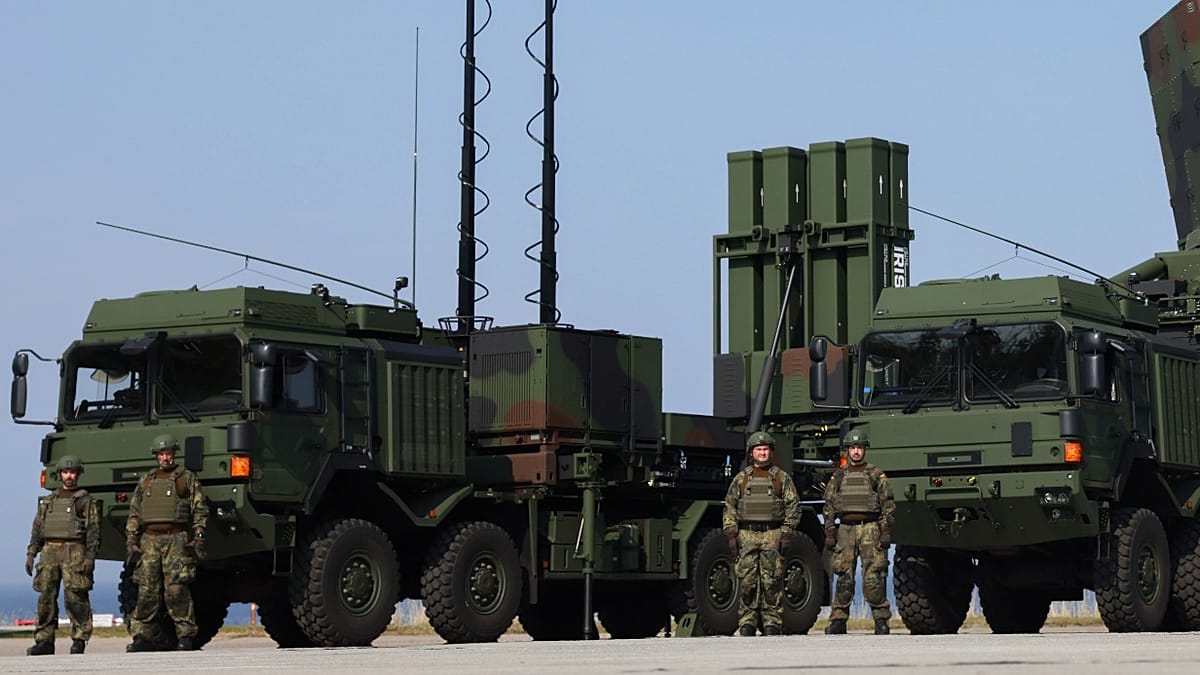
Diehl Defence unveiled a unified launcher at Enforce Tac that can fire both IRIS-T SLM (medium-range, intercepts to ~40 km and up to 20 km altitude; radar detection ~250 km) and IRIS-T SLX (long-range, up to ~80 km) missiles, with mixed-load capability within a battery. While presented as a potential European complement to the US Patriot—whose radar range (~150 km), PAC-3 MSE hit-to-kill capability and high cost (battery >$1bn; interceptor ≈$5m) set a high bar—the IRIS-T family remains more of an additional defence layer with limited ballistic-missile altitude reach. The announcement comes amid tight global Patriot supplies, US temporary export limits and continued demand driven by the war in Ukraine, implying potential procurement opportunities for European suppliers but not an immediate one-for-one replacement of Patriot capabilities.
Market structure: IRIS-T SLM/SLX parity narrows capability gaps for medium/long-range air defence in Europe, benefiting European primes and integrators (Rheinmetall RHM.DE, Saab SAAB-B.ST, Hensoldt HAG.DE) and Diehl (private) while reducing incremental Patriot (Raytheon RTX, Lockheed LMT) export leverage in NATO/EU tenders. Expect modest pricing pressure on US exporters for European contracts (potential share loss of ~10–20% in non-US NATO procurements over 2–5 years) but sustained demand keeps absolute market size growing.
Risk assessment: Tail risks include geopolitical escalation (Ukraine/Russia conflict) that could spike orders and raw-material bottlenecks, or conversely rapid US policy shifts restoring Patriot exports that blunt IRIS-T adoption; operational risk is scale-up of production (missile motor, seeker supply) with lead times of 12–36 months. Near-term (days-weeks) news flow will drive volatility; medium-term (3–12 months) procurement announcements and 12–36 month delivery timelines determine realized revenue.
Trade implications: Tactical long exposure to European defense OEMs (RHM.DE, SAAB-B.ST, HAG.DE) vs modest underweight of US integrators (RTX/LMT) captures regional procurement re-shaping; favor 3–6 month to 12–18 month call spreads to express upside while limiting cash outlay. Monitor EU/German order sizes (>€500m signals scale-up) and US export policy windows within 30–90 days as trade catalysts.
Contrarian view: Markets may overestimate immediate displacement of Patriot—high-end ballistic defence (PAC-3 MSE) remains a US moat—so avoid large, concentrated longs in smaller builders betting on rapid Patriot replacement. Fragmentation risk could raise per-unit costs and delay deliveries, making short-term winners those with deep supplier networks and backlog, not just headline-capable systems.
AI-powered research, real-time alerts, and portfolio analytics for institutional investors.
Request TrialOverall Sentiment
neutral
Sentiment Score
0.10
