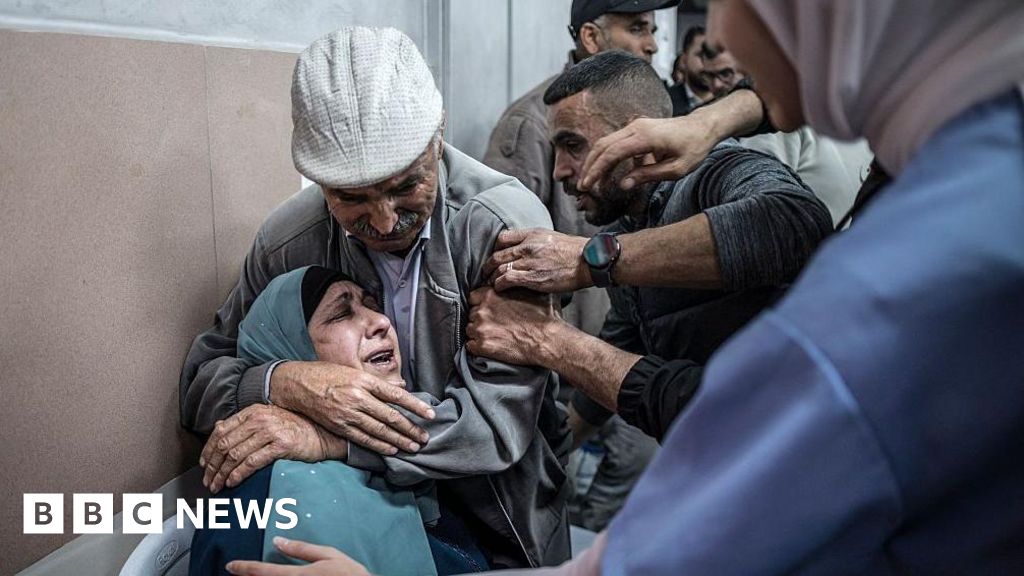
Two Palestinians, including a 14-year-old boy, were killed during a settler attack in the Israeli-occupied West Bank village of al-Mughayyir, with Palestinian officials blaming settler gunfire and Israel saying the incident is under review. The event adds to a broader surge in settler violence, with the UN citing at least 10 Palestinians killed and 385 injured by settlers across the West Bank since the start of 2026. The escalation raises geopolitical and security risk across the region and could worsen market sentiment toward Middle East stability.
The immediate market impact is not commodity-linked; it is a volatility catalyst for regional risk premia. The second-order effect is a higher probability of localized capital controls on movement, which hurts any business exposed to West Bank labor access, trucking efficiency, or checkpoint-sensitive logistics more than headline security escalation alone would suggest. The most underappreciated channel is insurance and war-risk pricing: even if this remains geographically contained, repeated incidents can tighten coverage terms for transport, construction, and cross-border supply routes over the next 1-3 months.
For Israel-adjacent assets, the bigger issue is policy drift rather than one-off violence. Each incident that blends civilians, settlers, and security forces increases the odds of a harsher security posture, which can slow permitting, delay infrastructure execution, and raise the discount rate applied to domestic cyclicals. That dynamic tends to favor defense, surveillance, and perimeter-security vendors while pressuring builders, logistics operators, and consumer names reliant on stable labor mobility.
The contrarian angle is that the market often treats these flare-ups as binary headlines, but the real trade is cumulative erosion of operating efficiency. If violence persists, the long-duration impact is not just geopolitical risk premium; it is lower productivity, more friction costs, and a larger fiscal burden as the state absorbs higher security and legal expenses. A genuine de-escalation would require enforced restraint and visible accountability, which is usually a months-long process, not a days-long event.
AI-powered research, real-time alerts, and portfolio analytics for institutional investors.
Request DemoOverall Sentiment
strongly negative
Sentiment Score
-0.80
