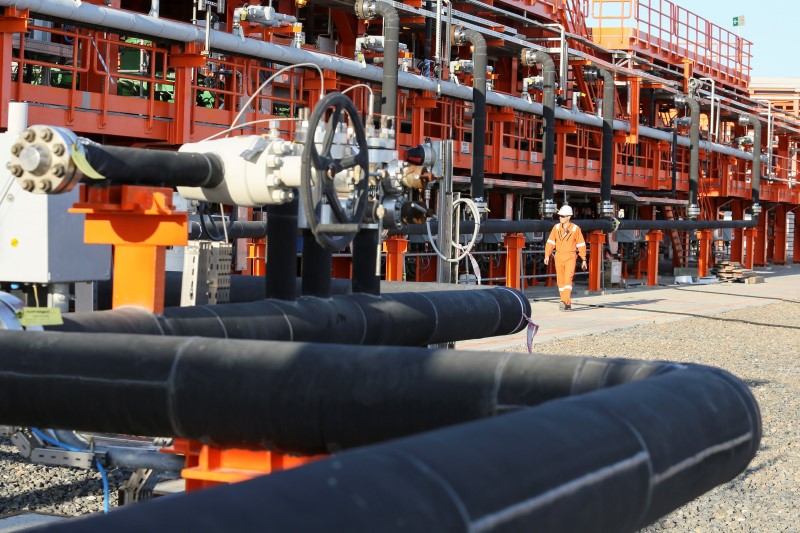
Iran’s Oil Terminals Company said inspections found no evidence of an oil leak near Kharg Island, despite satellite imagery this week suggesting a large slick west of the country’s main oil export hub. The company also said MEMAC reported no sign of leakage, and that additional field inspections and lab tests found "even the smallest trace" of leakage. The report is largely a denial of environmental or export disruption and is unlikely to move markets materially.
The market implication is less about the leak headline itself and more about the fragility premium embedded in Middle East export routes. Even a false alarm highlights how quickly tanker rates, prompt crude differentials, and refined product cracks can reprice when Kharg-related flow integrity is questioned; the first-order move is usually in prompt Brent and freight, but the second-order winners are alternative supply corridors and shipping names with optionality to reroute barrels.
Because the report was denied, the immediate risk is a reversal of any speculative bid in crude, but the asymmetry remains skewed to the upside if there is any later confirmation of disruption. The key time horizon is days, not months: headline risk can lift front-month Brent/WTI and VLCC earnings expectations in a matter of hours, while sustained physical disruption would take weeks to translate into inventory draws and tighter delivered barrels. On the downside, if no leakage is confirmed, crude may give back the entire risk premium quickly, especially if positioning was crowded.
The contrarian angle is that the best trade may be in volatility rather than direction. A denial after satellite-based concern often suppresses implied vol briefly, but the market is underpricing the probability of a repeat incident or a separate export interruption elsewhere in the Strait of Hormuz ecosystem; that argues for owning convexity instead of chasing spot strength. Logistics names can also benefit even if oil doesn’t move much, because every incremental security scare improves day-rate pricing power and insurance premia across Gulf-linked routes.
Most investors will treat this as noise, but the market still has to price the non-zero tail of a genuine export outage. In an already tight prompt physical market, even a 1-2 mb/d shock for several weeks would have an outsized effect on nearby spreads and refined product margins, while consuming countries would have limited near-term offset capacity. That makes the setup attractive for short-dated event-driven hedges, not long-duration macro bets.
AI-powered research, real-time alerts, and portfolio analytics for institutional investors.
Request DemoOverall Sentiment
neutral
Sentiment Score
0.00
