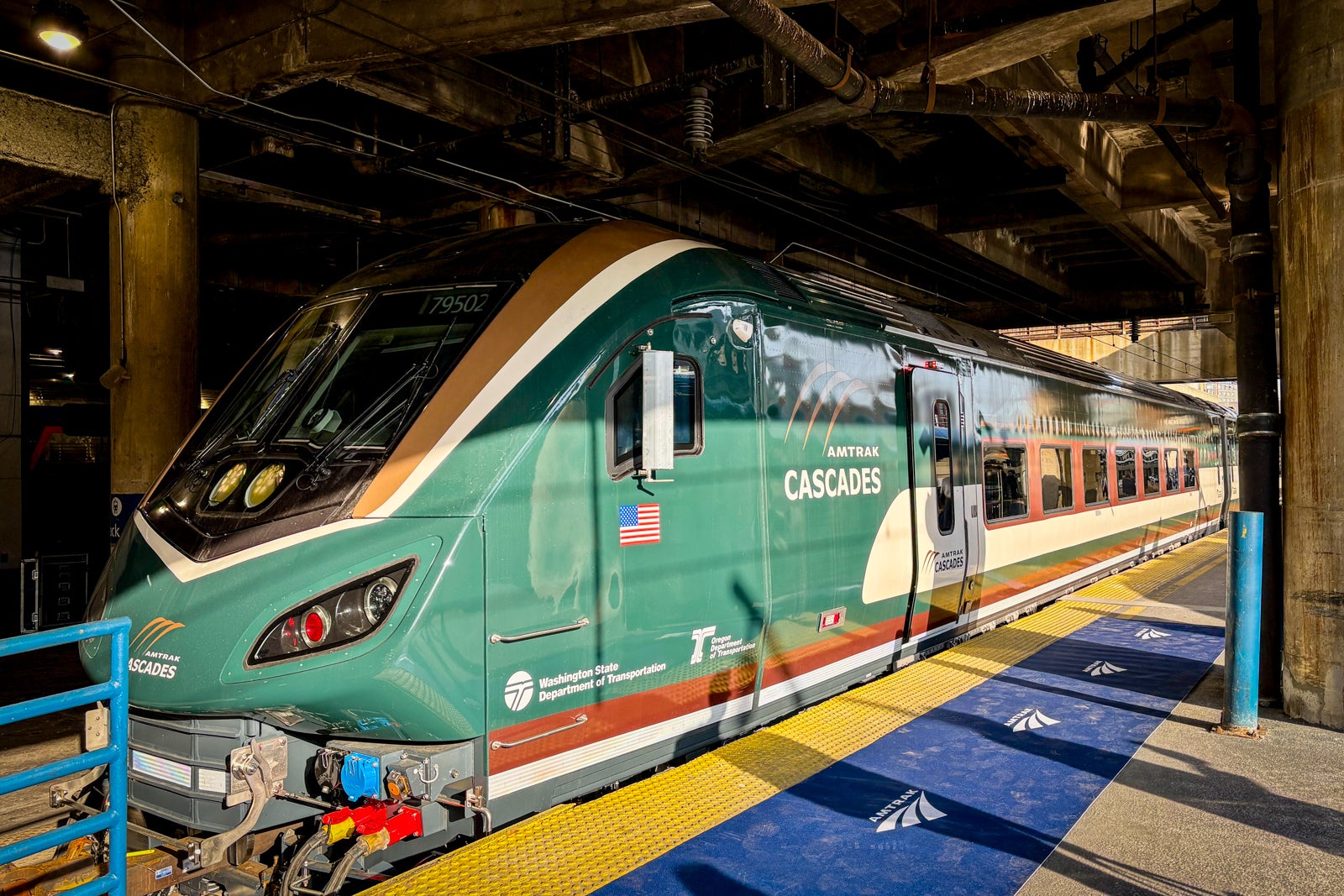
Amtrak is introducing Siemens-built Airo trains, with 83 units on order (first eight entering Cascades service mid-summer and the remaining 75 slated for East Coast deployment beginning testing this year and revenue service in 2027). Each Cascades Airo will seat up to 300 passengers—vs. 168 today—offering upgraded amenities including 5G Wi‑Fi, which supports Amtrak’s broader growth narrative after a record 34.5 million riders in 2025; Cascades ridership was 951,397 in 2025 and officials expect the new equipment could push the line past 1 million annual riders. The rollout increases capacity materially on key corridors and signals a multi-year fleet modernization that should boost network utilization and state-sponsored service offerings.
Market structure: Direct winners are rolling-stock OEMs and service/maintenance providers (expected aftermarket spares and maintenance upcycle) and state DOTs that can unlock higher fare revenue via ~80% more seats per train (300 vs 168). Short-haul airlines (routes <4–5 hours) and some bus/ferry operators are exposed to gradual share loss as capacity and onboard amenities compress door-to-door travel friction; pricing power shifts toward higher-frequency rail on dense corridors over 1–3 years.
Risk assessment: Key tail risks are manufacturing delays/cost overruns, safety/regulatory setbacks (NTSB/FTA probes) and federal funding changes—any of which could push East Coast Airo rollouts from 2027 to 2028+, materially hitting supplier revenue timing. Immediate market impact is limited (days); watch testing milestones over next 6–12 months and full-service deployment 2026–2028 for material cashflow effects. Hidden dependency: crew training, depot capacity and spare-parts logistics can bottleneck utilization even with delivered trains.
Trade implications: Favor industrials exposed to rolling stock (Alstom ADR ALSMY, Siemens AG SIEGY, Wabtec WAB) and short-duration muni bonds for state rail capex; be cautious on short-haul airline exposure (LUV, AAL) on Northeast/Pacific Northwest routes. Use directional equity positions sized 1–3% and 9–15 month call spreads to time testing-to-deployment catalysts; expect a 12–24 month alpha window tied to testing outcomes and state ridership growth.
Contrarian view: Consensus focuses on headline capacity—markets underprice recurring aftermarket revenue (parts, mid-life overhauls) which can be 20–30% of lifetime OEM revenue and are sticky. Conversely, customer pushback on seat comfort or initial reliability could temper ridership growth and spare-parts cadence, creating knee-jerk volatility—tradeable around test/funding news. Historical analog: Acela/NextGen teething created multi-quarter aftermarket upside once reliability normalized.
AI-powered research, real-time alerts, and portfolio analytics for institutional investors.
Request DemoOverall Sentiment
mildly positive
Sentiment Score
0.35
