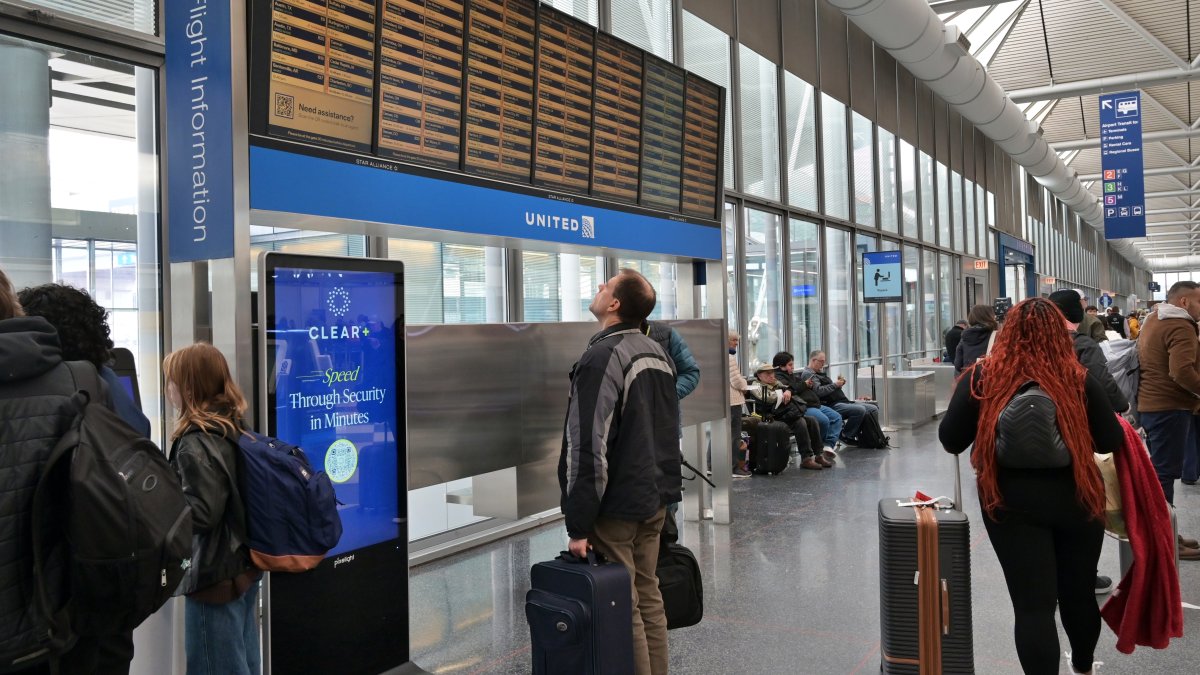
Departures to Chicago's O'Hare International Airport were grounded Thursday morning due to thunderstorms, with the FAA-issued ground stop beginning just after 10:30 a.m. and expected to last until at least 12 p.m. The disruption is tied to a broader stretch of stormy weather in the Chicago area, with the possibility of additional severe storms Friday evening. The impact is operationally negative but likely limited in market significance.
A ground stop at a major hub is less a local weather story than a short-duration shock to network reliability. The immediate losers are airlines with heavy O'Hare connectivity and tight same-day turn structures; the second-order effect is disproportionate disruption to connecting traffic, where a one-hour stoppage can cascade into missed banks, crew mispositioning, and aircraft out of sequence for the rest of the day. That makes the economic damage larger than the headline delay window, especially for carriers whose schedules are optimized for high utilization rather than slack.
The more interesting read-through is to adjacent beneficiaries: rail, rental car, and last-minute hotel demand in the Chicago corridor can see a same-day spike, while cargo operators with flexible routings may temporarily gain pricing power if belly capacity is interrupted. For logistics, this is mostly a transitory airfreight issue, but repeated storm episodes matter because they expose the fragility of just-in-time passenger and express networks during peak travel periods. If Friday evening storms materialize, the market will begin to discount a multi-day service reliability problem rather than a single weather event.
The key risk is not the weather itself, but the cumulative effect if disruptions cluster across multiple hubs this season. That can pressure near-term yield management for airlines, but it can also support fares by constraining effective capacity, so the net P&L impact is not uniformly negative. The contrarian view is that investors often overreact to isolated ground stops; unless this becomes a sustained pattern, the best trade is usually intraday rather than multi-week, because airlines recover a meaningful portion of revenue through rebooking and higher same-day pricing later in the week.
AI-powered research, real-time alerts, and portfolio analytics for institutional investors.
Request TrialOverall Sentiment
mildly negative
Sentiment Score
-0.15
