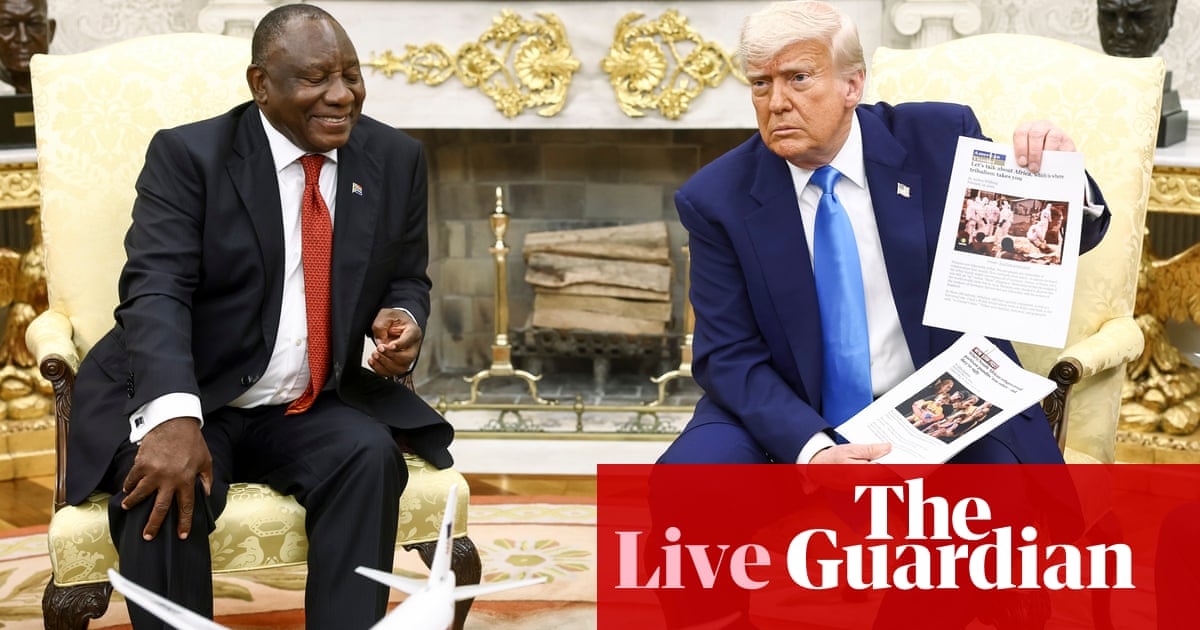
During a White House meeting, Donald Trump confronted South African President Cyril Ramaphosa with unsubstantiated claims of a "white genocide" and land seizures from white farmers in South Africa, despite rebuttals from Ramaphosa and contrary evidence. Trump's actions, including displaying videos and articles purporting to show violence against white South Africans, risk straining relations with the U.S.'s second-largest trading partner and come after previous criticisms of South Africa's land reform policies and aid cuts that have already impacted HIV testing.
A recent White House meeting between U.S. President Donald Trump and South African President Cyril Ramaphosa was characterized by significant tension, stemming from Trump's unsubstantiated allegations of a "white genocide" and widespread land seizures from white farmers in South Africa. President Ramaphosa refuted these claims, highlighting that while crime rates are high, the vast majority of victims are black, and denied that white farmers are being executed or having their land taken. These confrontational exchanges follow previous U.S. actions under Trump, including criticism of South Africa's land reform policies aimed at addressing apartheid-era injustices, the cancellation of aid—which has reportedly led to a decrease in HIV testing—and the expulsion of South Africa's ambassador. Given that the United States is South Africa's second-largest trading partner after China, the strained diplomatic atmosphere presents considerable economic risks for South Africa. The situation is further complicated by South Africa's current G20 presidency, which it is due to hand over to the U.S. in November. The overall negative sentiment and pessimistic tone surrounding these developments underscore potential headwinds for U.S.-South Africa relations and, by extension, South Africa's economic stability.
AI-powered research, real-time alerts, and portfolio analytics for institutional investors.
Overall Sentiment
Negative
Sentiment Score
-0.30
