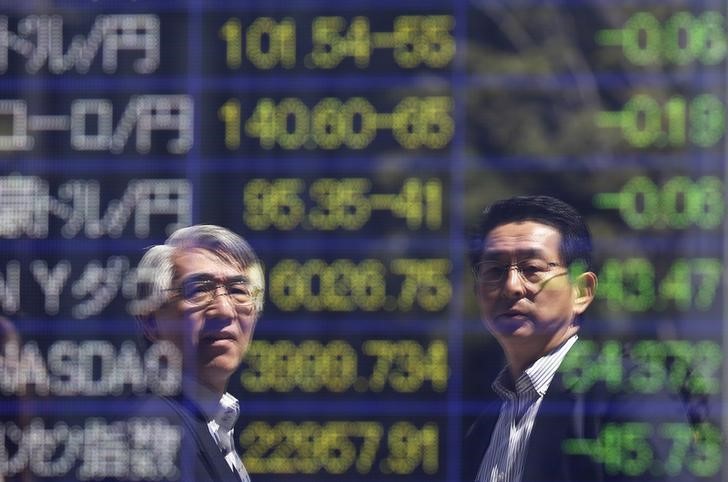
U.S.-Iran weekend talks failed to reach a consensus, and CENTCOM said Washington is preparing a blockade of the Strait of Hormuz starting April 13, driving a risk-off move across Asian markets. Brent crude jumped 8% back above $100/barrel, while S&P 500 futures fell as much as 1% and KOSPI, Nikkei 225, and Hang Seng each lost around 1% or more. TSMC also edged lower despite reporting March-quarter revenue up 35% to T$1.13 trillion, above expectations, with full Q1 earnings due later this week.
The immediate market loser is not just equities in Asia, but any asset class whose earnings are levered to smooth energy logistics. A Hormuz disruption is a convex shock because it simultaneously tightens physical crude availability, raises tanker insurance/charter rates, and forces Asian importers to rebuild inventories, which can create a self-reinforcing bid even if the blockade is partial. The first-order beneficiaries are upstream energy and freight, but the second-order winners are downstream balance-sheet hedges: refiners with spot-linked crack exposure, LNG substitutes outside the Gulf, and defense/cyber names if the standoff broadens into maritime protection spending. The more interesting read-through is on semis and AI infrastructure. TSMC’s revenue beat is supportive, but higher oil is a hidden tax on Asian manufacturing inputs, shipping, and power costs; that matters more for fab-heavy supply chains over the next 1-2 quarters than for TSMC’s near-term order book. If the blockade persists, expect margin compression to spread from transport into electronics assembly and industrial automation, which would pressure SMCI-style high-beta AI hardware multiples even if AI demand remains intact. APP is less directly exposed but tends to trade as a multiple-duration proxy; in a risk-off tape with rising input costs, it likely de-rates on factor rotation rather than fundamentals. Consensus may be underestimating how quickly policy response can cap the trade. A sustained Brent move above $100 usually triggers coordinated releases, diplomacy, and demand rationing within days to weeks, so the trade is better expressed as a tactical inflation shock than a secular oil bull. The asymmetric risk is that if the blockade is symbolic rather than physically effective, energy retraces sharply while cyclicals remain damaged, creating a short window where equity downside overshoots the commodity move. The bigger second-order effect is on cross-asset positioning: if rates fall less than equities because inflation expectations reprice higher, growth/tech multiples can compress harder than index levels suggest. That favors relative value over outright index shorts, especially in Asia where imported energy dependence is highest. The current move looks like an air pocket driven by weekend positioning, but the next 3-5 sessions should reveal whether this becomes a sustained supply shock or a fast mean-reversion trade.
AI-powered research, real-time alerts, and portfolio analytics for institutional investors.
Request DemoOverall Sentiment
strongly negative
Sentiment Score
-0.72
Ticker Sentiment
